Beyond Tokyo: Exploring Kanto on Easy Day Trips by Train
September 13, 2026
Traveling beyond central Tokyo opens up a diverse selection of nearby coastal towns, mountain hiking trails, hot spring gateways, and historical districts across the Kanto region. Because these destinations rely on a mix of straightforward ordinary commuter lines, scenic private railways, and reserved limited expresses, knowing how to choose the right route makes planning a day trip simple and efficient.
Quick Answer
- Kamakura: Take a direct, ordinary-fare JR Yokosuka Line train from Tokyo Station (about an hour), choosing one that runs beyond Ofuna.
- Enoshima: Choose between an Odakyu Romancecar, an ordinary train via Fujisawa, the Enoden coastal railway, or the Shonan Monorail.
- Hakone: Ride the direct Odakyu Romancecar from Shinjuku (about 80 minutes), or take an ordinary Odakyu train with a quick transfer at Odawara.
- Kawagoe: Board the Tobu Tojo Line from Ikebukuro or the Seibu Shinjuku Line from Seibu-Shinjuku.
- Takao-san and Ome: Take the Keio Line directly to Takaosanguchi for Mount Takao, or head west along the JR Chuo/Ome line corridor for Ome.
- Choshi: Ride a JR limited express Shiosai that runs through to Choshi from Tokyo Station (only some do), or take a slower ordinary-train route via Chiba.
- Yokohama: Choose from numerous direct, ordinary-fare JR or private railway lines running from various central Tokyo stations.
Orientation: The Kanto Day-Trip Network
The wider Kanto region surrounding Tokyo is served by an extensive web of private railways and JR trunk lines. Southern routes head toward coastal Kamakura and the mountainous hot spring resort of Hakone, while northern and western paths lead to historical merchant towns like Kawagoe or hiking destinations like Mount Takao. Eastern routes stretch across Chiba toward the Pacific coast at Choshi. Because different departure stations serve different regions—such as Shinjuku for Odakyu and Keio lines, or Ikebukuro and Asakusa for Tobu and Seibu lines—identifying your starting terminal is the first step in planning any trip.
Transport Options and Destinations
Kamakura
Kamakura is a historic coastal city filled with temples and shrines, easily accessible via a direct, ordinary-fare JR train (the Yokosuka Line) running from Tokyo Station in about an hour, with no transfers or limited express tickets required.
- Best for: Travelers seeking a classic, low-stress historical day trip with a completely direct ordinary train connection.
- How to buy: Tap a compatible regional IC card (such as Suica or PASMO) directly at the automatic station ticket gates.
- Watch out for: Some Yokosuka Line trains from Tokyo terminate at Ofuna, before Kamakura, so board one bound for Zushi, Kurihama or Yokosuka. Ordinary commuter trains can also experience heavy crowding during weekends and peak tourism seasons.
Enoshima
Enoshima is a small scenic island near Kamakura, connected to the mainland and reached via three distinct nearby stations operated by different companies: Katase-Enoshima Station (Odakyu), Enoshima Station (the scenic Enoden electric railway), and Shonan-Enoshima Station (the Shonan Monorail). Combining Kamakura and Enoshima in a single day using the Enoden line is a very popular routing.
- Best for: Visitors wanting to explore coastal views or combine an island visit with Kamakura using the historic Enoden tram line.
- How to buy: Purchase tickets at station kiosks, use ticket machines, or tap an IC card depending on your chosen railway operator.
- Watch out for: Your choice of railway line dictates which of the three separate Enoshima stations you arrive at.
Hakone
Hakone is a premier mountain resort area known for hot springs and views of Mount Fuji. The premier rail option is the Odakyu Romancecar, a fully reserved-seat limited express running directly from Shinjuku to Hakone-Yumoto Station in about 80 minutes without a transfer; it needs a limited express ticket in addition to the regular fare. A budget-friendly alternative involves taking an ordinary Odakyu train to Odawara and transferring once to the Hakone Tozan Train. The "Hakone Freepass" covers onward travel within the region's complex local transit network, but the Romancecar still requires a separate limited express ticket.
- Best for: Vacationers heading straight to the hot spring gateway who want either a direct luxury express or a budget-conscious ordinary transfer.
- How to buy: Book Romancecar limited express tickets online (EMot Online Tickets) or at Odakyu station windows and ticket machines in advance.
- Watch out for: Romancecar seats sell out quickly on weekends, so early booking is strongly recommended.
Kawagoe
Kawagoe, nicknamed "Little Edo," is a preserved merchant town featuring historic storehouses and traditional streetscapes. It is reached primarily from Ikebukuro via the Tobu Tojo Line, where most trains to Kawagoe, including the faster express services, run at the ordinary fare; the exception is the TJ Liner, which requires a separate seat-reservation ticket. A competing route runs via the Seibu Shinjuku Line from Seibu-Shinjuku Station to Hon-Kawagoe Station.
- Best for: Travelers looking for a quick, highly flexible cultural day trip with exceptional value options on ordinary fares.
- How to buy: Tap an IC card at station gates or buy standard paper tickets; no extra ticket is needed except for seat-reserved trains such as the TJ Liner.
- Watch out for: Ensure you board the correct express or local service, as stopping patterns vary along the Tobu and Seibu corridors.
Takao-san and Ome
Mount Takao (Takao-san) is an exceptionally popular hiking destination reached from Shinjuku via the Keio Line. Regular Keio trains, including limited express services, need only the ordinary fare. The seat-reserved Keio Liner and Mt. TAKAO trains (the Mt. TAKAO runs on weekends and holidays only) require a seat-reservation ticket in addition to the fare. Further out along a related western corridor, Ome offers scenic countryside and river valleys via the JR Chuo and Ome lines, typically involving a straightforward transfer at stations like Tachikawa.
- Best for: Outdoor enthusiasts, hikers, and nature lovers seeking accessible mountain trails or river scenery west of Tokyo.
- How to buy: Use an IC card to tap through the station gates for standard commuter fares. For the Keio Liner or Mt. TAKAO, also buy a seat-reservation ticket before boarding, online or at a ticket machine.
- Watch out for: Weekend hiking crowds can pack outbound morning trains heavily, so departing early is advisable.
Choshi
Choshi is a dramatic coastal city at the eastern tip of Chiba Prefecture, famous for its historic lighthouse and sweeping ocean cliffs. It is served by the JR limited express Shiosai from Tokyo Station, but only some Shiosai trains run all the way to Choshi; others end at Sakura or Naruto. The through trains take about 1 hour 50 minutes to 2 hours 5 minutes, depending on the train and the day; some Shiosai trains run only on certain days. Every Shiosai seat is reserved and there are no unreserved cars, but you can also ride with a seat-unassigned ticket (zaseki mishitei-ken), which lets you use a vacant seat; you must give it up if the passenger who reserved it arrives. A slower, lower-cost ordinary-train alternative requires a transfer at Chiba Station. The local Choshi Electric Railway does not accept IC cards, so your IC card covers only the JR part of the trip. Buy a Choshi Electric Railway ticket on board while a conductor is working or at one of its staffed stations; the railway also sells smartphone day tickets such as Beica through its website.
- Best for: Visitors seeking a rugged coastal destination and a ride on a distinctive local railway line.
- How to buy: Book a Shiosai reserved seat online or at JR stations ahead of travel. Seat-unassigned tickets are sold only at stations or on board, not online.
- Watch out for: Check that your Shiosai runs through to Choshi. Without a reserved seat, a seat-unassigned ticket does not guarantee you a seat.
Yokohama (Brief Overview)
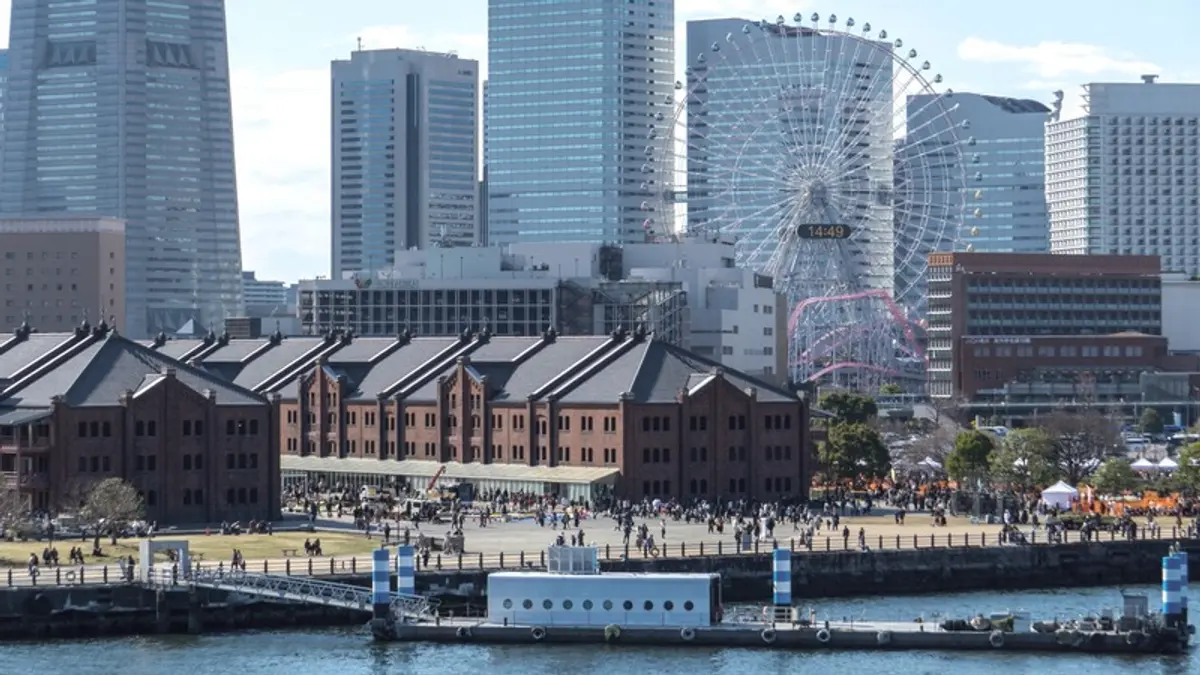
Yokohama is one of the closest and best-connected day-trip destinations from Tokyo, featuring multiple direct ordinary-fare routes operated by JR lines (such as the Tokaido, Keihin-Tohoku, and Yokosuka lines) and private railways (such as the Tokyu Toyoko and Keikyu lines) running straight from various central Tokyo stations.
- Best for: Travelers wanting a fast, flexible urban escape where the main transit decision is simply selecting the line closest to their starting point.
- How to buy: Tap a standard IC card directly at the departure station gates.
- Watch out for: Yokohama's large station complex serves multiple lines, so follow station signage carefully toward your specific destination exit.
Choosing by Destination
- Kamakura: Take a direct JR Yokosuka Line train that runs beyond Ofuna for simple, ordinary-fare coastal travel.
- Enoshima: Choose your route based on whether you prefer the Odakyu Romancecar, the scenic Enoden line, or the Shonan Monorail.
- Hakone: Select the direct Odakyu Romancecar for speed and comfort, or use ordinary Odakyu trains via Odawara to save money.
- Kawagoe: Ride the Tobu Tojo Line from Ikebukuro or the Seibu Shinjuku Line for an affordable, flexible cultural excursion.
- Takao-san and Ome: Take the Keio Line for Mount Takao, or follow the Chuo/Ome corridor further west for Ome's river scenery.
- Choshi: Take a JR Shiosai limited express that runs through to Choshi, with a reserved seat or a seat-unassigned ticket.
- Yokohama: Pick any direct JR or private line departing from your nearest central Tokyo hub.
Practical Tips
- Match your terminal to your line: Different destinations require starting from different Tokyo transport hubs—such as Shinjuku for Odakyu/Keio lines, Ikebukuro for Tobu lines, and Tokyo Station for JR trunk lines and limited expresses.
- Weekend crowds: Popular leisure routes like Kamakura, Hakone, and Mount Takao experience heavy congestion on weekends, making early morning departures ideal.
- IC card convenience: Most ordinary-fare day trips allow seamless tap-and-ride travel using standard IC cards without buying paper tickets. The Choshi Electric Railway is an exception: it does not accept IC cards.
Frequently Asked Questions
Do I need a special ticket to ride the train to Kamakura? No. A direct, ordinary-fare JR Yokosuka Line train runs from Tokyo Station to Kamakura, allowing you to simply tap an IC card at the gates. Choose a train that runs beyond Ofuna.
Is there a direct train to Hakone from central Tokyo? Yes. The Odakyu Romancecar runs as a direct, fully reserved-seat limited express from Shinjuku Station straight to Hakone-Yumoto Station.
Can I visit both Kamakura and Enoshima on the same day? Yes. Many travelers combine both destinations by using the Enoshima Electric Railway (Enoden), which connects the areas directly.
Are there unreserved cars on the Choshi limited express? No. Every Shiosai seat is reserved. You can book a seat in advance, or ride with a seat-unassigned ticket, which lets you use a vacant seat but requires you to give it up if the passenger who reserved it arrives. Only some Shiosai trains run all the way to Choshi.
Which railway line goes to Mount Takao? The Keio Line runs from Shinjuku to Takaosanguchi Station at the foot of Mount Takao. Regular trains, including limited express services, need no extra fee or reservation. The seat-reserved Keio Liner and Mt. TAKAO trains are the exception: they require a seat-reservation ticket in addition to the fare.
Updated 21 October 2026: Corrected the Shiosai seat rules and which trains reach Choshi, the IC card rules for the Choshi Electric Railway, the Yokosuka Line trains that reach Kamakura, the Kawagoe fare information and the Romancecar ticket details, explained the seat-reserved Keio trains to Mount Takao, and added journey times for Kamakura, Hakone and Choshi.