Japan’s Gold and Silver Mines: Where Remote Places Met Power and Money
September 26, 2026
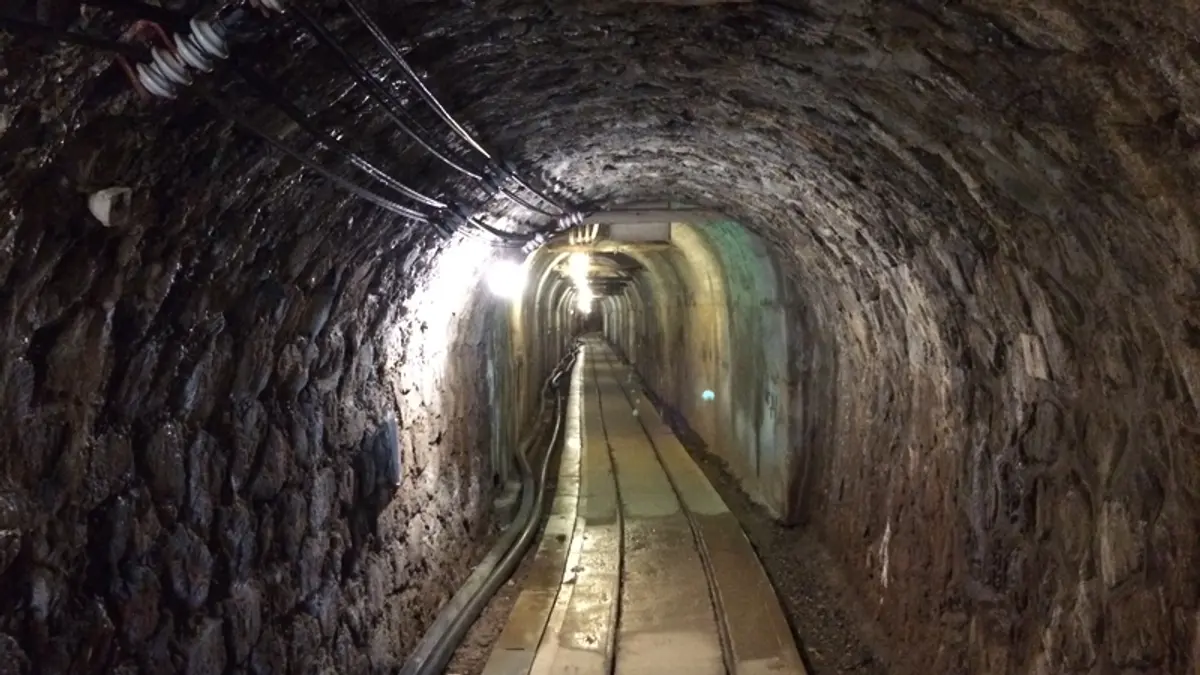
When travelers visit Japan’s old gold and silver mines today, they often find quiet mountain paths, restored tunnels, small museums, and towns that seem far from the centers of power.
That quietness can be misleading.
For centuries, mines were not just places where precious metals were dug from the ground. They were tied to military funding, currency, trade, transport routes, port towns, mountain communities, and political control. A mine in a remote valley or on a distant island could be connected to castles, shoguns, merchants, ships, and even overseas trade.
To understand Japan’s old mines, it helps to begin with Sado.
Sado: a distant island tied to central power
Sado Island, off the coast of Niigata, has long been seen as a place apart from the mainland. In earlier periods, that distance helped make it a place of exile. Historical figures such as Emperor Juntoku, the Buddhist monk Nichiren, and the Noh actor Zeami were sent to Sado, giving the island a strong association with people who had been removed from the political or cultural center.
But distance did not mean insignificance.
In the early Edo period, Sado became one of the Tokugawa shogunate’s most important mining centers. The Aikawa gold and silver mines were developed under shogunate control, and Sado became deeply connected to the financial system of Edo Japan. Gold and silver from this remote island were not just local resources. They became part of the economy of central power.
That contrast is what makes Sado so interesting. It was a faraway island, remembered as a place of exile, yet it also became a place the shogunate could not ignore.
This does not mean Sado should be reduced to a simple story of exiles working in the mines. The island’s history is more complex than that. The stronger point is this: a place on the edge of the map could still be central to the movement of money, authority, and people.
Mines before the Tokugawa: wealth for warlords
Long before the Tokugawa shogunate controlled Sado, mines were already important to regional rulers.
During the Sengoku period, warlords needed more than warriors and castles. They needed reliable sources of wealth. Armies had to be supplied, weapons purchased, alliances maintained, castles built, and retainers rewarded. Rice remained essential, but gold and silver were especially useful because they could function as portable wealth, gifts, trade goods, and military funds.
In Kai Province, present-day Yamanashi, gold mines such as those around Kurokawa and Yunooku are often linked with the Takeda clan. The people involved in mining were not simply laborers with tools. They included mountain specialists, mine operators, and skilled groups who understood where to dig, how to manage the work, and how to turn mountain resources into political and economic strength.
Iwami Ginzan, in present-day Shimane, shows this on an even wider scale. Developed from the 16th century, it became one of Japan’s major silver-producing areas. Its story is not limited to mine tunnels. It includes mining settlements, mountain paths, defensive sites, transport routes, and ports. Silver dug from the mountains moved outward through a larger landscape of roads, towns, and maritime trade.
For Sengoku warlords, controlling a mine meant controlling more than metal. It meant controlling workers, roads, merchants, taxation, transport, and bargaining power.
Under the Tokugawa: mines, money, and control
The Edo period gave mines a new place in a more centralized political order.
The Tokugawa shogunate developed systems of currency, taxation, and direct control over important resources. Mines such as Sado, Iwami, and Ikuno became part of that structure. A mine could be a source of coinage, a base of taxation, a center of administration, and a symbol of authority.
Ikuno Silver Mine, in present-day Hyogo, is a useful example of how a single mining site could change meaning over time. It had importance before the Edo period, came under major political powers, later became a shogunate-controlled mine, and after the Meiji Restoration was developed as one of Japan’s modern government-run mines.
This long history reminds us that a mine was not just a hole in the mountain. It was an institution. Under one ruler, it might be a military resource. Under another, a source of coinage and taxation. Later, it might become a site of modernization, machinery, and industrial policy.
Mines were never isolated
Many mines were located in mountains, but they were not isolated from the world.
A working mine needed food, timber, water, tools, workers, engineers, administrators, merchants, and transport. Ore had to be carried out. Refined metal had to move toward markets, mints, ports, or political centers. Roads and ports were just as important as tunnels and shafts.
Iwami Ginzan is one of the clearest examples. Its historic landscape includes not only mining remains, but also routes and port areas that connected the mountain mines to the sea. Yunotsu, for example, was both a hot spring town and a port linked to the movement of silver and supplies.
Seen this way, an old mine is not only a mining site. It is the center of a network.
The same is true of Sado. A gold and silver mine on an island required maritime transport, port towns, officials, merchants, tools, food supplies, and labor. Aikawa was not simply a mining town in the mountains. It was a place where island geography, shogunate control, and mineral wealth came together.
Mines, hot springs, and mountain resources
There is another layer that travelers may notice: in some places, mining history overlaps with hot springs.
This does not mean that every gold or silver mine was connected to an onsen. It is better to say that in certain mountain regions, different kinds of natural resources gathered around the same landscape.
In Yamanashi, the Yunooku gold mining area sits near Shimobe Onsen, a hot spring associated in local memory with Takeda Shingen. Near Iwami Ginzan, Yunotsu combined the roles of hot spring town and port. In Yamagata, Ginzan Onsen preserves the memory of silver mining in its very name; the hot spring town developed after the decline of the old mine.
These examples widen the way we look at mining landscapes. Gold and silver were not the only resources of the mountains. Water, timber, hot springs, roads, and human skill also mattered.
How to look at mining sites while traveling
When you visit an old gold or silver mine in Japan, the tunnel may be the most obvious attraction. But the tunnel is only the beginning.
Look for the town around it.
Look for the road out of the valley.
Look for the port, the river, the magistrate’s office, the storehouses, the temples, the workers’ quarters, the hot spring, or the museum.
Ask where the metal went after it left the mountain. Did it travel to a castle town? To a port? To Edo? To a mint? To overseas trade?
Japan’s old mines are quiet today, but they were once places of movement. People came to them for work. Officials came to control them. Merchants came to profit from them. Rulers wanted them because gold and silver could become military funds, coins, gifts, taxes, and power.
That is why these places still matter to travelers.
A gold mine or silver mine is not just a place where something was dug from the ground. It is a place where geography, economy, technology, and authority met.
Sado shows how a distant island could become essential to the shogunate. Kai shows how mountain resources could support warlords. Iwami shows how a mine could connect mountains, roads, ports, and the wider world. Ikuno shows how the same mine could pass through medieval, early modern, and modern industrial history. Hot spring towns such as Shimobe, Yunotsu, and Ginzan remind us that mountain landscapes held many kinds of value.
So when you stand before an old mine entrance in Japan, do not look only into the darkness of the tunnel.
Imagine the roads leading away from it.
Those roads may have led to castles, ports, markets, hot springs, shogunate offices, or ships crossing the sea. Through them, the quiet mountain or island in front of you was once connected to the movement of money, people, and power.
That is the real story hidden behind Japan’s gold and silver mines.