Traveling Responsibly in Japan: How Small Choices Keep Travel Enjoyable
September 19, 2026
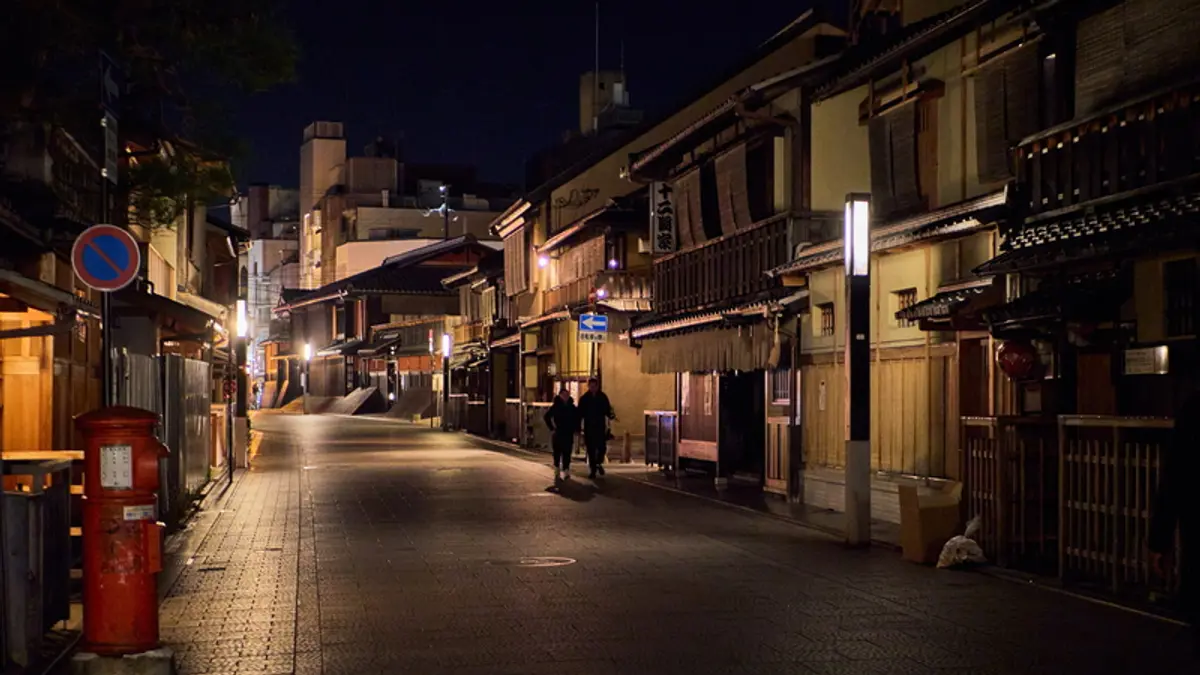
Japan is often described as clean, safe and easy to travel around.
Those qualities do not maintain themselves automatically.
They are supported by millions of small everyday choices: taking trash away, keeping voices down late at night, not blocking a sidewalk, respecting private property and remembering that a neighborhood remains somebody's home even when it appears in a guidebook or on social media.
Visitors do not need to memorize hundreds of Japanese rules.
A much simpler principle is more useful:
Enjoy the place without making it harder for somebody else to enjoy—or live in—it.
Drinking outdoors: Read the place, not only the law
Outdoor drinking itself is not generally prohibited across Japan.
Drinking under cherry blossoms during hanami or enjoying alcohol at an appropriate festival or outdoor event can be entirely normal. JNTO specifically notes that outdoor drinking can be part of Japanese culture, particularly during hanami. (japan.travel)
But context matters.
Standing in a busy street drinking for a long time, gathering around the entrance of a convenience store, becoming loud late at night, blocking pedestrians or leaving cans behind creates a very different situation. JNTO's responsible-travel guidance advises visitors to enjoy alcohol in bars, izakaya and restaurants and to avoid drinking on streets or outside convenience stores. (japan.travel)
Instead of asking only:
“Am I legally allowed to drink here?”
it is often more useful to ask:
“Is this an appropriate place and time to drink without inconveniencing the people around me?”
That is a useful way to understand many aspects of etiquette in Japan.
Trash: If there is no bin, keep it with you
Visitors are often surprised by the limited number of public trash cans in some parts of Japan.
The practical answer is simple.
Keep your rubbish until you find an appropriate place to dispose of it.
Do not leave it next to a full bin, on a bench, beside a vending machine or outside a store simply because you cannot immediately find somewhere else.
A small bag for your own rubbish can be surprisingly useful during a day of sightseeing.
A vacation rental may be somebody else's home environment
A minpaku or vacation rental may look almost identical to a hotel listing on a booking site.
The building may not operate like a hotel.
Other apartments may contain people who live there permanently, wake early for work, take children to school and use the same corridors, elevators and garbage collection areas.
Japan's Private Lodging Business Act specifically addresses neighborhood problems such as noise and waste disposal. Operators must explain noise prevention, waste disposal and fire-prevention rules to guests and respond appropriately to complaints from surrounding residents. (mlit.go.jp)
For guests, the practical message is straightforward.
Keep voices down at night.
Follow the accommodation's garbage instructions.
Do not leave luggage in shared corridors.
Do not treat common areas as an extension of your private room.
A quiet street may be quiet because people live there
One of the pleasures of traveling in Japan is walking through ordinary neighborhoods.
Small shrines, traditional-looking houses, local shops and narrow streets can be more memorable than famous attractions.
But that is also where a little extra awareness helps.
A beautiful doorway may simply be somebody's front door.
A narrow lane may be a school route.
A low wall may belong to somebody's property rather than being public seating.
You do not need to avoid residential neighborhoods.
Just remember that you are visiting a place where people live, not entering a tourist facility.
Photography: Remember what is outside the frame
Social media can turn one particular camera angle into an international attraction almost overnight.
The problem begins when the photograph becomes more important than the surroundings.
Before stopping for a picture, look away from the screen.
Are you standing in a road?
Blocking a shop entrance?
Entering private property?
Photographing somebody closely without asking?
JNTO asks travelers to respect private property, remain aware of their surroundings and ask permission before photographing people. (japan.travel)
Sometimes moving a few steps gives you a slightly different photograph.
It can also make the experience much better for everybody around you.
Public transport: Make yourself easy to travel beside
Japanese trains and buses move enormous numbers of people through limited space.
They work smoothly partly because passengers cooperate.
Let people get off before boarding.
Queue where indicated.
Keep conversations at a moderate volume.
Avoid ordinary phone calls on commuter trains.
Keep backpacks and luggage from blocking doors and aisles.
When luggage becomes difficult to manage, lockers or luggage-forwarding services can make the trip easier for you as well as everybody else. JNTO's general manners guidance similarly recommends silent phones, avoiding calls and paying attention to the people around you on public transport. (japan.travel)
None of this requires perfect knowledge of Japanese culture.
It mainly requires noticing the people around you.
Local expectations do not always come with a prohibition sign
One thing that can be difficult for visitors is that some Japanese etiquette is social rather than legal.
Nobody may tell you directly that something is inconvenient.
There may be no sign saying “Do not do this.”
Nobody may confront you.
That does not necessarily mean the behavior is welcome.
When you are unsure, look at how people around you are using the space.
That is often more helpful than asking only whether something is technically prohibited.
Small problems can eventually create more rules
This is also why etiquette matters to travelers themselves.
When a problem happens occasionally, communities can often handle it informally.
When the same problem happens hundreds or thousands of times, the response may change.
A sign appears.
Then another sign.
A barrier is installed.
Staff are needed.
Reservations are introduced.
Access is restricted.
Eventually a place that was once easy to enjoy can become surrounded by rules.
That is understandable from the community's point of view—but it is not ideal for travelers either.
No traveler wants every beautiful street behind a fence.
No traveler wants every viewpoint to require a reservation.
No traveler wants an enjoyable trip to become unnecessarily complicated because earlier visitors repeatedly caused problems.
This is not a reason to feel nervous while traveling.
Quite the opposite.
Most visitors to Japan will never cause a serious problem, and nobody expects a traveler to understand every local custom on the first day.
Notice what is happening around you.
Adjust when necessary.
Leave the place as easy to enjoy as you found it.
Good manners are not about reducing the freedom of travel.
They help preserve it.