Choosing Where to Go in Aichi: Nagoya, Inuyama, Tokoname, Toyota and Mikawa
September 20, 2026
Aichi is often treated as a destination centered almost entirely on Nagoya, but the prefecture becomes much easier to understand when it is divided into several distinct travel areas. Nagoya is the main urban base, Inuyama offers a compact historic castle town, the Chita Peninsula combines pottery and food culture with the coast, Nishi-Mikawa brings together samurai history, industry, and inland scenery, while Higashi-Mikawa opens toward Mikawa Bay and the more local atmosphere of eastern Aichi.
For most visitors, the important question is not how to see every part of Aichi, but which of these areas best fits the kind of trip they want.
Nagoya — The Main Base for Exploring Aichi
Nagoya is the natural starting point for most trips through Aichi. It has the prefecture's largest concentration of hotels, restaurants, museums, shopping districts, and rail connections, making it practical both as a destination in its own right and as a base for day trips.
For history, two of the city's most important places are Nagoya Castle and Atsuta Jingu. Nagoya Castle's main tower keep is currently closed to visitors, but the reconstructed Hommaru Palace and other parts of the castle grounds remain open. Atsuta Jingu provides a very different experience, with a wooded shrine precinct closely connected to the Kusanagi sword and centuries of religious history.
Nagoya also works well for travelers interested in modern industry, railway history, food culture, and large-scale urban attractions. It is therefore the safest choice for a first night in Aichi, especially when the rest of the itinerary is still flexible.
Ghibli Park is outside central Nagoya in Nagakute, but many international visitors will naturally plan it as part of a Nagoya stay. It should be treated as a planned full-day attraction rather than a casual side trip: advance reservations are required, and the park is large enough that visitors should decide which areas they want to see before the day of their visit.
Inuyama — Castle-Town Aichi
Inuyama is one of the clearest choices for travelers who want to add traditional townscape and castle history without committing to a long journey into rural Japan.
Inuyama Castle is a National Treasure with one of Japan's surviving original wooden castle keeps. The castle rises above the Kiso River, while the old town below retains the scale and street pattern of a traditional castle town. Together they create a much more compact historic experience than Nagoya.
The attraction of Inuyama is not simply the castle itself. The castle town, historic streets, shrines, traditional food, and nearby cultural sites make it easy to spend several hours walking rather than moving repeatedly between unrelated attractions.
For travelers staying in Nagoya, Inuyama works particularly well as a contrasting day trip: Nagoya provides the metropolitan side of Aichi, while Inuyama shows the older Owari character of the prefecture.
Tokoname and the Chita Peninsula — Pottery, Food Culture and the Sea
South of Nagoya, the Chita Peninsula has a different character again. Instead of castles and dense city districts, the region is associated with ceramics, brewing and fermentation, fishing communities, islands, and the waters of Ise and Mikawa bays.
Tokoname is the easiest introduction to this side of Aichi. The city has been an important ceramics center for centuries, and the Pottery Footpath passes old kilns, brick chimneys, ceramic pipes, workshops, and narrow streets shaped by that industrial history. It feels less like a conventional museum district and more like walking through a living craft town.
Farther into the peninsula, Handa is closely associated with brewing and vinegar production, while Minamichita and the offshore islands shift the emphasis toward seafood, coastal scenery, and hot springs.
Chubu Centrair International Airport is also located in Tokoname. That makes the Chita area unusual: travelers do not necessarily have to treat the airport simply as a place to leave immediately. For visitors interested in pottery, food traditions, or the coast, the area around the airport can become part of the trip itself.
Okazaki and Toyota — Samurai History, Manufacturing and Inland Aichi
Nishi-Mikawa offers one of Aichi's strongest contrasts.
Okazaki is closely associated with Tokugawa Ieyasu, who was born at Okazaki Castle. The city preserves this samurai connection around Okazaki Park while also maintaining another important local tradition around Hatcho miso, whose historic storehouses reflect the region's long-established fermentation culture.
Toyota presents a different image of Aichi. The city is internationally associated with automobile manufacturing, and the Toyota Kaikan Museum introduces Toyota's vehicles, production philosophy, technology, and mobility development. Visitors should not assume that a factory tour is included, however: plant tours in the Toyota City headquarters area remain suspended at present.
Toyota City is also much larger and more rural than its industrial reputation suggests. Areas such as Korankei and the historic streets of Asuke show the mountainous side of inland Aichi, particularly during the autumn foliage season.
This makes Okazaki and Toyota a useful pairing for travelers interested in how several different periods of Aichi's identity fit together: samurai history, traditional food production, modern manufacturing, and rural landscapes all appear within the same part of the prefecture.
Gamagori and Toyohashi — Mikawa Bay and Eastern Aichi
Farther east, Aichi changes again as the landscape opens toward Mikawa Bay.
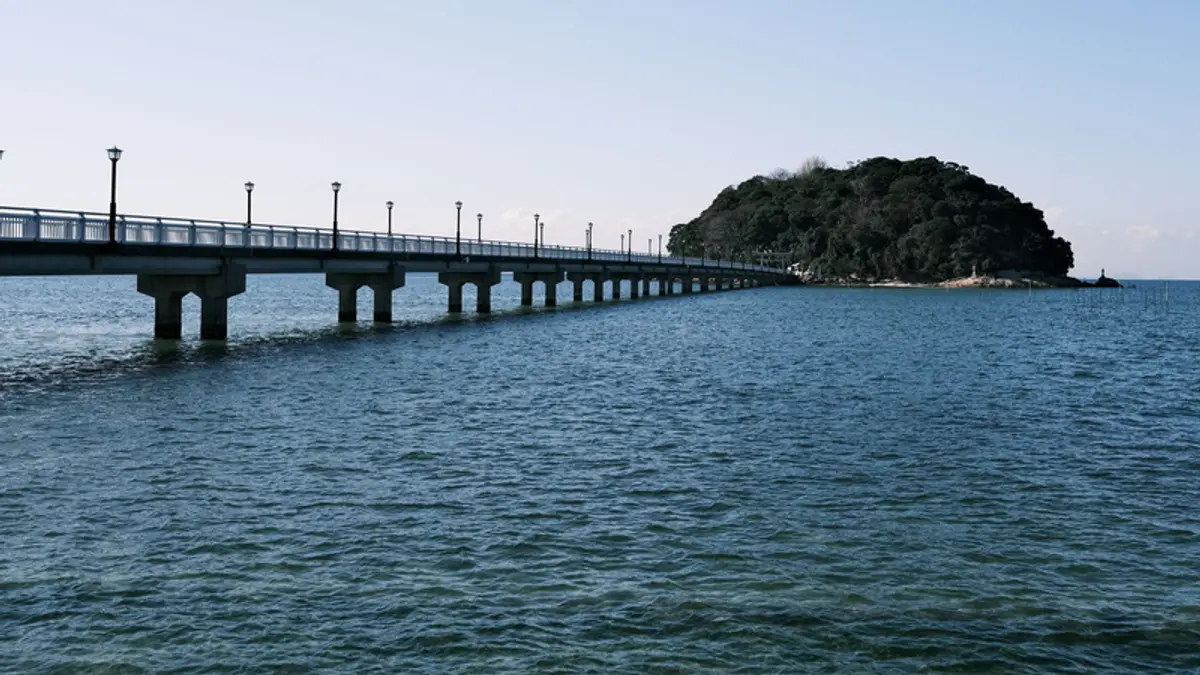
Gamagori is the more resort-oriented choice. Takeshima, linked to the mainland by a long pedestrian bridge, is one of the city's best-known landmarks, while the surrounding coast is associated with seafood and several hot-spring districts. Compared with Nagoya or Okazaki, Gamagori is better suited to travelers looking for a slower seaside stop rather than another dense sightseeing city.
Toyohashi, by contrast, is the major urban center of eastern Aichi. It retains a working local-city atmosphere and is one of the relatively few Japanese cities where streetcars remain part of everyday public transport. Yoshida Castle and the surrounding Toyohashi Park provide a historical layer, while the city also works as a base for exploring the wider Higashi-Mikawa area.
Gamagori and Toyohashi therefore serve different purposes. Gamagori is the place to slow down beside Mikawa Bay; Toyohashi is the stronger base for travelers who want to continue exploring eastern Aichi.
How to Choose Your Aichi Trip
For a short first visit, Nagoya and Inuyama create the clearest contrast between modern urban Aichi and its castle-town heritage.
Travelers interested in ceramics, fermentation, seafood, or a quieter coastal atmosphere should look south toward Tokoname and the Chita Peninsula. Those more interested in samurai history, Toyota's industrial story, or inland scenery should look toward Okazaki and Toyota. Gamagori and Toyohashi become more attractive when the trip has enough time to extend farther east toward Mikawa Bay and Higashi-Mikawa.
Ghibli Park is slightly different from these regional choices because it is usually a destination in its own right. If it is a priority, secure the required reservation first and build the Nagoya portion of the itinerary around that date.
Aichi does not need to be covered all at once. Choosing one area beyond Nagoya often produces a more coherent trip than trying to connect every major destination in a single day.
Where to stay
Planning to stay overnight? Find accommodation in: