Where to Go in Fukuoka, Saga, and Nagasaki: Ports, Pottery, Hot Springs, and Islands
September 25, 2026
Northern Kyushu is easy to enter, but difficult to reduce to a single route. Some travelers arrive overland from western Honshu, crossing the Kanmon Strait from Shimonoseki into Kitakyushu. Others fly in from Tokyo or another major Japanese city, while international visitors may land directly at Fukuoka Airport.
Those entrances shape the journey. Kitakyushu receives the route from Honshu. Fukuoka works as the most flexible city base. Saga opens toward coastlines, pottery towns, and hot springs. Nagasaki leads into harbor history, peninsulas, islands, and sea routes that have long connected Japan with the Asian continent.
Fast trains and main rail lines make movement between Kitakyushu, Fukuoka, Saga, and Nagasaki relatively straightforward. Yet many places that define the region lie beyond the fastest routes. Pottery villages, hot spring towns, peninsulas, and islands require local trains, buses, ferries, or slower regional connections. The question is not only how far you can go, but where you should stay, where a half-day is enough, and where the journey deserves its own time.
From the Kanmon Strait into Kyushu
If the Yamaguchi side of the Kanmon Strait ends with Shimonoseki looking toward Kyushu, the Kyushu side begins with Kitakyushu looking back across the same narrow channel.
Mojiko gives that crossing a clear sense of arrival. Historic port buildings, waterfront promenades, and views toward Shimonoseki make it more than a transfer point. It is not usually a place for several days, but it works well as a half-day stop for travelers coming from Yamaguchi who want to feel the strait, the old port atmosphere, and the geography between Honshu and Kyushu.
Kokura has a more practical role. It is Kitakyushu’s main rail center and a useful place to stay if you arrive late, want time around the Kanmon area, or need a convenient first night on the Kyushu side. For most travelers, however, Kitakyushu is the opening chapter rather than the main base. From here, the journey spreads toward Fukuoka, Saga, Nagasaki, and beyond.
Fukuoka: Stay Here, Then Branch Out
Fukuoka is often treated as a gateway, but it is better understood as a city worth staying in. Hakata gives you railway connections. Tenjin gives you shopping, restaurants, cafés, nightlife, and everyday city life. Between them are riverside walks, parks, museums, food stalls, and neighborhoods that make the city enjoyable without a rigid sightseeing plan.
This is the most flexible base in northern Kyushu. Staying in Fukuoka lets you enjoy the city while making short trips in several directions. Dazaifu, once an administrative center for ancient Kyushu, offers shrine culture, museums, and historical streets in a setting very different from central Fukuoka. It works well as a half-day or easy day trip.
The coast also matters. Around Hakata Bay and toward the Genkai Sea, beaches, seaside parks, and smaller communities give Fukuoka a softer edge than its station districts suggest. Some travelers will focus on the city, food, and nightlife. Others will use Fukuoka as a base for Dazaifu, the coast, Karatsu, or the first step toward Saga and Nagasaki. The important point is not to reduce Fukuoka to a transfer.
Saga: Coast, Ceramics, and Hot Springs
Saga often sits quietly between Fukuoka and Nagasaki on the map, but it should not be treated as empty space. It works as a regional hinge: not always the main place to stay for several nights, but an important reference point from which the prefecture opens toward the coast, pottery towns, hot springs, and local history.
Karatsu is Saga’s coastal side. Facing the Genkai Sea, it has a castle looking over the water, beaches, pine groves, and a maritime history that gives it a slower rhythm than the nearby cities. From Fukuoka it can be visited as a day trip, but travelers who enjoy coastal towns may want to slow down here.
Arita, Imari, and Okawachiyama belong to a different kind of journey. This is one of Japan’s major ceramic regions, where the appeal lies in kilns, workshops, galleries, museums, and streets shaped by pottery traditions. Arita is closely tied to the history of Japanese porcelain. Imari carries memories of distribution and trade. Okawachiyama gives the pottery landscape a concentrated kiln-village atmosphere. These places suit travelers willing to give craft, history, and townscape enough time to matter.
Takeo Onsen and Ureshino Onsen add another layer. They are not just points between Fukuoka and Nagasaki; they are places where staying overnight can be the purpose. In a hot spring town, the pace changes. You bathe, eat, walk, and let the day become quieter. Saga City itself can be a short stop for regional history, especially the late Edo and early modern period, but Saga is strongest when understood as a set of choices: coast, ceramics, hot springs, and local history.
Nagasaki: A City to Stay and Walk
Nagasaki deserves an overnight stay if your schedule allows. Its character comes from the way harbor, hills, foreign trade, religion, and daily neighborhoods overlap.
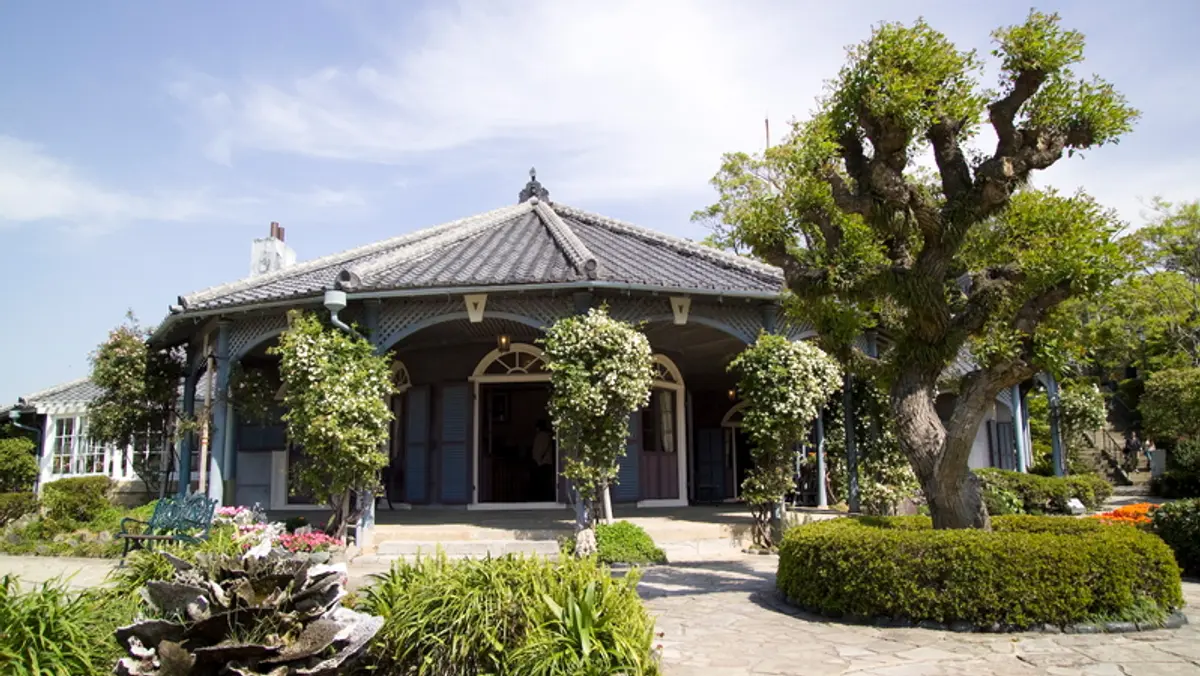
Dejima gives the city’s international history a clear physical form. Originally an artificial island in Nagasaki Bay, it later became the Dutch trading post and one of Japan’s limited but important points of contact with Europe during the Edo period. It helps explain why Nagasaki feels different from many other Japanese cities: its history was shaped by exchange across the sea.
The city is also defined by slopes and water. Streets climb from the harbor into hillside neighborhoods. Trams connect many central districts, but walking remains one of the best ways to understand the city. Around the waterfront, Dejima, Chinatown, church-related sites, markets, and residential slopes, Japanese, Chinese, and European influences become part of the landscape rather than a simple list of attractions.
Nagasaki can be visited quickly, but it rewards more time. Staying overnight lets you see the harbor at different hours, move without rushing, and decide whether to continue toward the western coast, the Shimabara Peninsula, or the islands beyond.
Beyond Nagasaki: Sea, Peninsula, and Hot Springs
Nagasaki Prefecture should not end with Nagasaki City. Sasebo and Kujukushima show the maritime side of western Kyushu. Sasebo is a port city with its own history, while Kujukushima offers one of the region’s most memorable coastal scenes: many small islands scattered across calm waters. Some travelers visit from Nagasaki or Fukuoka, while others may stay nearby if the sea landscape is a main interest.
The Shimabara Peninsula offers another direction. Unzen is the mountain and hot spring side, better suited to slowing down than passing through. Shimabara is the castle town and coastal side, facing the Ariake Sea with a different atmosphere from Nagasaki’s deep harbor. The peninsula also connects with Kumamoto across the water, so it should not be imagined only as a dead-end side trip. For travelers continuing beyond northern Kyushu, Shimabara can become a bridge toward Kumamoto, Aso, and the volcanic landscapes that define the next part of the island.
This area needs more care than travel between major stations. Public transport exists, but services are less frequent, and the geography encourages slower movement. That is why it belongs here: it helps travelers understand when a place deserves time rather than being squeezed into the edge of a city stay.
Islands Beyond the Mainland
Northern Kyushu also opens toward islands, and they are not minor add-ons. Iki is the most approachable for many travelers starting from Fukuoka. It offers shrines, archaeological sites, beaches, fishing communities, and a slower island rhythm without feeling extremely remote.
Tsushima deserves its own category. Located between Kyushu and the Korean Peninsula, it has long been shaped by diplomacy, trade, defense, and cultural exchange with the continent. Its mountains, forests, coves, and dispersed settlements make it very different from a casual beach island. It should be treated as a destination in its own right, not a quick day trip.
The Goto Islands require time as well. Spread across the sea west of Nagasaki, they combine rugged coastlines, quiet roads, fishing communities, churches, and the history of hidden Christians and later Christian settlements. Because movement depends on ferries and local transport, the Goto Islands are best for travelers who can give them several days.
Choosing the Right Range
A good northern Kyushu trip is not about drawing a line through every destination. It is about choosing the right range.
If you want the easiest base, stay in Fukuoka and add Dazaifu, the coast, Karatsu, or a first step into Saga. If you are interested in craft and quieter towns, give Saga’s ceramic areas and hot springs enough time. If you want a layered port city, stay in Nagasaki rather than rushing through it. If the sea is your focus, consider Sasebo, Kujukushima, the Shimabara Peninsula, or one of the islands. If you arrive from Honshu, let Mojiko and Kokura mark the transition into Kyushu, then continue outward.
Northern Kyushu rewards travelers who understand the difference between a base, a stop, and a destination that needs its own time. Major cities and fast trains make long-distance movement easier, but the region becomes more memorable when you follow local railways, buses, ferries, and walking routes toward coastlines, pottery villages, hot spring towns, peninsulas, and islands.
Where to stay
Planning to stay overnight? Find accommodation in:
Goto IslandsSaseboUreshino OnsenKokuraTakeo OnsenFukuokaNagasaki
Related Routes
- Fukuoka Airport → Hakata
- Hakata Port → Iki
- Hakata Port → Tsushima
- Hakata → Dazaifu
- Hakata → Karatsu
- Hakata → Nagasaki
- Hakata → Saga
- Haneda Airport → Fukuoka Airport
- Karato Pier → Mojiko Pier
- Kokura → Hakata
- Nagasaki Port → Fukue Port
- Nagasaki → Unzen
- Saga → Arita
- Saga → Takeo-Onsen
- Shimabara → Kumamoto
- Unzen → Shimabara