Where to Go in Gifu: Gifu City, Magome, Gujo, Gero, Takayama and Shirakawa-go
September 20, 2026
Gifu stretches from the plains north of Nagoya to the mountains of Hida, so the prefecture is difficult to understand as a single sightseeing area. Its destinations range from castle towns and battlefield history to Nakasendo post towns, hot springs, mountain communities, and the preserved streets of Takayama.
For most visitors, the useful question is not how to cover all of Gifu, but which part of the prefecture best fits the trip they want. Southern Gifu is easier to combine with Nagoya, while the central and northern areas increasingly become destinations worth building an overnight stay around.
Gifu City — River Culture and the Southern Gateway
Gifu City is the most convenient introduction to the southern part of the prefecture. The city sits along the Nagara River below Mt. Kinka and Gifu Castle, combining a modern regional center with traditions closely connected to the river.
The best-known example is ukai, traditional cormorant fishing on the Nagara River. In Gifu City, the fishing season runs from May 11 to October 15. Performances may be canceled when river conditions are unsafe and are not held on the night of the Harvest Moon. Outside the season, the Nagara River Ukai Museum provides a year-round introduction to the tradition.
Gifu City therefore works well for travelers who want history and local culture without immediately traveling deep into the mountains. It can also serve as the starting point for exploring other parts of the prefecture.
Sekigahara — The Battlefield That Changed Japan
Sekigahara is very different from a conventional castle town. The attraction is the landscape itself: this quiet rural area was the site of the Battle of Sekigahara, fought in 1600 between the Eastern and Western armies.
The battlefield extends beyond a single monument. Sites connected with commanders including Ishida Mitsunari and Tokugawa Ieyasu are spread across the area, so visitors interested in the battle can move through the actual terrain rather than simply viewing exhibits indoors. Cycling is one practical way to cover the wider battlefield.
Sekigahara makes the most sense for travelers with a strong interest in samurai and Sengoku-period history. For others, it is usually better treated as a focused historical stop rather than a general sightseeing town.
Magome and Nakatsugawa — Walking the Nakasendo
Eastern Gifu offers a different kind of historical experience along the old Nakasendo highway.
Magome-juku was one of the post towns that served travelers moving between Edo and Kyoto. Its steep stone-paved street is lined with old houses, museums, tea houses, and shops, making the shape of the former post town easy to understand on foot.
The wider Nakatsugawa area preserves sections of the old road and other post-town landscapes. Travelers with more time can continue beyond Magome on the well-known walking route toward Tsumago in neighboring Nagano Prefecture. The Magome–Tsumago section is about 8.8 kilometers and normally takes around three hours on foot, so it is better treated as a half-day walk than as a brief sightseeing stop.
Choose this part of Gifu if walking, old highways, and Edo-period travel culture are more important to you than castles or large urban attractions.
Gujo Hachiman — Waterways and a Living Castle Town
Gujo Hachiman is a compact mountain town where the historic streets and the town's water system are closely connected.
Clear water flows through channels that have long been integrated into daily life, and old districts such as Shokunin-machi, Kajiya-machi, and Yanagimachi retain elements of the former castle town. Above the town stands Gujo Hachiman Castle, from which visitors can look down over the surrounding streets and mountains.
The town is also famous for Gujo Odori, its summer dance tradition. That seasonal event changes the atmosphere considerably, but Gujo Hachiman is still worth visiting outside the festival period because the waterways and historic townscape are year-round attractions.
Gujo is a good choice for travelers who prefer a smaller town where the interest comes from walking through the place itself rather than moving between major monuments.
Gero Onsen — Make the Hot Spring the Destination
Gero is the clearest choice in Gifu for travelers who want the stay itself to be part of the experience.
The hot-spring district lies around JR Gero Station along the Hida River. Ryokan, bathing facilities, and footbaths are concentrated within the town, making it possible to enjoy Gero without building a complicated sightseeing itinerary.
This makes Gero different from the other destinations in this guide. The main reason to visit is not to collect a long list of sights, but to spend time in an onsen town, stay at a ryokan if the itinerary allows, and slow the pace of the trip.
For travelers moving between Nagoya and the Hida region, Gero can also work naturally as an overnight stop before or after Takayama.
Takayama — The Main Base in the Hida Region
Takayama is the strongest all-round base in northern Gifu.
The Sanmachi historic district preserves the character of the former merchant town, with traditional architecture, shops, sake breweries, local food, and crafts concentrated within walking distance of the center. Takayama Jinya adds another historical layer: this preserved government complex reflects the administrative role Takayama held in the Hida region during the Edo period.
Takayama works particularly well because it is not just an attraction but a functioning regional center. Travelers can spend a full day exploring the town, stay overnight, and then use it as a base for other destinations in the Hida mountains.
For a first trip to northern Gifu, Takayama is usually one of the easiest places around which to organize the itinerary.
Shirakawa-go — A Mountain Village Worth Planning Around
Shirakawa-go is one of Gifu's most distinctive destinations and should be treated differently from a casual sightseeing stop.
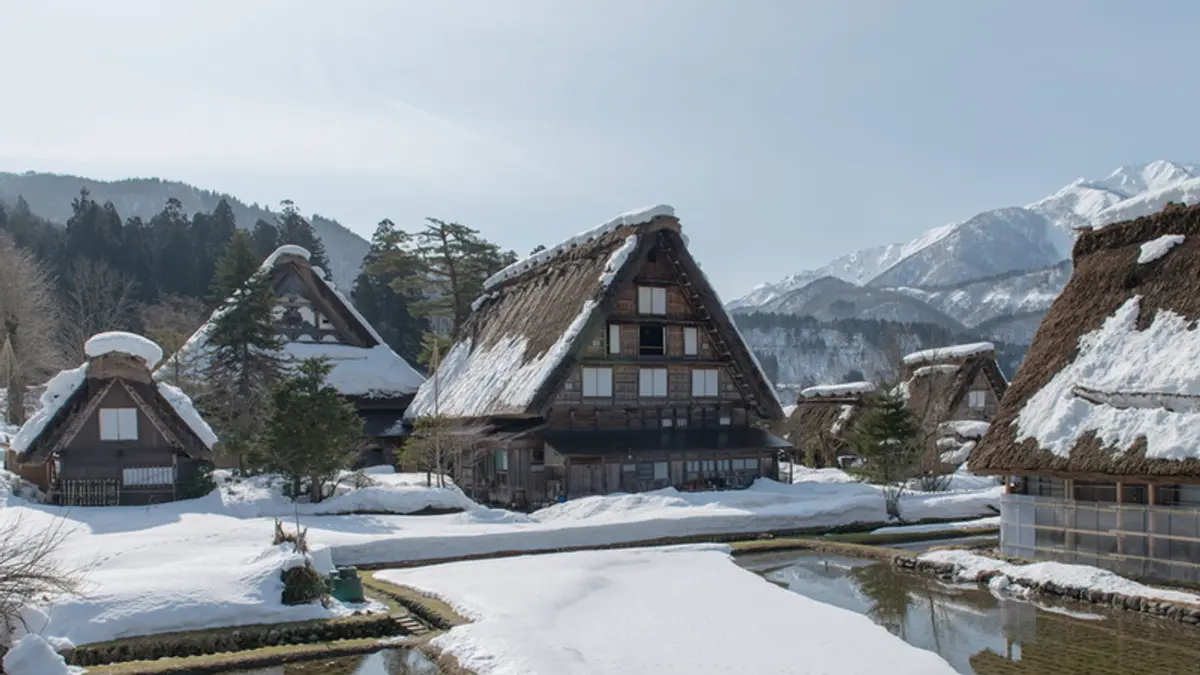
The Ogimachi settlement is part of the UNESCO World Heritage Site "Historic Villages of Shirakawa-go and Gokayama" and is known for its large gassho-zukuri farmhouses with steep thatched roofs. Many of the houses remain part of a living community, while some are open to visitors or offer accommodation. The Shiroyama Viewpoint provides a broad view across the settlement.
Unlike Takayama or Gero, Shirakawa-go is not on the railway network. Access is primarily by bus from places including Takayama, Kanazawa, and Nagoya, so it deserves more advance planning than destinations located directly on a railway line. The bus journey from Takayama to Shirakawa-go takes about 50 minutes.
For many travelers, Takayama and Shirakawa-go make a natural pair, but they offer different experiences: Takayama is a historic regional city where visitors can stay and explore at their own pace, while Shirakawa-go is a mountain settlement where the landscape and traditional architecture are the main focus.
How to Choose Your Gifu Trip
For a short extension from Nagoya, Gifu City or Sekigahara are the simplest choices. Gifu City offers river culture and a regional-city atmosphere, while Sekigahara is much more specialized around battlefield history.
Choose Magome and Nakatsugawa for the Nakasendo and walking; Gujo Hachiman for waterways and a small castle-town atmosphere; and Gero when hot springs and an overnight ryokan stay are the priority.
Takayama is the most practical center for a longer trip into northern Gifu, while Shirakawa-go becomes especially attractive when the itinerary already reaches the Hida region.
Gifu's destinations do not need to be connected into one continuous sightseeing day. The prefecture is long from south to north, and choosing one or two areas that fit the purpose of the trip usually produces a more coherent itinerary than trying to combine all of them at once.
Where to stay
Planning to stay overnight? Find accommodation in: