Where to Go in Nara, Wakayama, and the Kii Peninsula
September 22, 2026
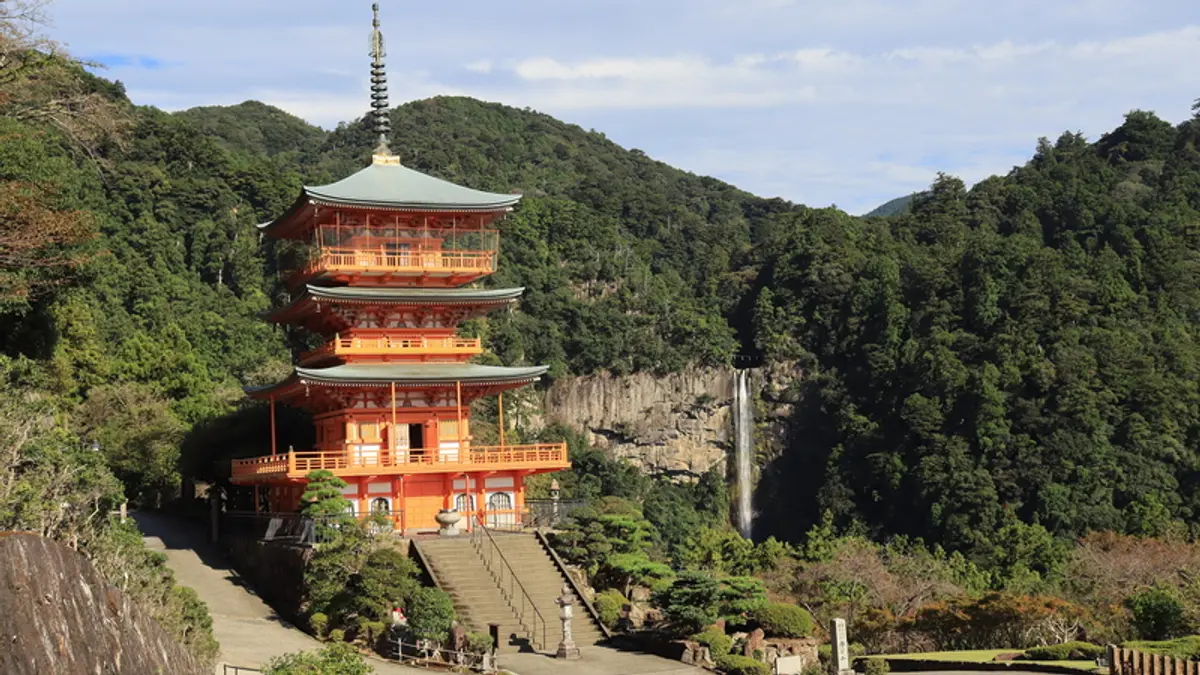
If Osaka, Kyoto, and Kobe form the urban heart of Kansai, traveling south reveals a very different side of the region. The journey begins with Nara, one of Japan's great historic cities, but beyond it the landscape becomes increasingly mountainous. Farther into the Kii Peninsula, sacred mountains, temple communities, pilgrimage routes, hot springs, and eventually the Pacific coast begin to define the journey.
Nara and Wakayama are more than two neighboring prefectures. Together, they offer a transition from the familiar cities of Kansai into the mountains and southern coast of the Kii Peninsula.
There is no need to visit the places below in this order. Mountains shape not only the landscape of the Kii Peninsula but also the way people travel through it, dividing the region into different travel corridors. Some journeys lead into the sacred interior around Yoshino and Koyasan, while others follow Wakayama's western coast toward Shirahama and Kumano.
The important question is not simply whether to visit Nara or Wakayama. It is what kind of journey you want to make.
Nara — The Easiest Introduction
For many travelers, Nara is the easiest first step beyond Osaka and Kyoto. Nara Park, Todai-ji, Kasuga Taisha, and other major sights are concentrated within a relatively manageable area, making the city well suited to a day trip. Stay overnight, and you also have time to experience the city after many day visitors have returned to Osaka or Kyoto.
Unlike a journey deep into the Kii Peninsula, Nara can fit comfortably into an itinerary centered on Osaka or Kyoto.
But Nara Prefecture does not end at Nara City. Continue south and the character of the journey begins to change.
Yoshino — Where the Mountains Begin to Take Over
Yoshino marks a transition from urban sightseeing toward the mountainous interior of the Kii Peninsula. Mt. Yoshino is especially famous for its cherry blossoms, but the area is also closely associated with Shugendo, the mountain-based ascetic tradition deeply connected with the Kii Mountains.
Yoshino and Omine, Koyasan, and the sacred sites of Kumano are all part of the UNESCO World Heritage property “Sacred Sites and Pilgrimage Routes in the Kii Mountain Range.” Seen in this wider context, Yoshino is not simply another excursion from Nara. It is one of the places where the religious landscape of the Kii Mountains begins to come into view.
Yoshino Station can be reached by train, but getting around Mt. Yoshino requires more planning than sightseeing in Nara City, especially when local transport operates less frequently or seasonally. It occupies an interesting middle ground for travelers who want mountain scenery, seasonal landscapes, and a quieter setting without yet traveling deep into the peninsula.
Koyasan — Where Staying Overnight Is Part of the Experience
Koyasan is one of the clearest reasons to travel into Wakayama's mountainous interior. Rather than a conventional sightseeing town, it is a religious community high in the mountains, with Okunoin, Kongobu-ji, and the Danjo Garan complex among its central sites.
Here, staying can be as important as sightseeing. Many temples offer shukubo accommodation, allowing visitors to spend the night within a temple community. Some offer opportunities to experience morning prayers, meditation, or other religious practices.
Koyasan suits travelers who want to slow down and spend time within the religious landscape of the Kii Mountains rather than fit as many destinations as possible into a single day.
It also represents a different way into the peninsula from the western coastal route. Koyasan and Kumano are historically connected through the mountains, making them part of the same wider sacred landscape of the Kii Peninsula.
Wakayama City — Where History Meets the Coast
Wakayama City deserves more than a role as a place to pass through on the way south.
At its center is Wakayama Castle, begun under Toyotomi Hideyoshi and later developed as an important stronghold of the Kishu Tokugawa family. But the city's character extends beyond the castle.
Around Wakanoura, the landscape opens toward the sea. Kimiidera Temple overlooks Wakanoura Bay, while shrines, gardens, and coastal scenery give this side of the city a very different atmosphere from central Wakayama. Farther west, Kada and the Tomogashima Islands add another coastal landscape.
Together, these areas give Wakayama City enough history and coastal scenery to stand as a destination in its own right. At the same time, the city provides a northern urban base for journeys down Wakayama's western coast. For travelers coming from the Kansai urban area, this is where the journey can begin to feel distinctly coastal.
Shirahama — A Seaside Break on the Journey South
Farther down Wakayama's western coast, Shirahama changes the atmosphere again. This is not a temple community or historic city but a seaside resort, known for Shirarahama Beach, coastal scenery, hot springs, and resort facilities.
After historic cities and mountain landscapes, Shirahama offers a deliberate change of pace. Temples and pilgrimage landscapes give way to the Pacific coast and onsen, making it a natural choice for travelers who want time to relax during a longer journey.
Shirahama can also form part of a journey farther south toward Kumano, linking a stay on the Pacific coast with a deeper journey into the southern Kii Peninsula.
Kumano — When the Journey Becomes Part of the Destination
By the time you reach Kumano, the trip feels very different from a conventional Kansai city itinerary.
The Kumano Kodo is not a single trail but a network of pilgrimage routes across the mountainous Kii Peninsula. For more than a thousand years, pilgrims from different levels of society traveled these routes toward the sacred sites of Kumano. Today, parts of the network form part of the UNESCO World Heritage property “Sacred Sites and Pilgrimage Routes in the Kii Mountain Range.”
Experiencing Kumano does not require walking a long pilgrimage route. Kumano Hongu Taisha, the hot-spring communities around Hongu, Nachi, Kii-Katsuura, and Shingu offer different ways to encounter the region.
On the western side of the peninsula, Kii-Tanabe is the historic and present-day gateway to Kumano. Buses from the station head inland toward the Nakahechi route and Hongu, making it an important transition point between the western coast and the sacred interior.
Time matters here. Places that appear relatively close on a map are not always connected by quick journeys because the mountains strongly shape transport routes. Kumano is better understood not as one more attraction to add to a Kansai itinerary, but as a region where travel between dispersed destinations becomes part of the experience.
Choosing Where to Go
- Nara — An easy historic excursion from Osaka or Kyoto
- Yoshino — Mountain scenery and an introduction to the sacred landscape of the Kii Mountains
- Koyasan — Temple lodging and time within a mountain religious community
- Wakayama City — Castle-town history, coastal scenery, and a starting point for the western coast
- Shirahama — The Pacific coast, hot springs, and a slower pace
- Kumano — Pilgrimage landscapes and a deeper journey through the Kii Peninsula
For a short Kansai trip, Nara alone may be enough. With more time, Yoshino or Koyasan can take you into the mountains. Wakayama City and Shirahama offer a different route along the western coast, while Kumano rewards travelers who can give the southern peninsula several days rather than treating it as a quick excursion.
The farther you travel into the Kii Peninsula, the less it feels like adding one more attraction to an Osaka or Kyoto itinerary. The time spent getting there gradually becomes part of the destination.
Where to stay
Planning to stay overnight? Find accommodation in: