Where to Go in Shiga and Northern Kyoto: Lake Biwa, Mount Hiei, and Kyoto by the Sea
September 22, 2026
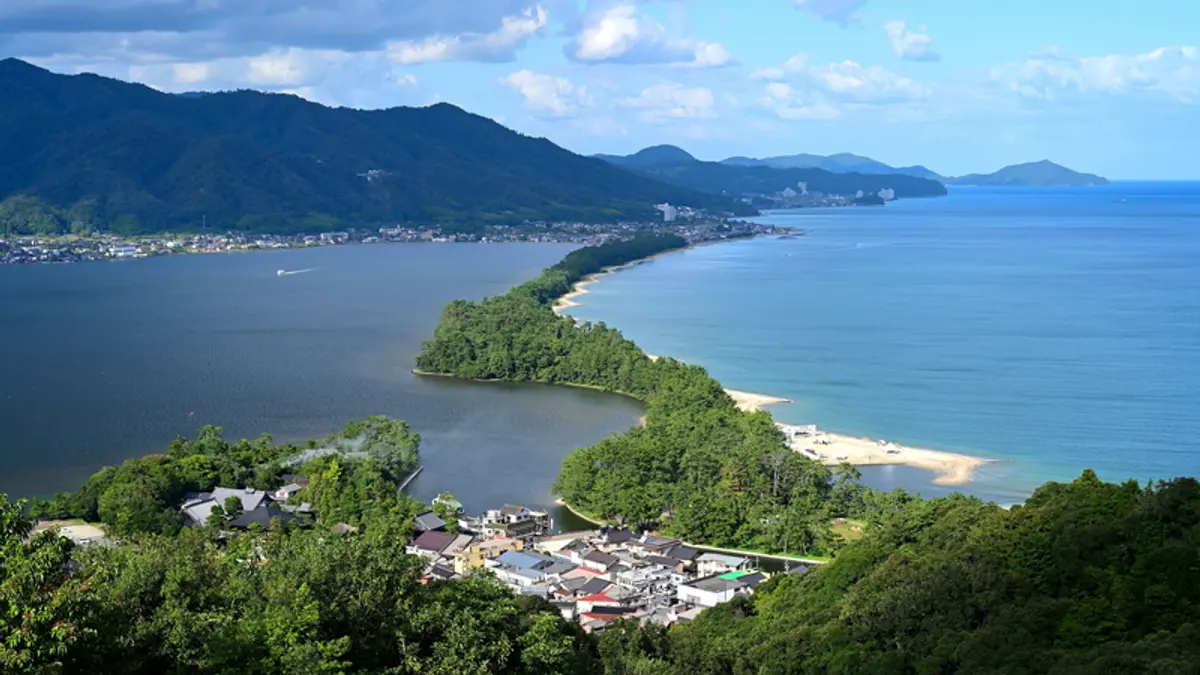
Just east and north of Kyoto, Kansai begins to feel very different. Shiga is shaped by Lake Biwa, Japan’s largest freshwater lake, while northern Kyoto opens into mountain villages, coastal towns, fishing ports, and the Sea of Japan.
This area works well when you want to add a different landscape to a Kyoto- or Osaka-based trip without moving far from Kansai’s main cities. Otsu and Mount Hiei are easy first steps beyond Kyoto. Hikone, Omihachiman, Nagahama, and Takashima show different sides of Lake Biwa. Farther north, Amanohashidate, Ine, Maizuru, and Miyama reveal Kyoto’s coastal and mountain regions.
The best way to use this guide is not to rush through every place. Choose the part of the region that matches the kind of trip you want: a quick lake escape, a mountain temple, a castle town, a quiet lakeshore, a seaside view, a fishing village, a port town, or a thatched mountain settlement.
Otsu and southern Lake Biwa: the easiest lake gateway from Kyoto
Otsu is the simplest way to add Lake Biwa to a Kyoto-based trip. It sits just east of Kyoto and gives travelers a quick change of scenery: lakefront views, temple and shrine visits, and a slower atmosphere than central Kyoto.
This area is useful when you want a light day trip rather than a complete change of base. You can use Otsu as a soft introduction to Shiga before continuing deeper along the lake toward Hikone, Omihachiman, Nagahama, or Takashima.
Choose Otsu if you want Lake Biwa scenery without moving far from Kyoto.
Mount Hiei: where Kyoto and Shiga meet
Mount Hiei sits between Kyoto and Shiga, making it one of the best places to understand how closely the old capital and Lake Biwa are connected. Enryakuji, the temple complex on the mountain, is historically associated with Kyoto, but many visitors also approach it from the Shiga side through Sakamoto and the Sakamoto Cable Railway. From the Kyoto side, the mountain can be reached through the Yase area, cable car, ropeway, and mountain transport.
This makes Mount Hiei different from a normal city temple visit. It feels more like a mountain journey between Kyoto and Lake Biwa: part pilgrimage site, part scenic viewpoint, and part regional connector. For travelers staying in Kyoto, it is a meaningful step beyond the city. For travelers exploring Shiga, it adds a historical and spiritual layer to the Lake Biwa side of the trip.
Choose Mount Hiei if you want a mountain temple experience that links Kyoto, Otsu, Sakamoto, and Lake Biwa.
Hikone, Omihachiman, and Nagahama: castle towns and merchant history by the lake
The eastern and northern sides of Lake Biwa feel more like a separate historical region. Hikone is known for its castle town atmosphere and lake views. Omihachiman is a preserved merchant-town area connected with canals and old townscapes. Nagahama adds a northern lakeside town atmosphere and works well when traveling toward Maibara or the Hokuriku side.
This part of Shiga is a good fit for travelers who like compact historical towns rather than large city sightseeing. It is also useful for building a route that connects Kyoto, Lake Biwa, Maibara, and onward travel toward Hokuriku.
Choose Hikone or Omihachiman if you want history, town walking, and Lake Biwa in the same trip. Add Nagahama if you want to continue farther north or make the lake journey feel more complete.
Western and northern Lake Biwa: a slower lake landscape
The western and northern sides of Lake Biwa are less about famous urban sights and more about scenery. Takashima and the northwestern shore are better for travelers who want a quieter landscape, seasonal views, cycling, lakeside stays, or a slower route around the lake.
This area may not be the first choice for a short first trip to Kansai, but it is useful for repeat travelers or anyone who wants to see a wider, more open side of the region. It also helps explain why Lake Biwa should not be treated as only a quick stop from Kyoto.
Choose western or northern Lake Biwa if you want scenery and space more than a checklist of famous sights.
Amanohashidate and Miyazu: Kyoto’s coast on the Sea of Japan
Amanohashidate is the symbolic gateway to Kyoto’s northern coast. The pine-covered sandbar across Miyazu Bay is one of Japan’s best-known scenic views, and it gives travelers a very different image of Kyoto. Instead of city buses, temple streets, and urban crowds, the journey brings you to bays, small stations, boats, and seaside viewpoints.
Amanohashidate can be visited as a long day trip from Kyoto, but it works better when treated as the anchor of a northern Kyoto route. It pairs naturally with Miyazu, Ine, or Maizuru, and it becomes much easier to enjoy if you avoid trying to force too much into a single day.
Choose Amanohashidate if you want to see Kyoto’s seaside rather than another temple district.
Ine: the fishing village side of northern Kyoto
Ine is often paired with Amanohashidate, but it should not be treated as the same kind of destination. Amanohashidate is a scenic landmark with a major station nearby. Ine is a working coastal village known for its funaya boathouses around Ine Bay. Access usually involves continuing from the Amanohashidate or Miyazu area by bus or local transport, so it needs more planning than a simple city day trip.
Ine is best for travelers who want a quieter coastal experience and are comfortable with a slower schedule. It is also one of the places where northern Kyoto feels least like the Kyoto most visitors imagine.
Choose Ine if you want a small fishing-village landscape and are willing to plan around local transport.
Maizuru: a port-town stop in northern Kyoto
Maizuru gives northern Kyoto a different tone from Amanohashidate and Ine. It is a port city rather than a scenic village or sandbar destination, and it works as a useful stop for travelers interested in the Sea of Japan side of Kyoto, railway movement across the region, or a route that continues beyond a single sightseeing point.
Maizuru does not need to be the main destination for every traveler, but it helps make this area feel like a wider northern Kyoto route rather than only an Amanohashidate-and-Ine trip.
Choose Maizuru if you want a port-town angle or a broader route through northern Kyoto.
Miyama: Kyoto’s mountain village side
Miyama is not on the coast, but it belongs in this area because it shows another northern Kyoto landscape: mountain villages, thatched houses, and rural scenery. Kayabuki no Sato, the best-known village area, is usually reached by combining train and bus from Kyoto via Hiyoshi Station.
Miyama is a good contrast to Amanohashidate and Ine. The coast shows Kyoto facing the Sea of Japan; Miyama shows Kyoto’s inland mountain settlements. Because access is less direct than major rail destinations, it should be treated as a planned side trip rather than an easy add-on.
Choose Miyama if you want rural Kyoto and do not mind a slower train-and-bus journey.
Which area should you choose?
Choose Otsu or southern Lake Biwa if you are staying in Kyoto and want the easiest lake trip.
Choose Mount Hiei if you want a mountain temple experience that connects Kyoto and Shiga.
Choose Hikone, Omihachiman, or Nagahama if you want castle towns, merchant history, and a more complete Shiga route.
Choose western or northern Lake Biwa if you want scenery, open space, and a slower lake-focused journey.
Choose Amanohashidate and Miyazu if you want Kyoto’s Sea of Japan coast and one of the region’s most famous scenic views.
Choose Ine if you want a quiet fishing-village landscape and are comfortable with bus connections.
Choose Maizuru if you want a port-town stop or a broader northern Kyoto route.
Choose Miyama if you want mountain villages and thatched houses rather than coastal scenery.
Suggested bases and travel rhythm
For Shiga, Kyoto is usually the simplest base. Otsu is very close and also works as a local base for southern Lake Biwa, Sakamoto, and Mount Hiei. For the eastern and northern sides of the lake, however, travelers usually continue directly by rail toward Omihachiman, Hikone, Nagahama, Maibara, or Takashima rather than treating Otsu as the only hub.
For northern Kyoto, Kyoto Station is still the main starting point, but the rhythm changes. Amanohashidate, Ine, Maizuru, and Miyama are not just quick extensions of central Kyoto sightseeing. They need more time, and in some cases, bus connections or limited train services shape the day.
For a first Kansai trip, use this region selectively. Add Otsu, Mount Hiei, Hikone, Omihachiman, or Amanohashidate as a focused side trip. For a repeat trip, consider spending one or two nights around Lake Biwa or Kyoto’s northern coast.
Conclusion
For most travelers, Shiga and northern Kyoto are best used selectively. Add Otsu or Mount Hiei if you want an easy extension from Kyoto. Choose Hikone, Omihachiman, Nagahama, or Takashima if Lake Biwa is the focus. Head toward Amanohashidate, Ine, Maizuru, or Miyama if you want Kyoto’s northern coast or mountain villages.
The reward is a Kansai trip with more variety. Instead of only moving between major cities, you can add water, mountains, old towns, ports, and rural landscapes while still staying within reach of Kyoto and Osaka.
Where to stay
Planning to stay overnight? Find accommodation in: