Which Amami Island Should You Visit? Amami Oshima, Kikai, Tokunoshima, Okinoerabu and Yoron
September 17, 2026
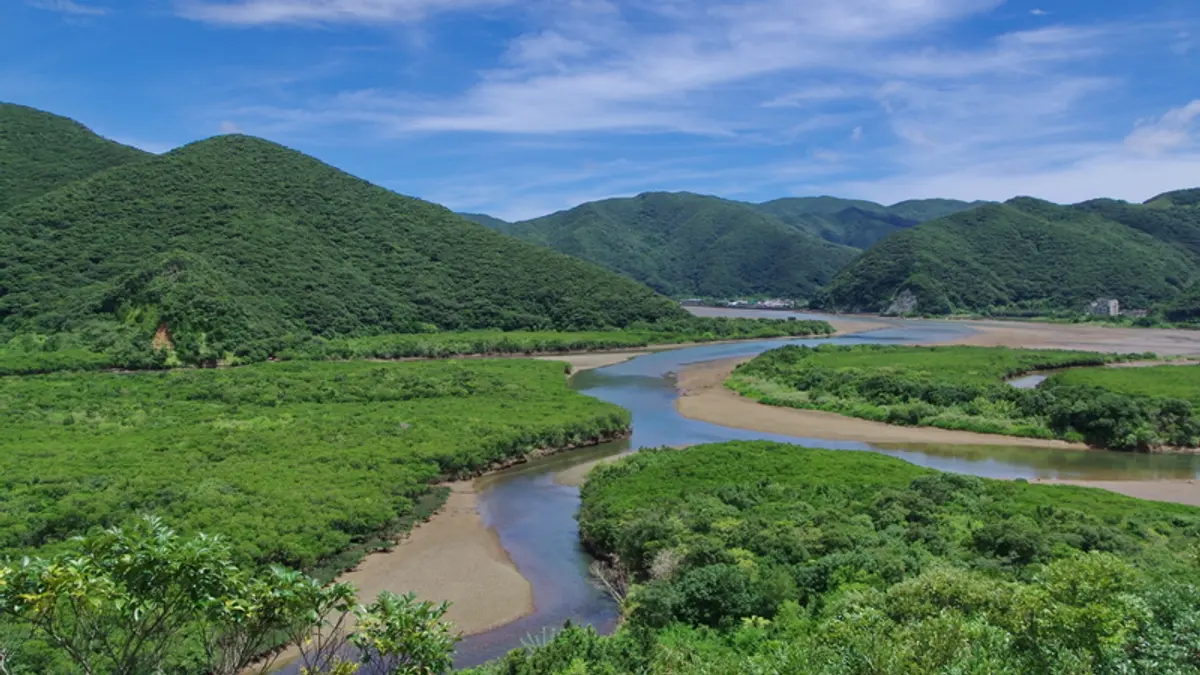
The Amami Islands stretch between Kagoshima and Okinawa, but they are not one destination that needs to be covered from end to end. The islands are different enough that the easiest way to plan a trip is to decide what you most want to do, then choose the island that fits that purpose. (kagoshima-kankou.com)
For a first visit, Amami Oshima offers the widest range of things to do. Kikai is smaller and quieter, Tokunoshima is known for dramatic coastlines and rich natural scenery, Okinoerabu is a strong choice for caves and underground exploration, and Yoron is the clearest choice if white sand and the sea are the main reasons for the trip.
Flights and ferries link the islands with Kagoshima and Okinawa, while some islands are also connected directly with each other. It is usually better to choose one or two islands and spend enough time on them rather than trying to move through the entire chain.
Start with Amami Oshima if you want the widest choice
Amami Oshima is the largest island in the Amami archipelago and the easiest place to begin if you are not yet sure what kind of island trip you want. It combines beaches, forest, mangroves, towns, food, and outdoor activities in one island. It is also part of the UNESCO World Natural Heritage area registered in 2021. (kagoshima-kankou.com)
Amami Airport has air connections with Tokyo, Osaka, Fukuoka, Kagoshima, and Naha, among other places. Some island routes are not nonstop in both directions, so check the current timetable when planning your trip. Airport buses connect the airport with Naze, the main urban area on the island. Ferries from Kagoshima and Okinawa also call at Naze Port. (amami-tourism.org)
If the sea is your priority, the northern part of the island has beaches and clear water. If you want forests and outdoor activities, the central and southern parts offer mangroves, forest walks, kayaking, and wildlife experiences.
The mangrove forest in Sumiyo is one of the easiest natural experiences to understand before you arrive: canoe tours take visitors into the mangrove area, with guided sessions offered during the day. (kagoshima-kankou.com)
Kinsakubaru is another well-known forest destination, but access is managed to protect the area. Visitors are asked to enter with an Amami Islands certified eco-tour guide, so this is something to arrange rather than treat as an unplanned stop. (amami-tourism.org)
Amami Oshima is large enough that you should not treat it like a compact resort island. Choose a part of the island and a main activity for each day rather than trying to cross the island repeatedly.
Choose Kikai for a smaller and quieter island
Kikai lies east of Amami Oshima and has a very different scale.
It is an uplifted coral island with a coastline of about 50 kilometers. The island is still rising by around two millimeters per year, and coral stone walls, sugarcane fields, beaches, and broad views from the higher central area are some of its characteristic landscapes. (kagoshima-kankou.com)
Kikai works well if the purpose of the trip is not to collect major attractions but to spend time in a smaller island environment.
Sugira Beach is close to the airport and is one of the best-known beaches on the island. Hyakunodai provides wide views across the island and sea, while Sugar Cane Road gives a simple sense of the island's agricultural landscape. (kagoshima-kankou.com)
Local buses operate on Kikai, so it is worth checking the current route and timetable before deciding where to stay and which parts of the island to visit. (kagoshima-kankou.com)
Kikai is a good choice when you want a slower trip with fewer destinations rather than a long sightseeing list.
Go to Tokunoshima for coastline and large-scale island scenery
Tokunoshima is the second-largest island in the Amami group. Its appeal is spread around the island rather than concentrated in one town or one attraction. (kagoshima-kankou.com)
The coast is one of the clearest reasons to visit. Mushiroze on the northwestern side has large granite rock formations that are unusual in southern Japan, while In-no-jofuta shows how the sea has carved openings and cliffs into the coral coastline. (kagoshima-kankou.com)
There are also beaches and marine activities around the island. Aze Prince Beach has a long white-sand shoreline surrounded by coral reef, while other coastal areas are used for snorkeling and diving. (kagoshima-kankou.com)
Tokunoshima has its own airport, and it is also a stop on the main ferry route linking Kagoshima, the Amami Islands, and Okinawa. (amami-tourism.org)
This is an island where it makes more sense to select a few coastal areas and spend time there than to try to turn the entire island into a checklist.
Choose Okinoerabu if caves are the main reason for the trip
Okinoerabu offers one of the clearest reasons to choose a specific island in the Amami chain: caves.
The island was formed from uplifted coral reef and has around 300 caves of different sizes. Shoryudo can be visited more easily, while organized caving tours take visitors deeper into natural cave systems. (kagoshima-kankou.com)
This makes Okinoerabu different from a trip built mainly around beaches. You can still enjoy the coast and sea, but the caves give the island a purpose that is easy to understand before booking the trip.
Okinoerabu has an airport and is also served by the main Kagoshima-Okinawa ferry route. Official tourism information lists air connections toward Kagoshima and Naha, while ferries connect the island with Amami Oshima and the other main islands on the route. (kagoshima-kankou.com)
If caving is high on your list, arrange the activity first and build the rest of the island stay around it.
Choose Yoron when the sea and white sand are the priority
Yoron is the southernmost of the main Amami Islands and sits close to Okinawa.
This is the island to consider when beaches, clear water, and spending time by the sea are the main purpose of the trip. Yoron is surrounded by coral reef and white-sand beaches, and the island's coastline is around 24 kilometers long. (kagoshima-kankou.com)
The best-known destination is Yurigahama, a sandbar that appears offshore from Oganeku Beach at low tide during certain periods. Its appearance depends on the tide and conditions, so it should not be treated as something guaranteed to be visible at any time. (kagoshima-kankou.com)
Yoron Airport has air links including a route from Naha, with the flight taking about 40 minutes according to Kagoshima Prefecture's official travel information. Ferries on the Kagoshima-Okinawa route also call at Yoron. (kagoshima-kankou.com)
Local buses operate on the island, and official visitor information provides route and timetable details. (kagoshima-kankou.com)
Yoron works particularly well when you want to stay in one small island environment and let the sea set the pace of the trip.
Think carefully before combining several islands
The Amami Islands can be linked into one journey, but that does not mean every trip should become an island-hopping itinerary.
The main ferry route between Kagoshima and Okinawa calls at Amami Oshima, Tokunoshima, Okinoerabu, and Yoron. Kikai is served by a separate route that also connects with Amami Oshima and other islands. (amami-tourism.org)
Flights can also connect some of the islands more quickly. Amami Airport, for example, has short flights to Kikai and Tokunoshima, while other air links continue farther south. (amami-tourism.org)
When using ferries, check not only the departure time but also the port. Weather and sea conditions can affect ferry operations, and visitor information for islands such as Kikai and Yoron specifically advises travelers to confirm the departure port and timetable in advance. (kagoshima-kankou.com)
For a first trip, Amami Oshima alone can easily provide several days of travel.
If you want to add one more island, choose it for a clear reason:
A smaller and quieter island: Kikai
Coastal scenery and a larger island to explore: Tokunoshima
Caves and underground adventure: Okinoerabu
White sand and a beach-focused stay: Yoron
That approach usually makes more sense than choosing islands simply because they are next to each other.
Add Kakeroma if you want a smaller trip from Amami Oshima
You do not necessarily need to move to another major island to add a second island experience.
From Koniya Port in southern Amami Oshima, ferries cross to Kakeroma Island, with services to both Seso and Ikuma ports. (amami-tourism.org)
This makes Kakeroma a natural extension of a stay on Amami Oshima, especially if you are already spending time in the southern part of the main island.
Kakeroma is larger than it may first appear and local bus services are designed primarily for residents, so the island should be planned as a destination rather than treated as a quick walk around after getting off the ferry. (amami-tourism.org)
For a first Amami trip, this can be a simpler way to experience two islands without trying to connect several airports and long-distance ferry routes.
Choose the island first, then build the transport plan
The easiest way to plan the Amami Islands is not to begin with a ferry map.
Begin with the trip you want.
If you want the broadest mix of forest, sea, food, and outdoor activities, start with Amami Oshima.
If you want a smaller and quieter island, consider Kikai.
If dramatic coastlines and a larger island landscape appeal to you, choose Tokunoshima.
If caves are the reason for the journey, choose Okinoerabu.
If beaches and clear water come first, choose Yoron.
Then check which flight or ferry works best for that island, how you will move around after arrival, and whether adding another island will improve the trip or simply add another travel day.
The Amami Islands are easier to enjoy when each island has a reason to be in the itinerary.
Where to stay
Planning to stay overnight? Find accommodation in: