Chiran — Samurai Gardens and Tea Country in Satsuma
October 18, 2026
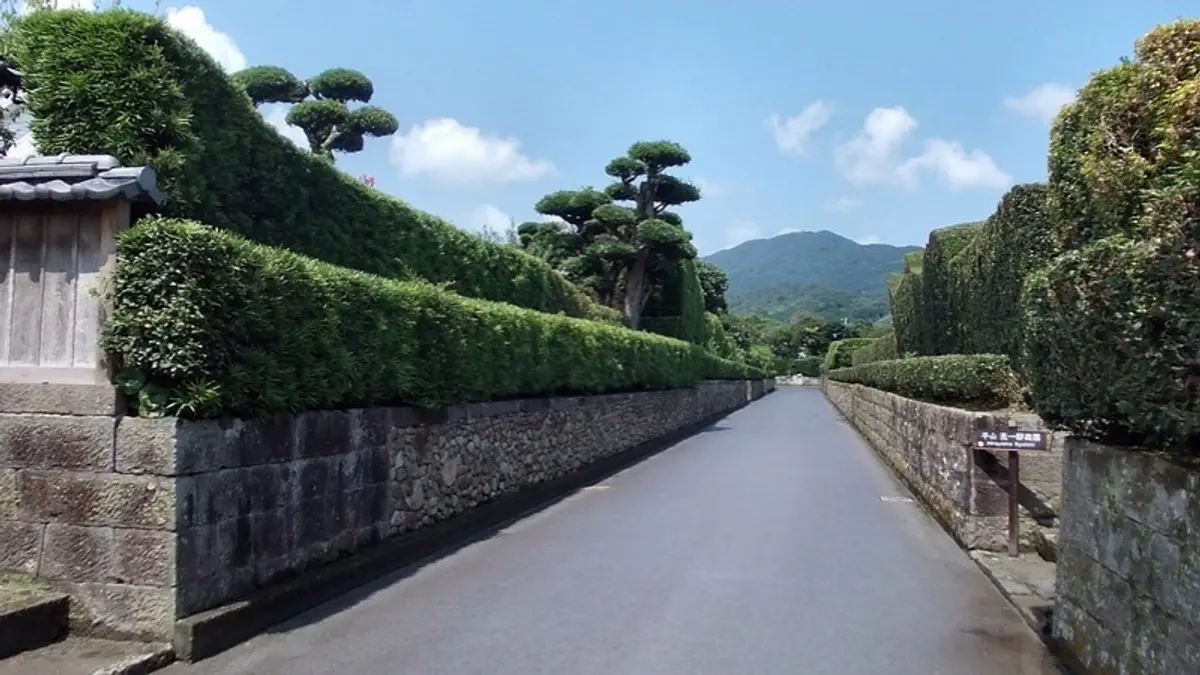
Explore a town in southern Kagoshima where stone walls, carefully shaped gardens and a thriving tea-growing tradition reveal the distinctive heritage of Satsuma.
A Little Kyoto on the Satsuma Peninsula
Chiran, now part of Minamikyushu City in Kagoshima Prefecture, rewards travelers who want to understand a place through more than its best-known attraction.
In the old samurai district, stone walls support dense hedges, and gates open onto gardens arranged around rocks, clipped greenery and distant hills. Beyond this neighborhood lies a working agricultural landscape associated with Chiran tea.
Together, the historic streets, gardens and tea culture offer a glimpse of the region's past and present.
Chiran can be visited from Kagoshima or Ibusuki. Allow enough time to enjoy the gardens, stroll through the neighborhood and sample local tea without rushing.
Why Is Chiran Called a Little Kyoto?
Chiran is often introduced as the Little Kyoto of Satsuma. The name draws attention to its historic streets and cultivated landscape, but the town's character is rooted in southern Kyushu.
The old district formed part of the Satsuma domain's network of fumoto, settlements where samurai lived around local administrative centers. These communities helped the domain govern its territory through a dispersed warrior population.
This history explains the relationship between Chiran's streets, residential plots and gardens. The neighborhood was a place of administration and everyday life as well as a setting for garden design.
The nickname itself also belongs to the history of tourism. A preservation account prepared by Minamikyushu City records that Chiran used “Little Kyoto of Satsuma” in a tourism brochure in 1970. It should not be treated as evidence that the settlement was laid out as a replica of Kyoto.
The Samurai District — Streets Shaped by Satsuma
The district is best explored slowly, beginning with the walls, hedges and gates along its main street.
Its origins are generally associated with the middle of the Edo period. The city's cultural-property account presents more than one explanation of when the settlement took shape, so assigning the entire neighborhood to a single founder or year would give a misleading impression of certainty.
The bends in the streets interrupt long views, while the enclosing walls make each residence feel like a separate space. These are useful details to notice before entering the gardens: they help explain how the neighborhood was organized.
In 1981, two distinct forms of national recognition were granted. Seven gardens were designated a Place of Scenic Beauty on February 23; the surrounding historic district was selected as an Important Preservation District for Groups of Traditional Buildings on November 30.
The designations protect different aspects of the place: the gardens themselves and the wider townscape. Its appearance today also reflects continuing care and conservation by later generations.
Seven Gardens Behind the Walls
The Chiran Samurai Residence Gardens are the main reason to spend time in the old district.
Six of the seven designated gardens use dry-landscape compositions; the Mori Shigekata garden includes a pond. Rocks and planted forms suggest a larger landscape within a confined residential space. Looking carefully at the relationship between a stone, a slope and a clipped shrub can be more rewarding than trying to see every garden quickly.
Chiran's garden heritage also looks beyond Kyoto. Cultural-property descriptions identify similarities with Ryukyuan garden techniques. This is a useful reminder that the history of Japanese gardens includes regional connections and exchanges, rather than a single style radiating unchanged from the former capital.
Treat this as a garden visit within a residential neighborhood. Use designated entrances and viewing areas, and avoid assuming that a garden ticket opens every house or private space.
Allow roughly 1½–2 hours for an unhurried walk through the street and gardens. This is a planning allowance, rather than an official minimum visiting time.
Chiran Tea — A Landscape That Is Still Working
Tea connects Chiran with the present as much as with the past.
The name Chiran tea now covers production across Minamikyushu City, including the former towns of Chiran, Ei and Kawanabe. Their tea brands were unified under the Chiran name in April 2017, following the municipal merger in 2007.
The city's history associates the development of substantial cultivation in the Chiran area with land clearance in 1872. An earlier story about Heike refugees growing tea at Temino is presented as a local tradition, rather than an established starting date.
The industry changed considerably after the war, including a period of black-tea production before a shift toward green tea. Today's tea country therefore reflects adaptation and modern agricultural work as well as inherited knowledge.
Chiran is particularly associated with deep-steamed green tea. Longer steaming produces finer leaf particles and a richly green infusion, while cultivars and blending give different teas distinct flavors. When buying tea, ask about the leaf variety and follow the producer's brewing instructions.
A tea stop makes a natural part of the day. Field visits and tea-picking experiences, however, require a separately confirmed arrangement. Treat tea fields as working farms and view them from permitted public places unless invited inside.
Planning a Day in Chiran
Begin with a leisurely walk through the samurai district and its gardens. Leave time for lunch and a cup of locally grown tea, and enjoy the streets at a comfortable pace.
If you have only half a day, focus on the historic neighborhood and gardens rather than trying to cover too much. With more time, explore the surrounding tea-growing landscape from public roads and permitted viewpoints; tea fields are working farms, not open-access attractions.
Chiran is a practical day trip from Kagoshima, while a stay in Ibusuki makes it easy to include the town in a wider journey around the southern Satsuma Peninsula. Plan around the actual bus timetable rather than assuming frequent connections.
Visitors interested in a different chapter of local history may also wish to know about the Chiran Peace Museum, which preserves materials relating to Japan's special-attack operations during the final months of the Second World War. For details, see the museum's official website.
On hot days, allow time for breaks and carry drinking water. In heavy rain or when a typhoon is approaching, check transport and visitor information before setting out.
Visitor Information
For current opening hours, closures and admission charges for the gardens, please consult the official Chiran Samurai Residence Gardens visitor information.
Getting to Chiran — Transport Information
There is no passenger rail service directly to Chiran's main visitor areas. Local buses run from Kagoshima-Chuo Station and from the Ibusuki area. Services and operating days vary, so check the latest timetables before traveling.
| From | Method | Transfers | Notes |
|---|---|---|---|
| Kagoshima-Chuo Station | Kagoshima Kotsu local bus | 0 | Direct service toward Chiran. |
| Kagoshima-Chuo Station | JR Ibusuki Makurazaki Line + local bus | 1, at Hirakawa | Check rail-to-bus connections. |
| Ibusuki Station | Kagoshima Kotsu local bus | 0 | Check operating days and return services. |
| Kagoshima Airport | Airport bus + local bus via Kagoshima-Chuo | 1 | Allow sufficient transfer time. |
Official Transport Information
- Minamikyushu City: access and public transport timetables
- Kagoshima Kotsu: route timetables and fares
The Character of Chiran
Chiran's samurai district reveals the organization and aesthetics of a regional community, while its gardens show how carefully designed landscapes became part of everyday surroundings. Tea growing connects the scenery beyond the old streets with the work of people living here today.
Its place among Japan's Little Kyoto towns offers an introduction; the distinctive heritage of Satsuma gives a visit to Chiran its depth.
For the wider background to the series, see Longing for Kyoto — Japan's “Little Kyoto” Towns and the Pull of the Old Capital.