Longing for Kyoto
October 14, 2026
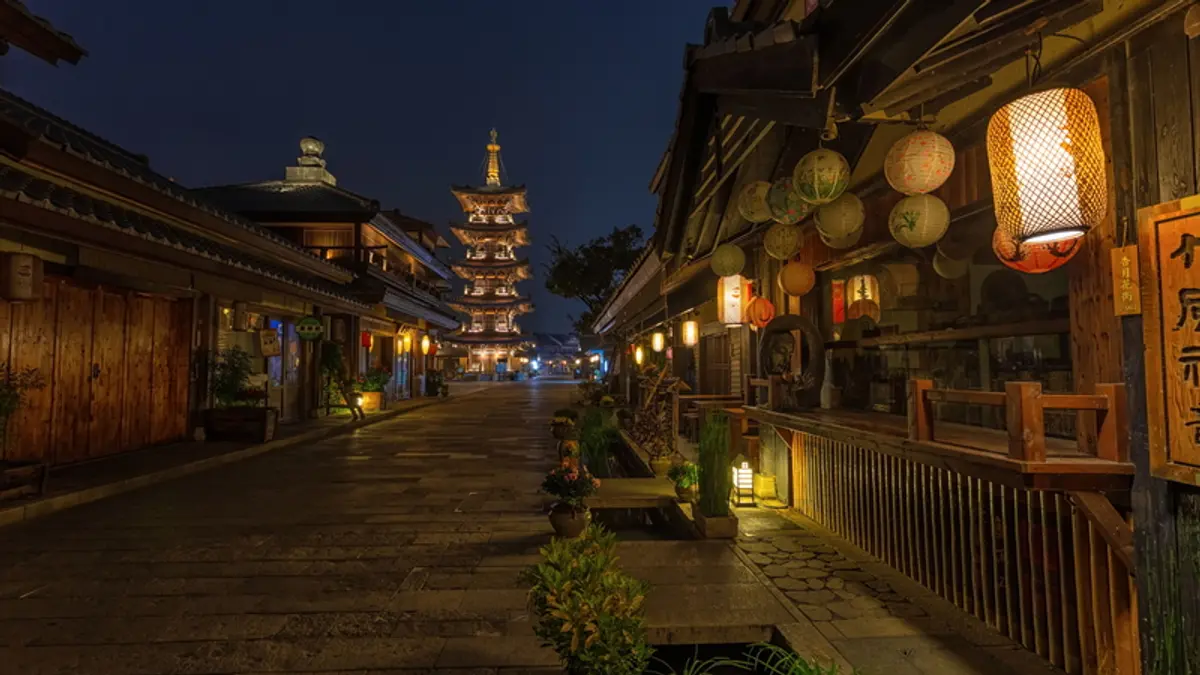
The History and Culture of Japan’s Little Kyotos
Far from Kyoto, travelers exploring Japan sometimes encounter an unexpected name: Little Kyoto.
Kakunodate in northern Japan, Tsuwano in the western mountains, Nakamura in Shikoku, and Chiran in southern Kyushu are among the places associated with this name.
Their landscapes and histories vary considerably. Some preserve elegant samurai residences, while others are known for peaceful waterways, historic temples, or carefully maintained gardens.
Why are such different towns compared with Kyoto?
Part of the answer lies in the lasting cultural prestige of Japan's ancient capital.
For centuries, Kyoto represented imperial authority, refined learning, artistic achievement, and sophisticated traditions. Regional rulers, scholars, and artists sought connections with its court, religious institutions, and cultural communities.
Yet Japan's Little Kyotos did not all emerge from deliberate attempts to recreate the capital.
Some developed through direct historical relationships with Kyoto. Others acquired the name because their traditional streetscapes or cultural atmosphere reminded later generations of the ancient city.
Together, their stories reveal Kyoto's lasting appeal and the rich variety of cultures that developed across Japan.
Kyoto: A Capital That Inspired Generations
In 794, Emperor Kanmu moved the imperial capital to Heian-kyo, the city that would become Kyoto.
For more than a thousand years, Kyoto remained the seat of the emperor and the imperial court.
Even when political power rested with military governments, including those based in Kamakura and Edo, Kyoto retained an exceptional position in Japan's political and cultural life.
The city was also an important center of literature, religion, scholarship, and the arts.
During the Heian period, court society cultivated poetry, calligraphy, elaborate ceremonies, and refined etiquette. Works such as The Tale of Genji, written by Murasaki Shikibu, became enduring achievements of Japanese literature.
For regional elites, familiarity with these traditions could demonstrate education, prestige, and connections with the imperial court.
Kyoto's attraction extended beyond artistic appreciation. Its cultural traditions were closely associated with authority, social standing, and the ideals of the age.
A City of Authority Through Changing Times
Kyoto remained important even during periods of political upheaval.
During the Sengoku period, when rival warlords competed for power, establishing a political presence in Kyoto carried considerable significance.
The emperor, imperial court, and established institutions of government gave the city a special place in the political landscape.
In 1568, Oda Nobunaga entered Kyoto in support of Ashikaga Yoshiaki, who subsequently became shogun. The episode illustrates how military strength and established political authority could reinforce one another.
When the Tokugawa shogunate was established in 1603, the principal center of government shifted to Edo, present-day Tokyo.
Kyoto, however, remained the seat of the emperor and the imperial court. Its traditional authority and cultural standing continued even as the shogunate governed from Edo.
Across Japan, Kyoto remained a city of exceptional historical and cultural significance.
A Meeting Place for People and Traditions
Kyoto attracted courtiers, monks, scholars, artists, craftspeople, and merchants.
Temples and shrines supported religious and artistic activities, while workshops and commercial communities sustained traditions in textiles, ceramics, architecture, and other crafts.
Cultural exchange also flowed toward Kyoto.
Ideas, techniques, and artistic traditions arrived from other regions, were adapted and refined, and sometimes traveled outward again.
Kyoto's influence grew because it was both a guardian of tradition and a place where people and ideas met.
How Kyoto's Culture Reached Other Regions
Kyoto's cultural traditions spread through many different networks.
Aristocrats traveled to provincial estates. Warriors developed relationships with the imperial court. Monks moved between temples, while merchants and artisans carried skills and customs across the country.
For some regional rulers, adopting Kyoto's traditions expressed prestige and sophistication. For others, connections with the capital offered access to knowledge, religious networks, or skilled craftspeople.
Kyoto's traditions were adapted to regional geography, political circumstances, and everyday life. Over time, towns developed their own cultural identities.
This helps explain why the places known today as Little Kyotos can differ so greatly from one another.
Eight Little Kyotos Across Japan
The following eight towns illustrate different relationships with Kyoto.
Some preserve direct historical connections with the former capital. Others are celebrated for traditional landscapes and cultural heritage that later inspired comparisons with Kyoto.
1. Kakunodate, Akita — Samurai Streets and Weeping Cherry Trees
Kakunodate, in Akita Prefecture, is often called the Little Kyoto of Tohoku.
Its historic samurai district is known for imposing residences, dark wooden fences, and graceful weeping cherry trees.
The town also has a historical connection with Kyoto through the Kita branch of the Satake family, which governed Kakunodate.
The family had marriage ties with Kyoto's aristocratic Sanjonishi family. According to local tradition, weeping cherry trees were brought to Kakunodate through this connection.
In spring, the dark fences of the samurai district and the blossoms arching above them create one of the town's most recognizable scenes.
2. Tsuwano, Shimane — A Castle Town in the Mountains
Surrounded by wooded hills, Tsuwano is widely known as the Little Kyoto of San'in.
Its historic streets, waterways, traditional buildings, and shrines preserve the atmosphere of a former castle town.
One connection with Kyoto can be found at Taikodani Inari Shrine. The shrine was established in 1773, when the lord of Tsuwano had a deity ceremonially transferred from Kyoto's Fushimi Inari Taisha to protect the castle and its people.
Tsuwano's appeal also comes from its mountain setting and the traditions that developed within the community over generations.
3. Nakamura, Kochi — An Aristocratic Legacy from Kyoto
Nakamura, now part of Shimanto City in Kochi Prefecture, has one of the clearest historical connections with Kyoto.
In 1468, during the turmoil of the Onin War, Ichijo Norifusa, a former imperial regent, traveled from Kyoto to his family's estates in Tosa.
Norifusa established a base in Nakamura, and his son, Fusaie, played an important role in developing the town and introducing elements of Kyoto's culture.
This aristocratic heritage is central to Nakamura's identity as the Little Kyoto of Tosa.
4. Izushi, Hyogo — A Preserved Castle Town
Izushi, now part of Toyooka City in Hyogo Prefecture, is often called the Little Kyoto of Tajima.
Its compact historic center preserves the atmosphere of an Edo-period castle town, with traditional buildings, narrow streets, and landmarks associated with its former castle.
The town's Little Kyoto identity is closely associated with its well-preserved historic streetscape.
Visitors can also enjoy Izushi sara soba, the local specialty of buckwheat noodles served on small plates.
5. Gujo Hachiman, Gifu — Poetry, Waterways, and Dance
Gujo Hachiman is celebrated for its clear waterways, historic streets, and the lively Gujo Odori dance tradition.
The region also has an important connection to classical Japanese poetry.
The To family of Gujo had a notable connection to the literary traditions surrounding the Kokin Wakashu, an influential anthology of Japanese poetry.
One of its members, the poet To no Tsuneyori, transmitted teachings about the anthology's interpretation to the renga master Sogi.
This practice of passing down interpretations of classical poetry from master to disciple is known as Kokin Denju.
This literary heritage connects the region with the cultural world of Kyoto's imperial court.
Today, Gujo Hachiman combines this heritage with a local culture shaped by water, festivals, and community life.
6. Chiran, Kagoshima — The Gardens of Satsuma's Samurai
Chiran, in Minamikyushu City, is known for its beautifully preserved samurai residences and gardens.
The historic district developed as a fumoto, a samurai settlement within the Satsuma domain's tojo (outer-castle) system of local administration.
Stone walls, hedges, and carefully composed gardens create an elegant landscape.
Chiran's traditional atmosphere has invited comparisons with Kyoto, while its historical identity remains deeply rooted in the samurai culture of southern Kyushu.
7. Yamaguchi — The Kyoto of the West
Yamaguchi, in Yamaguchi Prefecture, has a particularly significant relationship with Kyoto.
During the medieval period, the powerful Ouchi family developed the city into a major political and cultural center.
The Ouchi cultivated connections with the imperial court and welcomed artistic and intellectual traditions associated with Kyoto.
At the same time, their trade and diplomatic relationships with continental East Asia helped shape a rich regional culture.
Yamaguchi became known as the Kyoto of the West, a name reflecting its cultural ambitions and historical importance.
Its heritage demonstrates how Kyoto's traditions could inspire new forms of regional culture.
8. Hida Takayama, Gifu — Kyoto's Influence in the Mountains
Hida Takayama is famous for its preserved merchant streets, traditional buildings, and mountain setting.
Its castle town was developed under the Kanamori family during the late sixteenth and early seventeenth centuries.
According to local historical accounts, the Kanamori drew inspiration from Kyoto when planning parts of the town.
A district of temples was established to the east, modeled on Kyoto's Higashiyama area.
In 1692, Takayama came under the direct control of the Tokugawa shogunate. The town continued to develop as a center of commerce, with traditions reflecting the character of the Hida region.
Its historic landscape brings together Kyoto-inspired planning and the local history of a mountain community.
How the Name “Little Kyoto” Spread
The expression Little Kyoto does not describe a single type of town or a uniform historical process.
In some places, comparisons with Kyoto developed from historical relationships. Elsewhere, the name became associated with traditional streets, temples, gardens, or picturesque surroundings.
These comparisons were reinforced by tourism as interest in historic towns and regional heritage grew in modern Japan.
In 1985, an organization known in Japanese as Zenkoku Kyoto Kaigi was established to encourage exchange among communities associated with Kyoto.
Its membership criteria include historical connections with Kyoto, similarities in scenery or townscape, and the presence of traditional industries or performing arts. A community does not need to satisfy every criterion.
Membership has changed over time, and the popular use of Little Kyoto is not limited to current members of the organization.
The name is therefore best understood as a cultural and historical association rather than a formal classification of towns built to resemble Kyoto.
Discovering the Many Faces of Japan's Little Kyotos
Kyoto's cultural traditions traveled far beyond the ancient capital.
They reached provincial estates, castle towns, religious communities, and centers of trade. Sometimes they shaped the ambitions of local rulers. In other places, they left traces in poetry, architecture, gardens, or religious practices.
Each region responded in its own way.
Kakunodate's samurai streets, Nakamura's aristocratic heritage, Yamaguchi's cultural achievements, and Chiran's gardens tell very different stories.
Their shared association with Kyoto offers a starting point for exploring those differences.
Visiting Japan's Little Kyotos offers a chance to discover how Kyoto's prestige, the movement of people, and the creativity of local communities contributed to the remarkable cultural diversity of Japan.