Tsuwano — A Little Kyoto in the Mountains of Shimane
October 16, 2026
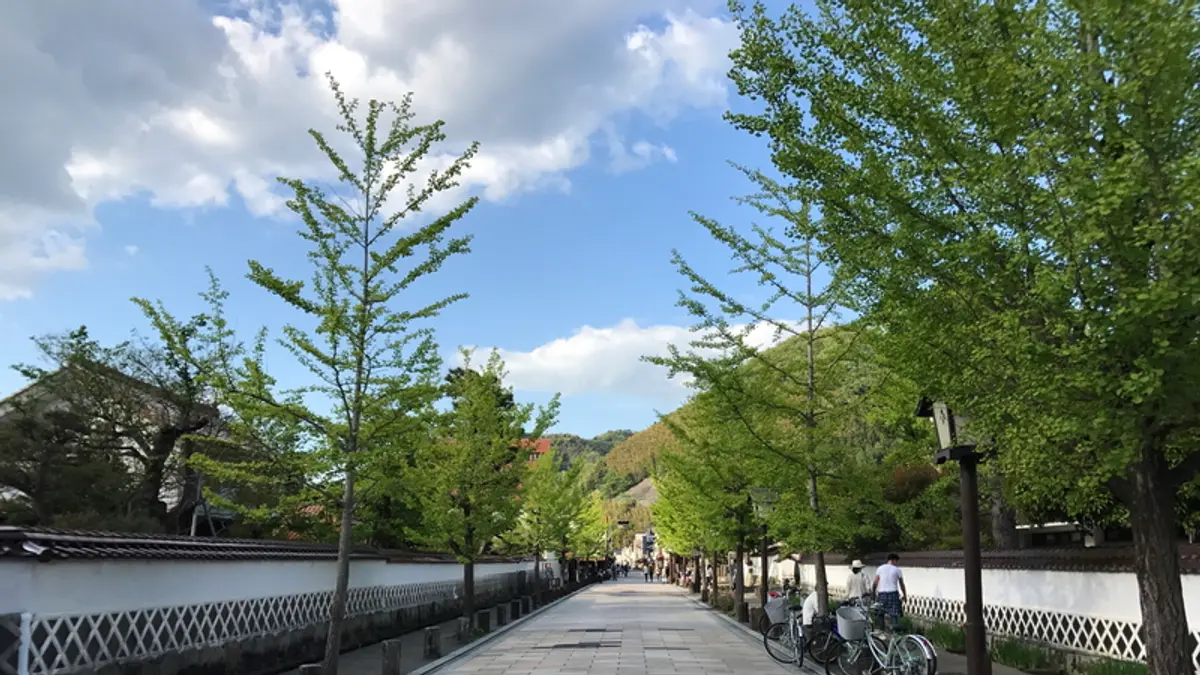
Discover a historic castle town where samurai-era streets, mountain shrines, literary heritage, and the memory of religious persecution reveal different chapters of Japan's past.
A Castle Town in a Mountain Valley
Tucked into a narrow valley in western Shimane Prefecture, Tsuwano is one of Japan's best-known towns associated with the name Little Kyoto. Its white-walled buildings, waterways, traditional streets, and surrounding green mountains create a setting that feels far removed from the country's major cities.
Yet Tsuwano is more than a picturesque reminder of an earlier Japan. It was a castle town governed by successive warrior families, a center of learning in the Edo period, and the birthplace of influential figures who helped shape modern Japanese literature and philosophy.
The town also preserves memories that are far less comfortable: the persecution of Christians during the turbulent years surrounding the Meiji Restoration.
A visit to Tsuwano is therefore not simply a journey into nostalgia. It is an opportunity to explore how several layers of Japanese history have survived within a relatively compact mountain community.
Why Is Tsuwano Called a Little Kyoto?
The expression Little Kyoto is often used for Japanese towns whose historic streets, cultural traditions, or landscapes evoke the atmosphere of the former imperial capital.
In Tsuwano, the comparison is especially easy to understand while walking through the old castle-town district. White plaster walls, traditional buildings, and narrow waterways create a distinctive streetscape. The mountains enclosing the valley add a sense of separation from the modern world.
However, the nickname should not be taken to mean that Tsuwano was simply built as a copy of Kyoto. Its appearance and culture developed through its own history as a regional castle town, shaped by local geography, successive rulers, religious institutions, and the daily lives of its residents.
Understanding this difference makes Tsuwano more interesting. The town's appeal lies not in how closely it imitates Kyoto, but in the particular history that produced its own character.
Tonomachi Street — The Heart of Old Tsuwano
Tonomachi Street is one of the best places to begin exploring the town.
This historic area retains white-walled buildings, traditional gates, and waterways associated with Tsuwano's castle-town past. Colorful carp swimming through the roadside channels have become one of the town's most recognizable sights.
The scene is attractive in photographs, but it also reflects a practical relationship between the town and water. The channels form part of the historic streetscape rather than being merely decorative features created for visitors.
Nearby stands Yōrōkan, the former domain school where young members of the warrior class studied. Its surviving buildings offer a reminder that an Edo-period castle town was not only a place of military administration. Education, scholarship, and the transmission of cultural knowledge were also important parts of domain life.
The best way to appreciate Tonomachi is to walk slowly. The details of the walls, gates, waterways, and surrounding streets are easier to notice without rushing between attractions.
Taikodani Inari Shrine — Faith Above the Town
One of Tsuwano's most striking landmarks is Taikodani Inari Shrine, situated on a hillside overlooking the town.
According to the shrine's recorded history, it was established in 1773, when Kamei Norisada, lord of the Tsuwano domain, invited the deity of Kyoto's Fushimi Inari to be worshipped here. The purpose was to pray for the protection of the domain and the well-being of its people.
This connection with Fushimi Inari is one of Tsuwano's clearest historical links to Kyoto.
Today, visitors can approach the shrine through a long sequence of vermilion torii gates. The bright red structures, forested hillside, and views across the valley make the ascent memorable.
The shrine is also known for the unusual spelling of its name. While most Inari shrines use the characters 稲荷, Taikodani Inari uses 稲成, replacing 荷 with 成, a character that conveys the idea of fulfillment. Explanations of this spelling, which center on the fulfillment of wishes, are part of the shrine's religious tradition and should be understood in that context.
Visitors should remember that Taikodani Inari is an active place of worship, not simply a scenic viewpoint. Respectful behavior is appropriate throughout the grounds.
Tsuwano Castle Ruins — The Town Seen from Above
High above the valley stand the remains of Tsuwano Castle.
The castle's history reaches back to the medieval period, when the Yoshimi family established its position in the region. Later, control passed through other ruling families before the Kamei family governed the Tsuwano domain during much of the Edo period.
The surviving stone walls are especially impressive. Although the original castle buildings no longer stand, the remains reveal the scale and strategic importance of a mountain fortress overlooking the surrounding valley.
From the castle ruins, visitors can see Tsuwano's buildings gathered along the valley floor, with mountains rising on either side. The view helps explain why the town developed in this location and why its historic center remains visually distinct.
A sightseeing chairlift provides access partway up the mountain, but reaching the main ruins still requires walking uphill. The route includes uneven ground, so suitable footwear is important.
Chairlift operating days and hours can vary, particularly during winter. Visitors should check current information before planning the ascent.
Mori Ōgai and the Intellectual World of Tsuwano
Tsuwano's cultural importance extends far beyond its streets and shrines.
The town was the birthplace of Mori Ōgai (1862–1922), one of the most influential figures in modern Japanese literature. A physician, translator, and writer, Ōgai played a significant role in introducing European intellectual and literary influences to Japan while developing his own literary voice.
His childhood home and the nearby Mori Ōgai Memorial Museum help visitors understand the environment in which he grew up.
Tsuwano was also the birthplace of Nishi Amane (1829–1897), a philosopher and intellectual associated with the introduction of Western philosophical concepts into modern Japan.
These figures reflect an important side of Tsuwano's history. The town was not isolated from the political and intellectual transformations of the nineteenth century. People born and educated here participated directly in Japan's transition toward a modern state.
For visitors interested in literature, philosophy, or the Meiji period, Tsuwano offers a valuable perspective on national history through the lives of individuals connected to a small regional town.
Otome Pass — Remembering Religious Persecution
Not all of Tsuwano's historical sites celebrate artistic achievement or architectural beauty.
Otome Pass is associated with the persecution of Christians who were sent from the Urakami district of Nagasaki during the early Meiji period.
Beginning in 1868, Christians from Urakami were brought to Tsuwano in two groups. The first group consisted of 28 people, followed by another 125 in 1870. The transfers brought a total of 153 people to the town as part of a wider campaign intended to force them to abandon their faith. Historical accounts record that 37 people died during their confinement and persecution.
The Otome Pass Maria Chapel, built in 1951, commemorates those who suffered and died.
This history belongs to the difficult period when Japan was undergoing major political change while restrictions on Christianity had not yet been fully lifted.
The site deserves a quiet and respectful visit. It is a place of remembrance rather than an attraction to be approached only for its scenery.
Nearby, Tsuwano Catholic Church is also notable for its Gothic-inspired exterior and Japanese-style tatami interior, reflecting the meeting of different religious and architectural traditions.
The Landscapes of Tsuwano in Art
Another distinctive part of Tsuwano's cultural heritage is its connection with the artist Anno Mitsumasa (1926–2020).
Born in Tsuwano, Anno became internationally known for illustrated books and works that combine careful observation, visual imagination, and an interest in mathematics and the natural world.
The Anno Art Museum introduces visitors to his work and creative outlook.
Tsuwano's broader landscape also forms part of its cultural identity. The town's historic scenery was documented in a nineteenth-century collection of illustrations commonly known as the Tsuwano Hyakkeizu, or One Hundred Views of Tsuwano.
These images are central to the Japan Heritage story Tsuwano Konjaku — Hyakkeizu o Aruku (in English, roughly "Tsuwano Then and Now: Walking Through the One Hundred Views"). They encourage visitors to compare places depicted in the past with the landscapes and traditions that remain today.
Rather than viewing the town as a frozen historical exhibit, this approach reveals how its surroundings have changed while retaining recognizable connections with earlier generations.
Getting to Tsuwano
Tsuwano Station is on the JR Yamaguchi Line, which connects the town with destinations including Yamaguchi and Shin-Yamaguchi to the south and Masuda to the north.
For travelers arriving by Shinkansen, Shin-Yamaguchi is an important interchange. From there, the journey continues on the Yamaguchi Line.
Tsuwano is also the destination of the SL Yamaguchi sightseeing train, which operates on selected dates between Shin-Yamaguchi and Tsuwano. The steam-hauled journey is an attraction in its own right, but it is not a daily service. Reservations and operating dates should be checked through JR West.
The historic town center can largely be explored on foot, although some attractions are farther from the station and others involve uphill walking.
Travelers who want to visit the castle ruins, museums, shrine, and surrounding sites in one day should allow time for the distances and elevation changes.
How Much Time Should You Spend?
A few hours are enough to enjoy Tonomachi Street, explore the central historic district, and visit selected nearby attractions.
A full day allows for a more balanced visit, including Taikodani Inari Shrine, the castle ruins, and one or two museums or memorial sites.
Staying overnight offers a different experience. After day visitors leave, the town's quieter streets and mountain setting become more noticeable.
Spring brings fresh greenery and seasonal flowers, while autumn is particularly attractive around the wooded hillsides. Summer can be warm and humid, and winter conditions may affect access to higher attractions.
The best season depends on whether your priority is walking through the town, enjoying mountain views, or exploring indoor cultural sites.
A Little Kyoto with Its Own History
Tsuwano is often introduced through its resemblance to Kyoto, but its most meaningful stories are distinctly its own.
The old waterways and domain school recall life in a castle town. Taikodani Inari Shrine preserves a religious connection with Kyoto. The castle ruins reveal the geography of regional power, while the lives of Mori Ōgai and Nishi Amane connect this mountain community to the intellectual history of modern Japan.
Otome Pass, meanwhile, reminds visitors that the past includes suffering as well as beauty.
Together, these places make Tsuwano more than a charming historic destination. They reveal a town where faith, learning, politics, art, and memory remain closely connected.
For travelers willing to look beyond the familiar label of Little Kyoto, Tsuwano offers a particularly rewarding encounter with Japan's regional history.
Getting to Tsuwano
| From | Method | Transfers | Notes |
|---|---|---|---|
| Shin-Yamaguchi | Train Limited Express Super Oki Speed | 0 | Direct service. Check operating times before departure. |
| Shin-Yamaguchi | Train JR Yamaguchi Line local train | 0 | Direct local service; check train frequency and departure times. |
| Hiroshima | Train Sanyo Shinkansen + Limited Express Super Oki Speed | 1 | Change at Shin-Yamaguchi. Check the connection before traveling. |
| Hiroshima | Train Sanyo Shinkansen + JR Yamaguchi Line local train | 1 | Change at Shin-Yamaguchi. Local train connections may be limited. |
Check current fares, timetables, and connections with the railway operator before traveling.