Nakamura — Tosa’s Little Kyoto on the Shimanto River
October 16, 2026
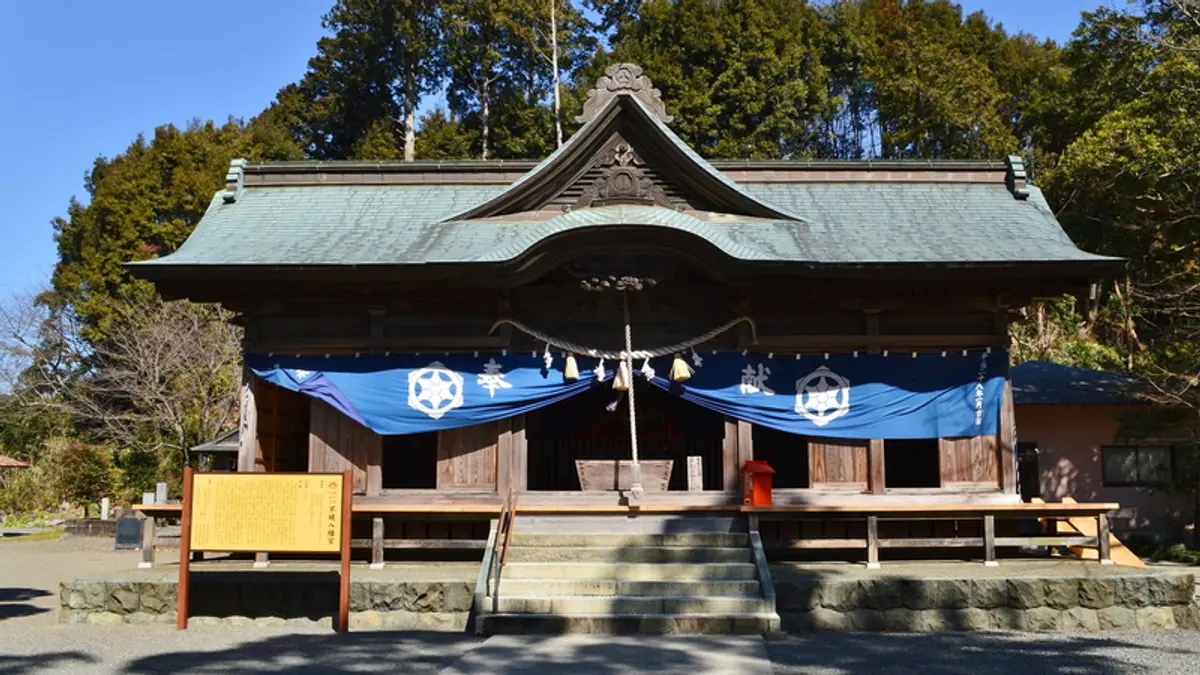
Discover a historic town in southwestern Shikoku where Kyoto’s aristocratic heritage meets the landscapes and traditions of the Shimanto River.
A Little Kyoto in Southwestern Shikoku
In the southwestern corner of Kochi Prefecture, Nakamura is a town whose history reaches back to the turbulent final centuries of medieval Japan.
Today, Nakamura forms the central urban area of Shimanto City. Most travelers associate the region with the Shimanto River, its low-water bridges, and the rural landscapes of southern Shikoku.
Yet Nakamura has another identity: it is known as Tosa’s Little Kyoto.
Unlike historic towns where rows of traditional buildings have survived, Nakamura’s connection with Kyoto is found mainly in its history, street layout, shrines, and cultural traditions.
In the fifteenth century, a former imperial regent from Kyoto established his residence here. His descendants developed Nakamura into a regional center where aristocratic culture from the capital interacted with the society and politics of Tosa Province.
Although much of the original townscape has disappeared, the influence of the Ichijo family remains an important part of Nakamura’s identity.
For travelers interested in Japan’s regional history, Nakamura offers an opportunity to discover how the culture of Kyoto reached far beyond the imperial capital.
Why Is Nakamura Called a Little Kyoto?
Nakamura’s connection with Kyoto began during the Onin War, which broke out in 1467 and devastated much of the capital.
Norifusa Ichijo (1423–1480), a former imperial regent and member of one of Japan’s five prestigious regent families, left Kyoto during this period of conflict.
After traveling through Nara, he reached the Hata district of Tosa Province in 1468, where the Ichijo family possessed extensive estates.
Although the destruction of Kyoto was an important reason for his departure, Norifusa’s journey was not simply an attempt to escape the fighting. Recovering and strengthening the family’s estate interests in Tosa was also a major objective.
He established his residence in Nakamura and laid the foundations for the Tosa Ichijo family.
After his death in 1480, his son Fusaie became the first head of the Tosa Ichijo line, according to Shimanto City’s historical account.
Fusaie strengthened the family’s regional authority and encouraged the development of Nakamura as an administrative, commercial, and cultural center.
The town came to be associated with a grid-like street layout inspired by Kyoto. Local place names, including Kamogawa and Higashiyama, also recall the geography of the old capital.
However, Nakamura was not created as a complete copy of Kyoto in a single period.
According to Shimanto City, local tradition holds that Nakamura’s grid-like street pattern continued to develop through the efforts of townspeople after the Ichijo period.
The town also reflects later influences, including the warrior culture associated with the Yamauchi family.
The Tosa Ichijo family’s rule did not last indefinitely. During the upheavals of the Sengoku period, the family lost its position in Nakamura as rival powers expanded their influence in southern Shikoku.
Nakamura’s Little Kyoto identity therefore represents several layers of history rather than a perfectly preserved medieval plan.
Its significance lies in the way Kyoto’s aristocratic traditions were adapted to the circumstances of a distant provincial community.
Ichijo Shrine — The Heart of Nakamura’s History
Ichijo Shrine is a natural starting point for exploring Nakamura’s Little Kyoto heritage.
The shrine stands on Komoriyama, a small hill in the center of the town, within the former Nakamura Gosho site associated with the Ichijo family.
Norifusa Ichijo established his residence in this area after arriving in Tosa. The present shrine occupies the site traditionally identified as the family’s mausoleum.
The original residence no longer survives, but the location preserves the memory of the family whose arrival transformed Nakamura’s history.
The shrine was established in 1862 by local supporters who wished to honor the Tosa Ichijo family.
It enshrines members of the Ichijo lineage, including Norifusa’s father, Kaneyoshi Ichijo.
The present shrine building dates from 1944.
Within the grounds are places traditionally associated with the former residence, including the site known as Fujimi no Goten and a well associated with the Ichijo family.
The shrine is affectionately called Ichijokosan by local residents.
Each November, the Ichijo Taisai festival commemorates the family’s legacy and brings religious ceremonies and celebrations to the town.
Although the medieval residence itself has disappeared, the shrine remains one of the most direct connections with the origins of Tosa’s Little Kyoto.
The Historic Street Layout — Traces of the Old Capital
One of Nakamura’s most distinctive historical features is its street layout.
The town is traditionally associated with a grid-like arrangement inspired by Kyoto, reflecting the influence of the Ichijo family and the cultural prestige of the imperial capital.
Walking through central Nakamura, visitors can still recognize elements of this pattern.
However, the modern streets should not be mistaken for a completely preserved fifteenth-century town.
The layout developed over time, and later generations contributed to the shape of the urban area.
Different districts also reflect different historical influences.
Some streets retain associations with Kyoto and the Ichijo family, while others developed through the warrior culture of the early modern period.
Much of the older architecture has been lost over time, including through disasters such as the 1946 Nankai earthquake.
The town therefore offers a different experience from destinations famous for preserved wooden buildings.
Its historical character is discovered by observing the arrangement of streets, visiting religious sites, and understanding the stories attached to familiar places.
For visitors who enjoy exploring history beneath the surface of a modern town, Nakamura provides a rewarding example.
Fuba Hachimangu Shrine — A Religious Legacy of the Ichijo Family
Fuba Hachimangu Shrine provides another important connection with Nakamura’s medieval past.
According to local historical accounts, Norifusa Ichijo invited the deity worshipped at Iwashimizu Hachimangu, near Kyoto, to be enshrined in the Hata district during the late fifteenth century.
The shrine became associated with the protection of the Ichijo family and the surrounding region.
Its main sanctuary is designated an Important Cultural Property of Japan.
One of the shrine’s most distinctive traditions is a ceremony commonly described as the marriage of the gods.
During the annual festival, portable shrines representing male and female deities take part in a symbolic meeting.
According to local tradition, the ceremony is said to have been introduced under the Ichijo family to discourage certain marriage practices of the time.
This explanation is part of the shrine’s transmitted tradition and should not be treated as an independently established historical account.
The festival remains an unusual example of how religious ceremonies can preserve memories of regional history.
Shimanto City Local History Museum — Understanding the Town’s Past
For visitors who want to understand Nakamura beyond its surviving landmarks, the Shimanto City Local History Museum is particularly worthwhile.
The museum stands in Tamematsu Park, on the former Nakamura Castle site.
Its castle-style building was modeled on Inuyama Castle in Aichi Prefecture, although the structure itself is a modern museum rather than a surviving medieval castle.
Exhibitions introduce the history and culture of the Hata region, including the Tosa Ichijo family.
From the castle-style tower, visitors can enjoy views of Nakamura, the surrounding hills, and the Shimanto River.
A visit is especially useful before exploring historical sites whose original buildings have disappeared.
Visitors should check current opening arrangements and temporary closures before visiting.
Festivals — Remembering Kyoto Across the Centuries
Nakamura’s relationship with Kyoto survives not only in historical records but also in festivals and commemorative events celebrated by the local community.
Two notable examples reflect different periods in the town’s history.
Ichijo Taisai
Held annually from November 22 to 24, Ichijo Taisai is one of Nakamura’s major religious festivals.
The festival is the autumn celebration of Ichijo Shrine.
Its program includes religious ceremonies and events involving local residents.
A particularly meaningful tradition involves a sacred flame received from Shimogamo Shrine in Kyoto.
This connection provides a symbolic link between Nakamura and the former imperial capital.
The Fuji Festival
The Fuji Festival is a modern historical reenactment event that began in 1992.
Held annually on May 3, it commemorates the arrival of the Ichijo family in Tosa and the aristocratic culture they brought to Nakamura.
Its central attraction is the Tosa Ichijo Court Procession, in which participants wearing historical costumes parade through the town.
The procession is modeled on Kyoto’s Aoi Festival, making the cultural connection between the two places particularly visible.
Unlike Ichijo Taisai, which is a religious festival associated with Ichijo Shrine, the Fuji Festival was established in 1992 to honor the Ichijo family and express gratitude for the Shimanto River and its natural surroundings.
Together, these events show how Nakamura remembers its connection with Kyoto through both established religious celebrations and modern historical reenactments.
Visitors should confirm current festival dates and programs before making travel arrangements.
The Shimanto River — Beyond Nakamura’s Little Kyoto Heritage
Nakamura’s historical attractions are only part of the reason to visit the area.
The town is also an important gateway to the Shimanto River, one of Shikoku’s best-known natural landscapes.
The river is particularly famous for its chinkabashi, low-water bridges built without conventional railings.
These bridges are designed to allow floodwaters to pass over them, reducing the resistance caused by their structures during periods of high water.
Their design reflects the practical relationship between local communities and a river that can change dramatically with the weather.
Sada Chinkabashi
Sada Chinkabashi, officially known as Imanari Bridge, is one of the most recognizable bridges on the Shimanto River.
It is also known as the longest low-water bridge on the river, stretching approximately 292 meters.
The bridge offers a classic view of the river, surrounding mountains, and rural landscape.
Unlike the historical sites in central Nakamura, the bridge introduces visitors to the everyday relationship between the river and the people who live along it.
Visitors should remember that the bridge is a functioning local road, not a pedestrian attraction.
There are no conventional railings, and crossing requires particular care.
Access should be avoided during flooding or unsafe weather conditions.
Combining Nakamura’s historical district with the Shimanto River reveals two different but complementary aspects of southwestern Shikoku: the legacy of Kyoto’s aristocratic culture and the landscape of a river-centered community.
Getting to Nakamura
Nakamura Station, operated by Tosa Kuroshio Railway, is the main railway gateway to the town.
The most straightforward public transport route is from Kochi Station.
JR Shikoku’s Limited Express Ashizuri connects Kochi with Nakamura, with some services continuing to Sukumo.
Travelers arriving from Takamatsu may be able to use a direct Limited Express Shimanto service to Nakamura. However, direct departures are limited and may operate early in the morning. Other journeys require a transfer at Kochi.
From Okayama, travelers can take the Limited Express Nanpu to Kochi and transfer to the Ashizuri service for Nakamura.
The journey into southwestern Kochi Prefecture passes through mountainous and coastal landscapes.
Once in Nakamura, the central historic district can be explored on foot, although some attractions are farther from the station.
Bicycle rental can be useful for exploring the river area, but visitors should consider distances, weather, and their own cycling experience.
Nakamura is relatively remote, and train services are less frequent than those in Japan’s major urban areas.
Checking the latest timetable and connections in advance is particularly important when traveling from Okayama or Takamatsu.
How Much Time Should You Spend?
A few hours are enough to visit Ichijo Shrine and explore the central streets associated with Nakamura’s Little Kyoto heritage.
A full day allows for a more balanced visit, including the local history museum, Fuba Hachimangu Shrine, and time to appreciate the town’s historical setting.
Travelers who also want to explore the Shimanto River should allow additional time.
Sada Chinkabashi is relatively close to Nakamura, but reaching other bridges and riverside attractions can involve longer journeys.
Staying overnight makes it easier to combine historical sightseeing with cycling, river scenery, or outdoor activities.
Spring is attractive for its greenery and seasonal festivals, while autumn offers comfortable conditions for walking and exploring the surrounding countryside.
Summer brings opportunities for river activities, although the weather can be hot and humid.
Heavy rainfall and flooding may affect access to riverside locations.
The best length of stay depends on whether your priority is Nakamura’s historical heritage, the Shimanto River, or a combination of both.
A Little Kyoto Shaped by Its Own History
Nakamura is not a town where visitors can step into an intact medieval streetscape.
Many of its historic buildings have disappeared, and its modern appearance may seem quite different from the traditional image of a Little Kyoto.
Yet the town’s historical significance goes far beyond architectural resemblance.
The arrival of Norifusa Ichijo in 1468 connected this distant region of Tosa with one of Kyoto’s most influential aristocratic families.
Under his descendants, Nakamura developed as a center where courtly traditions, local society, religious institutions, and regional commerce interacted.
The Tosa Ichijo family eventually lost its political position, but the cultural memory of its presence survived.
That legacy remains visible in Ichijo Shrine, the town’s street layout, and the festivals that commemorate the family.
The nearby Shimanto River adds another dimension, revealing the landscapes and everyday traditions of southwestern Shikoku.
Together, these elements make Nakamura more than a historical nickname.
They tell the story of a town that absorbed influences from the old capital while developing a character of its own.
For travelers willing to look beyond preserved architecture, Tosa’s Little Kyoto offers a distinctive encounter with Japan’s regional history.
Getting to Nakamura
| From | Method | Transfers | Notes |
|---|---|---|---|
| Kochi | Train — Limited Express Ashizuri Speed | 0 | Direct service to Nakamura. Check operating times. |
| Takamatsu | Train — Limited Express Shimanto Speed | 0* | Limited direct service, departing early in the morning. Other departures require a transfer at Kochi. |
| Okayama | Train — Limited Express Nanpu + Ashizuri Speed | 1 | Transfer at Kochi Station. Check connections. |
Direct services from Takamatsu are limited. Check the latest timetable before departure.
Official Transport Information
JR Shikoku — Official Railway Information