Where to Go in Shikoku: Following the Island’s Natural Routes
September 24, 2026
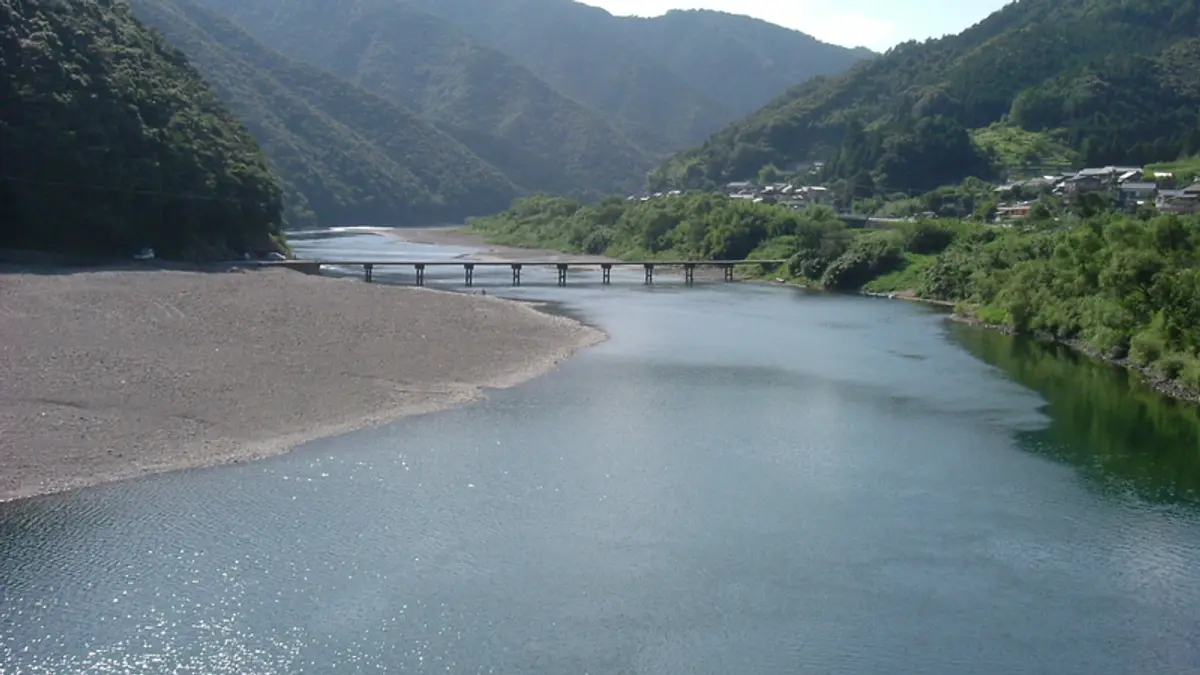
Shikoku is Japan’s smallest main island, but its mountains, coasts, and rivers give each part of it a distinct character.
For travelers arriving from western Honshu, the island can begin in several different ways. Trains cross the Seto Ohashi from Okayama, ferries cross the Seto Inland Sea from Honshu, and the bridges through Awaji Island lead toward Naruto and Tokushima. For travelers coming from Tokyo or other distant parts of Japan, flying is another important option, with airports providing direct gateways to different parts of Shikoku.
There is no need to turn these gateways into a complete circuit. Shikoku is easier to understand when you follow the landscape: along the Seto Inland Sea, south through western Ehime, around the Pacific side, or inland along the Yoshino River.
Takamatsu and Sanuki: A Natural Beginning from the Seto Inland Sea
For travelers coming from Okayama and the Seto Inland Sea, Takamatsu is a natural place to begin.
The city faces the calm waters of the inland sea, and Ritsurin Garden gives good reason to spend time in Takamatsu itself. The port also keeps the islands close, so travelers arriving after an island journey do not feel that one trip has abruptly ended and another has begun.
Inland from Takamatsu lies Kotohira, the traditional approach town for Kotohira-gu, or Konpira-san. Its long stone steps lead upward from old streets lined with shops and inns. Kotohira is close enough to visit from Takamatsu, but its hot springs and traditional accommodation also make an overnight stay possible.
This part of Kagawa therefore works well at an unhurried pace. Takamatsu offers the city and the sea; Kotohira turns toward the mountains.
West Along the Inland Sea to Matsuyama
Continue west and the Seto Inland Sea remains part of the journey.
Matsuyama is one of Shikoku’s major cities, but its appeal is not simply its role as a transport center. Matsuyama Castle rises above the city, while Dogo Onsen provides one of the clearest reasons on the island to stay overnight and slow down.
The compact streets around Dogo are easy to explore on foot, and the historic bathhouse district feels quite different from the port cities and islands farther east.
Matsuyama can also be reached across the sea from the Hiroshima side, making it another natural continuation of a Seto Inland Sea journey. Travelers arriving by air can begin here just as easily, without first crossing northern Shikoku.
For some visitors, Matsuyama and Dogo may be enough. For others, the journey becomes quieter as it turns south.
South Through Uchiko, Ozu, and Uwajima
South of Matsuyama, the cities become smaller and the pace changes.
Uchiko preserves streets from its prosperous merchant past, while Ozu grew as a castle town beside the Hiji River. Neither needs to be treated as a box to tick on the way south. They are places where a traveler can stop, walk, and see a more intimate side of Ehime.
Farther south, Uwajima becomes the main center of southwestern Ehime. By this point the journey feels removed from the busier northern coast.
Uwajima Castle overlooks the city, and the surrounding region opens toward the deeply indented coast and the mountains of southwestern Shikoku. Travelers who continue from here can eventually reach the Shimanto area of western Kochi.
It is not the quickest route across the island, and that is part of its character. This is a journey for travelers who have chosen to spend time in southwestern Shikoku rather than simply cross it.
The Shimanto River and Western Kochi
Crossing into western Kochi brings another change of landscape.
The Shimanto River flows through a broad rural region before reaching the Pacific. Nakamura is a useful base for the lower river area, but the attraction lies less in a single landmark than in the river, countryside, and slower rhythm of the region.
This is not an easy day trip from Kochi city, nor does it need to be. For travelers who come this far, western Kochi can be a destination in its own right.
From here, the journey can continue east along the Pacific side toward Kochi city.
Kochi and the Pacific Coast
Kochi feels different from the Seto Inland Sea side of Shikoku.
The Pacific is larger and more exposed, and the mountains rise close behind the populated coastal areas. Kochi city provides a comfortable center from which to experience this side of the island.
Kochi Castle and Hirome Market are both close to the city center, while Katsurahama faces the open Pacific a short trip away. Together they make Kochi worth visiting without requiring travelers to continue farther.
Those with more time can explore beyond the city. The coast stretches east toward the Muroto Peninsula, while western Kochi leads back toward the Shimanto region.
Kochi can therefore be either the end of a longer journey around western Shikoku or the beginning of a Pacific-side trip entered directly through Kochi Ryoma Airport.
Another Way into Shikoku: Naruto, Tokushima, and Iya
Not every Shikoku journey needs to begin on the Seto Inland Sea side.
Travelers coming from Kansai and Awaji Island naturally reach Shikoku around Naruto. The Naruto Strait, with its powerful tidal currents and whirlpools, gives this entrance to the island a character of its own.
Nearby Tokushima is the main urban center of eastern Shikoku. The region is also where the Shikoku 88 Temple Pilgrimage begins, at Ryozenji.
The pilgrimage is not necessary for understanding a modern trip around Shikoku, but its path hints at something important about the island: mountains shape the routes between its inhabited regions.
That becomes obvious when traveling west from Tokushima along the Yoshino River.
The route leads toward Awa-Ikeda, Oboke, and the Iya Valley, where steep slopes, deep gorges, hot springs, and mountain settlements replace the coastal landscape. This is a part of Shikoku worth giving time to rather than squeezing into a quick excursion.
Travelers staying around Oboke or Iya can experience the mountain interior at a slower pace. From this side of the island, routes also continue toward Kochi, allowing an eastern entrance to connect naturally with the Pacific side.
Choose a Part of Shikoku, Not a Checklist
Shikoku’s four prefectural capitals are important transport centers, but a journey around the island does not have to be organized around them.
Takamatsu and Matsuyama make natural bases along the Seto Inland Sea. South of Matsuyama, smaller towns lead gradually toward Uwajima and the Shimanto region. Kochi opens onto the Pacific. From the east, Naruto and Tokushima lead inland toward the Yoshino River and Iya.
Airports make it possible to begin close to the region that interests you, while railways, buses, ferries, and bridges connect these different parts of the island.
The result is not one ideal circuit.
Shikoku is small enough for its regions to connect, but varied enough that each deserves time of its own. Rather than trying to collect all four prefectures, choose the landscapes and towns that interest you, and let the journey between them become part of the trip.
Where to stay
Planning to stay overnight? Find accommodation in:
Related Routes
- Awa-Ikeda → Oboke
- Haneda Airport → Kochi Ryoma Airport
- Haneda Airport → Matsuyama Airport
- Haneda Airport → Takamatsu Airport
- Haneda Airport → Tokushima Awaodori Airport
- Iyo-Ozu → Uwajima
- Kochi Ryoma Airport → Kochi
- Matsuyama Airport → Matsuyama
- Matsuyama → Uchiko
- Nakamura → Kochi
- Naruto → Tokushima
- Oboke → Kochi
- Okayama → Takamatsu
- Takamatsu Airport → Takamatsu
- Takamatsu → Kotohira
- Takamatsu → Matsuyama
- Tokushima Awaodori Airport → Tokushima
- Tokushima → Awa-Ikeda
- Uchiko → Iyo-Ozu
- Uwajima → Nakamura