Tokyo to Tohoku by Shinkansen: Choosing Hayabusa, Komachi or Tsubasa
September 12, 2026
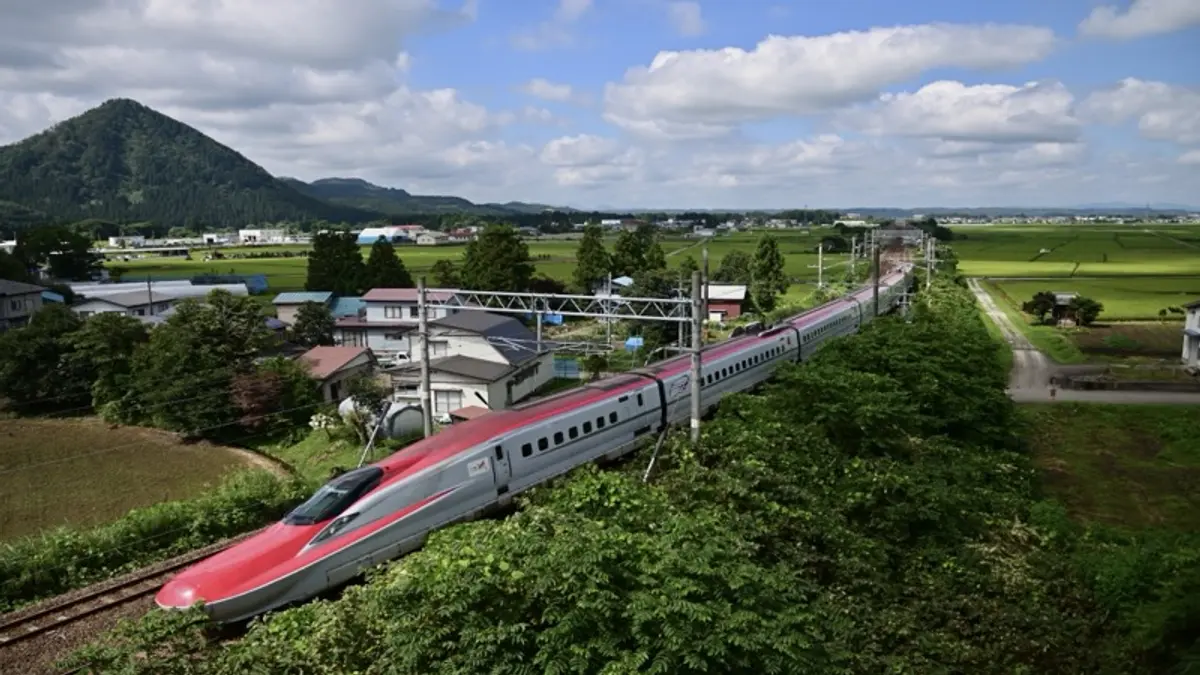
Traveling from Tokyo Station to the Tohoku region via the Shinkansen (bullet train) is the fastest and most efficient way to head north through Honshu. Unlike domestic flight routes, rail travel lets you board a single train in central Tokyo and arrive directly in the heart of northern cities without airport transfers. Choosing the right service depends entirely on your specific destination along the branching Shinkansen network.
Quick Answer
- Sendai: Take the high-speed Hayabusa for a fast ride, or use the Yamabiko service for more frequent intermediate stops.
- Fukushima: Ride the Yamabiko, which has unreserved cars, or a Tsubasa, on which every seat is reserved.
- Morioka: Board the Hayabusa for a direct, high-speed journey to the northern hub of Iwate Prefecture.
- Shin-Aomori (Aomori): Ride the Hayabusa, which runs the full length of the main trunk line to the northern tip of Honshu.
- Akita: Take the Komachi, which runs coupled with a Hayabusa as far as Morioka and then continues on its own to Akita.
- Yamagata: Board the Tsubasa through-service; many Tsubasa trains run coupled with a Yamabiko as far as Fukushima before continuing to Yamagata.
Orientation: The Shinkansen Network and Branching Lines
The Tohoku Shinkansen operates as a primary trunk line running north from Tokyo Station through Sendai and Morioka all the way to Shin-Aomori. Two branch routes continue beyond the trunk line to reach regional areas. Rather than requiring a physical transfer at the junction stations, these trains run as through-services: the Akita Shinkansen (Komachi) leaves the trunk line at Morioka to reach Akita, while the Yamagata Shinkansen (Tsubasa) leaves it at Fukushima to reach Yamagata. Passengers bound for Akita or Yamagata board a single train at Tokyo and stay in their seats straight through to their destination.
Shinkansen Services and Lines
Hayabusa (Tohoku Main Line to Morioka and Shin-Aomori)
The Hayabusa is the premier high-speed service on the trunk line, connecting Tokyo directly to major northern stations like Sendai, Morioka, and Shin-Aomori with minimal intermediate stops.
- Best for: Travelers heading to Sendai, Morioka, Shin-Aomori, or continuing to Hokkaido (some Hayabusa trains run through to Shin-Hakodate-Hokuto).
- How to buy: Book online through JR East's official reservation services (Ekinet, or JR-EAST Train Reservation in English), at reserved-seat ticket machines, or at a ticket counter (midori-no-madoguchi).
- Watch out for: The Hayabusa is entirely reserved-seat only; it carries no unreserved cars. When traveling from Tokyo, you must secure a reserved seat before boarding.
Komachi (Through-Service to Akita)
The Komachi service pairs with the Hayabusa out of Tokyo Station, traveling coupled together along the trunk line before uncoupling at Morioka to continue independently toward Akita.
- Best for: Visitors traveling straight from Tokyo to Akita Prefecture.
- How to buy: Secure tickets in advance through online booking portals, ticket machines, or station counters.
- Watch out for: Like the Hayabusa, the Komachi features exclusively reserved seating with no unreserved cars available.
Tsubasa (Through-Service to Yamagata)
Many Tsubasa trains run out of Tokyo coupled with a Yamabiko, traveling north until the Tsubasa uncouples at Fukushima Station and continues toward Yamagata; other Tsubasa trains run on their own.
- Best for: Travelers heading directly to Yamagata and inland cities along the route.
- How to buy: Book tickets ahead of time using online apps, ticket kiosks, or staffed counters.
- Watch out for: Every Tsubasa is reserved-seat only, with no unreserved cars, so when traveling from Tokyo, book a seat before you board.
Yamabiko (Limited-Stop and Regional Service)
The Yamabiko operates as a supplemental service along the northern corridor, making more frequent stops than the Hayabusa and commonly terminating around Sendai or Morioka.
- Best for: Travelers going to Fukushima or Sendai who want a reliable train option with flexible seating types.
- How to buy: Buy tickets at any JR station machine, counter, or digital reservation app.
- Watch out for: Unlike the Hayabusa, Komachi and Tsubasa, Yamabiko trains carry unreserved cars, making them practical if you prefer not to lock in a fixed reservation ahead of time.
Choosing by Destination
- Sendai: Choose the Hayabusa for speed or the Yamabiko for flexible stop options.
- Fukushima: Take the Yamabiko if you want an unreserved seat, or a Tsubasa with a reserved seat.
- Morioka and Shin-Aomori: Ride the Hayabusa for the most direct, high-speed trunk-line transit.
- Akita: Board the Komachi for a seamless single-train journey via the northern branch.
- Yamagata: Take the Tsubasa for a direct ride on the western branch.
Flying as an Alternative
For travelers comparing itineraries or looking to minimize travel time to distant northern hubs, flying is also an alternative way to reach select Tohoku destinations. Akita, Aomori, and Yamagata each feature their own regional airports offering direct flights from Haneda. This option can be weighed against the shinkansen's longer overland journey, serving as an efficient alternative depending on your precise schedule and preferences.
Seat Reservations and Standing Tickets
A critical rule of the Tohoku Shinkansen network is that the Hayabusa, Komachi, and Tsubasa operate with zero unreserved cars, so travelers boarding these trains in Tokyo normally need a reserved seat. Only the Yamabiko among these services has unreserved cars. If all seats on a Hayabusa, Komachi or Tsubasa sell out, JR East may sell a standing-only ticket, usually priced below the regular reserved-seat charge, but these are not always available. For short trips on the Akita and Yamagata branch sections only, a special limited express ticket is another exception; see the first question below. A Suica or other IC card cannot be used as the basic fare with a separately bought express ticket; see the Suica question below for the two ways IC cards can be used.
Practical Tips
- Station navigation: Tokyo Station is massive; arrive well ahead of departure time to navigate the bustling concourses and locate your correct Shinkansen platform.
- Coupled train configurations: Hayabusa/Komachi trains, and many Yamabiko/Tsubasa trains, run coupled together for the first portion of their journey. Verify your car and seat number carefully on your ticket to board the correct section of the train before departure.
- Luggage storage: On the Tohoku, Yamagata and Akita Shinkansen, you do not need to reserve space for large luggage. Each passenger may bring up to two items, each no more than 250 cm in total length, width and height (up to 2 m long) and 30 kg. If the luggage area is full, keep your bag at your feet.
Frequently Asked Questions
Can I board a Tohoku Shinkansen without a seat reservation? It depends on the train. The Hayabusa, Komachi, and Tsubasa have no unreserved cars, so from Tokyo you normally need a reserved seat. The Yamabiko, which serves stations such as Fukushima and Sendai, offers unreserved seating. One exception applies only to trips within the branch sections: between Morioka and Akita on the Komachi, or between Fukushima and Shinjo (via Yamagata) on the Tsubasa, you can travel with a special limited express ticket (tokutei tokkyū-ken). It does not reserve a seat; it lets you sit in a vacant ordinary-car seat. On the Komachi, JR East says you must give the seat up if the passenger who reserved it arrives. For a trip from Tokyo, book a reserved seat.
Do I need to change trains to reach Akita or Yamagata? No. Komachi and Tsubasa trains run through from Tokyo. When coupled to another train, they separate at Morioka (Komachi) or Fukushima (Tsubasa), and you stay in your seat.
What happens if all reserved seats are sold out? As a last resort when all seats are booked on fully reserved services, JR East may sell a standing ticket so that you can board, though you will not have an assigned seat for the trip. Standing tickets are not guaranteed to be on sale.
Can I use my Suica card to ride these Shinkansen trains? Yes, in two ways. With Touch de Go! Shinkansen, you register your Suica or other transit IC card once and then tap through the Shinkansen gates; it covers unreserved seats on a one-way trip on the day of travel, so from Tokyo it suits Yamabiko trains to stations such as Fukushima or Sendai. It cannot be used for trips that continue beyond Morioka (such as Tokyo to Akita or Shin-Aomori) or from the Tokyo side of Fukushima onto the Yamagata Shinkansen (such as Tokyo to Yamagata). For a reserved seat, book a Shinkansen eTicket on Ekinet and link your IC card to it, then tap the card at the gate. You cannot use an IC card as the basic fare while holding only a separately bought express ticket.
Where can I buy Shinkansen tickets? Tickets can be purchased online through JR East's official reservation services (Ekinet, or JR-EAST Train Reservation in English), at reserved-seat ticket machines inside stations, or in person at staffed ticket counters.
Updated 21 October 2026: Corrected the seat rules for the Tsubasa, how Suica and other IC cards can be used on the Shinkansen, the luggage rules, and which Tsubasa trains run coupled with a Yamabiko.