Across Kyushu and Beyond
September 25, 2026
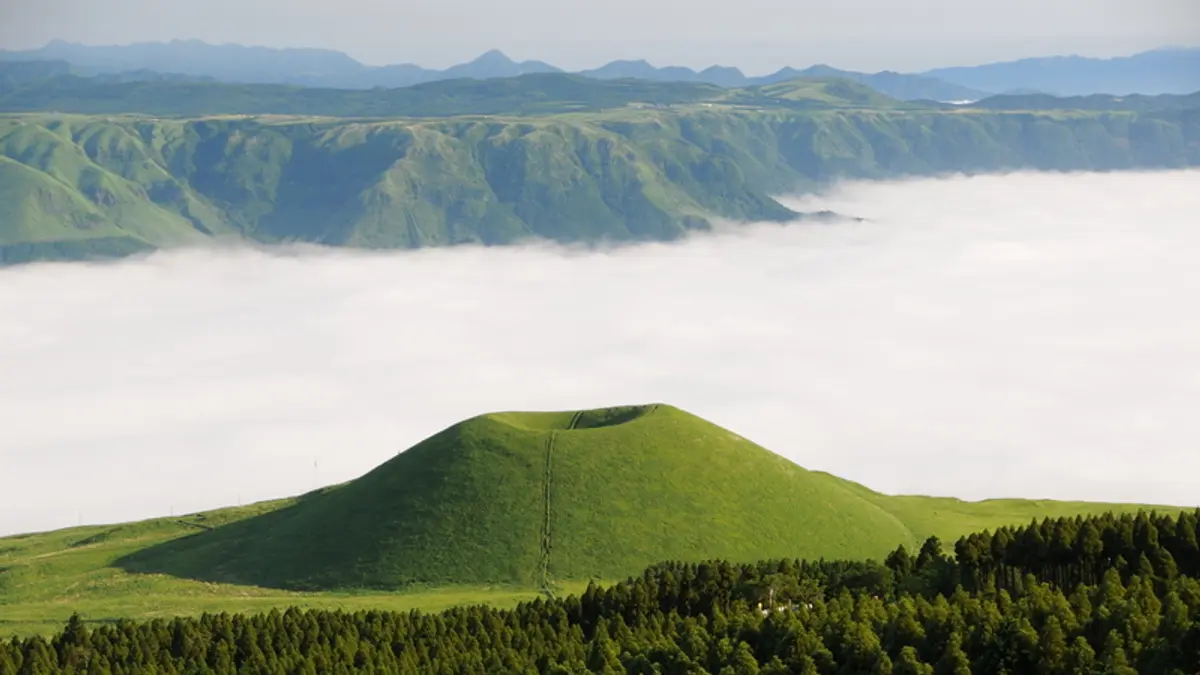
After exploring Fukuoka, Saga, and Nagasaki, you can continue into a very different side of Kyushu: volcanic highlands, mountain onsen towns, the Pacific coast, and, beyond Kagoshima, islands that can become destinations in their own right.
You do not have to see all of central and southern Kyushu in one trip. You can continue overland from northern Kyushu, fly directly into one region and explore from a few bases, or choose a particular experience — an onsen stay, a volcanic landscape, the Pacific coast, or an island — and build the journey around it.
The useful question is not simply which prefecture to visit. It is where to stay, what to explore from there, and whether the journey to the next place is worth making part of the trip.
From Northern Kyushu, Continue to Kumamoto
For travelers coming from Fukuoka, Saga, or Nagasaki, Kumamoto is a natural starting point for the next stage.
Stay in the city to see Kumamoto Castle and enjoy the convenience of a major urban base before heading into the mountains. From here, you have a choice. The Kyushu Shinkansen provides the fast route south toward Kagoshima, but turning east toward Aso creates a much more varied journey across the middle of Kyushu.
Through Aso — and Perhaps a Night in Kurokawa Onsen
Aso is much more than a single mountain or viewpoint. Its vast caldera contains towns, farmland, grasslands, mountains, and active volcanic terrain.
You can visit from Kumamoto and return, or make Aso part of the journey itself. Rail services cross central Kyushu through Aso toward Oita, so you can continue east rather than retracing your route.
If you have more time, this is also a good place to slow down.
Kurokawa Onsen lies in the mountains north of Aso. It is not a major transport center, and reaching it by public transportation requires more planning than moving between the larger cities. But that is also why it works as an overnight destination. A ryokan stay, outdoor baths, and an evening in the small hot-spring settlement are the experience rather than simply a stop between attractions.
With less time, keep Kumamoto as your base and explore Aso. With more, consider a night around Aso or Kurokawa before continuing east.
Mount Aso is an active volcanic area, so check current crater access restrictions before visiting.
Finish the Crossing in Yufuin or Beppu
Continue east and the journey leads toward two of Kyushu's best-known onsen destinations.
Yufuin and Beppu are close enough to combine, but there is no need to stay in both.
Yufuin suits travelers looking for a smaller mountain resort, a ryokan stay, cafés and galleries, and time to enjoy the town itself. Beppu is larger, with hot springs ranging from neighborhood baths to hotels and resorts, and it is also convenient for continuing through eastern Kyushu.
The choice is part of the journey: stay in Yufuin for the atmosphere of a smaller onsen town, or in Beppu for greater variety and easier onward travel.
Coming from northern Kyushu, the route from Kumamoto through Aso to this side of the island can make the crossing itself one of the highlights. But if hot springs are your main purpose, you can skip the long journey, fly into Oita, and focus on Yufuin and Beppu instead.
From Beppu, Turn South Toward the Pacific
Continue south along eastern Kyushu and the landscape changes again.
Miyazaki makes a useful base for exploring the Pacific side, whether you arrive overland from Oita or fly directly into Miyazaki Airport.
From the city, Aoshima is an easy excursion, with its shrine and the unusual coastal rock formations known as the Devil's Washboard. Continue along the Nichinan Coast and the journey itself becomes part of the attraction, with ocean scenery, shrines, and smaller coastal communities.
This does not have to be simply another stage on the way to Kagoshima. If warm coastal scenery and a slower Pacific-side journey appeal to you, spending a few days around Miyazaki can be the focus of the trip.
A Different Inland Journey: Takachiho
Takachiho does not fit neatly into the Pacific coast route simply because it is in Miyazaki Prefecture.
Its gorge, mountain scenery, and places associated with Japanese mythology lie well inland, and there is no JR rail service to the town. Visiting therefore requires more deliberate planning.
One possibility is to treat Takachiho as a branch from the Aso side of the journey, using the limited bus connections between the two areas. Another approach is from eastern Kyushu through Nobeoka.
Either way, Takachiho works better as a destination you intentionally add than as a quick stop while traveling south along the coast.
Or Begin in Kirishima
Not everything in this guide needs to form one continuous route.
Kirishima is a good example. Its volcanic mountains, forests, hot springs, and Kirishima Jingu make it worth stopping for, but it can also be the beginning of a separate southern Kyushu trip.
From Kagoshima Airport, buses run toward the Kirishima Onsen area and Kirishima Jingu, so you do not need to go into Kagoshima City first. You can arrive by air, spend a night or two among the mountains and hot springs, and then continue to Kagoshima — or make Kirishima itself the center of a short trip.
Kagoshima — Sakurajima and the Road South
Kagoshima is where the journey opens up again.
Stay in the city and Sakurajima rises directly across Kinko Bay. Ferries connect Kagoshima Port and Sakurajima in about 15 minutes, making the volcano an easy excursion without changing accommodation.
You can end the journey here, leaving by Shinkansen or through Kagoshima Airport. Or you can continue farther south.
On the Satsuma Peninsula, Ibusuki offers another kind of onsen stay, particularly its naturally heated sand baths. It provides a slower mainland ending and a very different experience from Kurokawa, Yufuin, Beppu, or Kirishima.
Kagoshima also gives you another choice: leave the mainland behind.
Make Yakushima the Destination
Yakushima is not a place to squeeze into a spare day.
Its mountainous interior, ancient cedar forests, waterfalls, and hiking routes make the island a destination in its own right. Reaching it means beginning a different kind of journey, and staying on the island gives you time to experience it properly.
Yakushima can be reached from Kagoshima by air or sea, making it a dramatic final stage after an overland journey through Kyushu. But it does not have to come at the end of a long itinerary. If Yakushima is the reason you are traveling, make it the center of the trip and use the most practical connection to reach it.
Tanegashima Offers a Different Island Trip
Nearby Tanegashima gives you a different reason to leave the mainland.
Rather than mountain forests, it is known for long coastlines, surfing, the history of the introduction of firearms to Japan, and the Tanegashima Space Center.
Choose Yakushima primarily for forests, mountains, and hiking. Consider Tanegashima for coastal scenery, history, the space center, and a journey that involves moving around the island. With enough time you can combine the two, but either can stand on its own.
Farther south are the Amami Islands. They are substantial destinations in their own right, so if you want to continue south, see Which Amami Island Should You Visit? rather than treating them as another brief extension of this journey.
Choose Where to Slow Down
Central and southern Kyushu reward travelers who leave room in the itinerary.
You might cross the island through Aso, spend a night in an onsen town, follow the Pacific coast south, or fly directly to the place that interests you most. There is no need to connect everything.
What matters is choosing where the journey itself is worth slowing down — and where staying overnight lets you experience more than simply passing through.
Where to stay
Planning to stay overnight? Find accommodation in:
BeppuMiyazakiYakushimaIbusukiKumamotoYufuinAsoKirishimaKagoshimaKurokawa Onsen
Related Routes
- Aso → Beppu
- Aso → Kurokawa Onsen
- Aso → Takachiho
- Beppu → Miyazaki
- Beppu → Yufuin
- Hakata → Kagoshima-Chuo
- Hakata → Kumamoto
- Kagoshima Airport → Kirishima Onsen
- Kagoshima Port → Miyanoura Port
- Kagoshima Port → Nishinoomote Port
- Kagoshima Port → Sakurajima Port
- Kagoshima-Chuo → Ibusuki
- Kirishima Onsen → Kagoshima-Chuo
- Kumamoto → Aso
- Miyazaki → Aoshima
- Nobeoka → Takachiho
- Oita Airport → Beppu