How to Get from Narita Airport to Central Tokyo
By Editorial Team · September 7, 2026
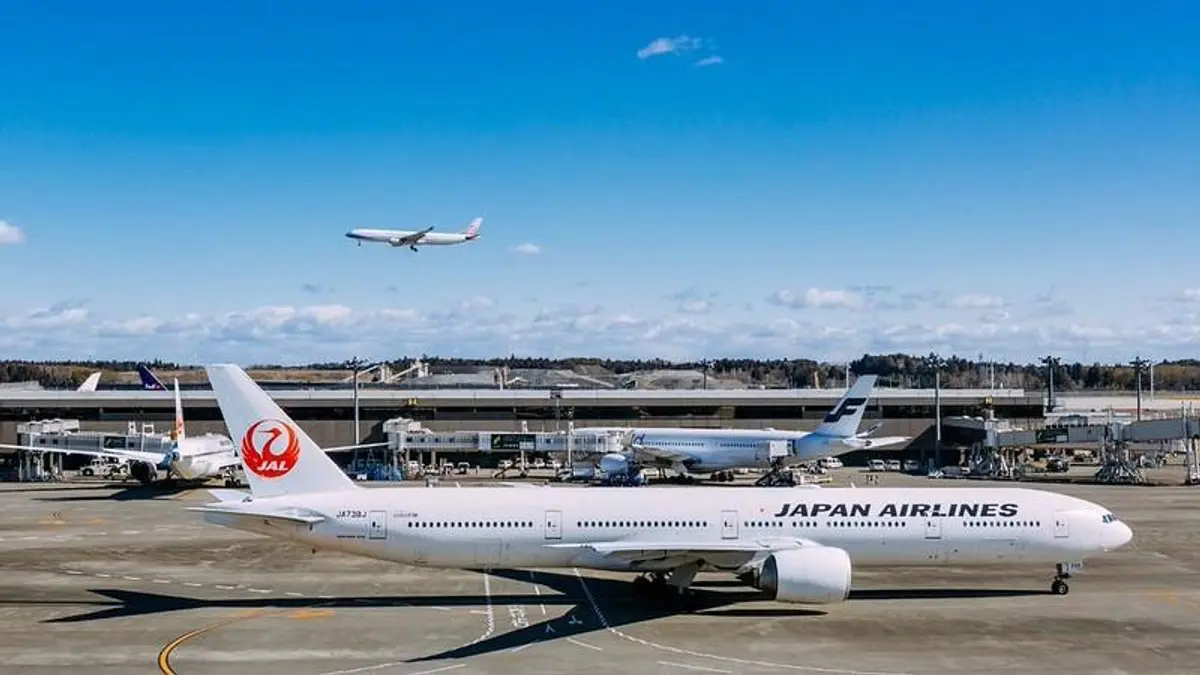
Narita is Tokyo's more distant airport, sitting well outside the city in neighbouring Chiba Prefecture. That distance sounds intimidating, but the connection into town is one of the best-organised airport transfers in Japan: several trains and buses leave from directly under or in front of the terminals, run frequently, and are clearly signed in English. The only real decision is which one, and that comes down to where you are going, how much luggage you have, and what time you land.
This guide walks through every option, who each one suits, and how to buy tickets. For exact travel times and fares, see the linked route pages for each option below — those numbers shift with the season and the time of day, so we keep them out of the text here.
Quick answer
- Going to Ueno or Nippori? Take the Keisei Skyliner (fastest) or the Keisei Access Express (cheapest).
- Going to Asakusa, Oshiage (Tokyo Skytree), or anywhere on the Toei Asakusa Line? Take a through-running Keisei Access Express.
- Going to Tokyo Station, Shinjuku, Shibuya, or Yokohama? Take the Narita Express (N'EX) for a direct ride, or a JR Sōbu Line Rapid train if you are travelling light and want to save money.
- Travelling with large suitcases and want zero transfers? Use the Airport Limousine Bus to a hotel or terminal near your accommodation.
- On a tight budget? The Keisei Access Express is the lowest train fare; AIRPORT BUS TYO-NRT is the lowest bus fare (to Tokyo Station and Ginza only).
- Landing late at night? Trains and most buses stop before midnight. Plan for a late-night bus, a taxi, or a night near the airport.
First, figure out your destination station
"Central Tokyo" is not one place. The metropolitan area spreads across more than twenty wards and several neighbouring cities, and the fastest route from Narita to one neighbourhood can be the slowest to another.
Before you compare options, look up the station closest to your hotel and note which network it sits on:
- JR lines (the Yamanote loop and its branches) serve the western and southern side of the tourist map — Shinjuku, Shibuya, Ikebukuro, Shinagawa, and on to Yokohama. Narita connections to this side are strongest on JR's own trains.
- Keisei lines and the Toei Asakusa Line serve the eastern side — Ueno, Nippori, Asakusa, Oshiage (Tokyo Skytree), and Nihonbashi. If your hotel is near one of these, a Keisei train can take you almost door to door.
Once you know your target station, the "Choosing by destination" section below points you to the right service.
At the airport: terminals and where the stations are
Narita has three passenger terminals. Terminal 1 and Terminal 2 each have their own railway station in the basement, shared by JR and Keisei, with the two companies' ticket areas side by side. Terminal 3, used by low-cost carriers, has no train station of its own; from there you walk a signed path to Terminal 2 — a flat route, roughly a 15-minute walk — or ride the free shuttle bus.
A few things worth knowing before you reach the platform:
- Follow the signs for "Railways" down to level B1. Immigration and baggage claim are on the upper floors; the trains are at the bottom.
- JR and Keisei sell different tickets. For the N'EX or a Sōbu Line Rapid train, use the JR ticket office or machines. For the Skyliner or Access Express, use the Keisei counter. Staff at both speak enough English to sort out a first-time visitor.
- Buy reserved-train tickets before you tap through. The Skyliner and the N'EX both need a seat ticket in addition to the basic fare; an IC card alone will not get you on board.
- The passport-holder discount desks are at the station level, not in arrivals. Bring your passport if you want the round-trip N'EX ticket or a Skyliner combo pass.
If you land with time to spare, both terminals have coin lockers, staffed left-luggage counters, and same-day luggage delivery services, so you do not have to drag everything into the city at once.
Train options
Trains are the reliable choice: they are unaffected by road traffic, run to a fixed timetable, and reach every major hub. There are four to compare.
Keisei Skyliner
The Skyliner is the quickest way from the airport into the northeast of the city. It runs non-stop for most of its journey and calls only at Nippori and Keisei-Ueno, both a short walk or one JR stop from the sights around Ueno Park and a straightforward transfer point for the Yamanote Line.
- Best for: speed; anyone staying near Ueno, Nippori, or on the Yamanote Line's eastern arc.
- Seating: all reserved, with a dedicated luggage area at the end of each car.
- How to buy: vending machines and the Keisei counter at the airport, or online in advance for a small discount. Foreign-passport holders can buy a Skyliner ticket bundled with an unlimited Tokyo Subway pass, which pays off quickly if you plan to ride the metro a lot.
- Watch out for: if your hotel is on the western side of town, you will still need a JR transfer at Nippori, which eats into the time saved.
Narita Express (N'EX)
The N'EX is JR's dedicated airport express. It runs directly to Tokyo Station, Shibuya, Shinjuku, and Yokohama, with some trains continuing to Ōfuna — no transfer needed. That makes it the natural pick if you are heading to the western or southern side of the city with luggage.
- Best for: a no-transfer ride to a major JR hub; travellers with big suitcases; Japan Rail Pass holders (the pass covers it).
- Seating: all reserved. Luggage racks near the doors have cable locks.
- How to buy: the JR ticket office or machines at the airport. Visitors with a foreign passport can buy a discounted round-trip ticket valid for two weeks — worth it if you will return to Narita.
- Watch out for: regular N'EX trains to Ikebukuro and Ōmiya were discontinued in 2022, so for those you now change to another JR line at Shinjuku or Tokyo. Trains also split at Tokyo Station, with the two halves going to different destinations — check the sign on your car, or ask staff, before you board.
Keisei Access Express
The Access Express runs on the newer Narita Sky Access Line and charges only the ordinary fare — there is no limited-express surcharge, which makes it the cheapest train from the airport.
Its trains divide during the run. Some head for the dead-end terminal at Keisei-Ueno, calling at Nippori on the way; others turn north at Aoto toward Oshiage and run through onto the Toei Asakusa Line, serving Asakusa and Nihonbashi, with a few continuing all the way to Haneda Airport. The two branches split partway along the line, so check the destination shown on the train before you board.
- Best for: budget travellers; anyone whose hotel is on the Asakusa Line (Asakusa, Higashi-Nihombashi, Sengakuji).
- Seating: unreserved, ordinary commuter cars. There is no dedicated luggage space, so it is less comfortable with several large bags.
- How to buy: any Keisei machine, or simply tap in with a Suica or PASMO.
- Watch out for: it makes more stops than the Skyliner and takes noticeably longer. Make sure the train on the platform is an "Access Express" and not a local, and that it is heading where you want.
JR Sōbu Line Rapid
JR also runs ordinary Rapid-service trains from the airport on the Sōbu Line. (These once carried the nickname "Airport Narita," which JR dropped in 2018; today they show simply as a "Rapid" service on the board.) They through-run to Tokyo Station and onward to Yokohama and Ōfuna. The fare is the lowest of any JR option.
- Best for: light packers heading to Tokyo Station or Yokohama who would rather save the express fare.
- Seating: unreserved. Some trains have a small number of Green (first-class) seats for an extra charge.
- Watch out for: slower than the N'EX, with limited luggage space, and departures are less frequent — check the timetable so you are not waiting long on the platform.
Bus options
Buses trade a fixed timetable for the convenience of no stairs and no transfers. They are the easiest choice with a lot of luggage or a tired family, as long as you can absorb the risk of expressway traffic.
AIRPORT BUS TYO-NRT
TYO-NRT is the low-cost bus. It runs a single simple route to Tokyo Station (Yaesu side) and the Ginza area at a flat fare that undercuts every train.
- Best for: budget travellers heading to the Tokyo Station or Ginza area; anyone who wants to avoid stairs and platform changes.
- How it works: buy at the airport bus counter or a machine; reservations are possible but not always required. Board at the clearly numbered bus stops on the arrivals level.
- Watch out for: it serves only those two areas, so if your hotel is elsewhere you will still have a final leg by subway or taxi. Journey time depends entirely on traffic.
Airport Limousine Bus
The Airport Limousine network is the opposite approach: dozens of routes fanning out to major hotels and transport terminals across the whole metropolitan area — Shinjuku, Ikebukuro, Shibuya, Akasaka, Ginza, the Tokyo City Air Terminal, Yokohama, Tokyo Disney Resort, and more. Staff load your suitcases into the hold, and many routes stop at the hotel door.
- Best for: families, travellers with heavy or multiple bags, and anyone who wants to sit down once and not move again until they arrive.
- How to buy: the Airport Limousine counter in arrivals, a vending machine, or online. Tell the agent your hotel and they will sell you the closest route.
- Watch out for: it is the most expensive option after a taxi, and traffic on the expressway can add significant time during the evening peak.
Taxis and late-night arrivals
Taxis from Narita run on fixed fares to defined zones of the city. It is a comfortable, door-to-door ride, but even those set fares run to roughly ¥20,000–¥30,000 before expressway tolls and the late-night surcharge — many times any other option — and heavy traffic still applies. It mainly makes sense very late at night, for a group splitting the cost, or when you simply cannot face a transfer.
If you land in the evening or later, check the last-departure times carefully. The Skyliner, N'EX, and most trains finish before midnight; the last buses run a little later. A few late-night buses continue to Tokyo Station and Ginza after the trains stop. If your flight arrives after those have gone, your realistic choices are a taxi or a night at one of the airport-area hotels, with a fresh start in the morning.
Choosing by destination
- Ueno, Nippori, Yanaka: Keisei Skyliner (fastest) or Access Express (cheapest). Both reach here directly.
- Asakusa, Oshiage / Tokyo Skytree, Nihonbashi: a through-running Keisei Access Express on the Asakusa Line.
- Tokyo Station, Marunouchi, Ginza: N'EX for a direct train, a Sōbu Line Rapid to save money, or the TYO-NRT bus.
- Shinjuku, Shibuya: the N'EX runs straight through.
- Ikebukuro: take the N'EX or the Skyliner to a Yamanote Line hub (Shinjuku or Nippori) and change for one or two stops.
- Yokohama, Minato Mirai: the N'EX runs straight through.
- A hotel with a named Limousine Bus stop: take the Limousine Bus and skip the transfers entirely.
The related route pages below show the time and fare trade-off for each of these against your exact destination.
Tickets, IC cards, and passes
- Get an IC card. Suica and PASMO work on every train and most buses in the region, including the non-reserved parts of these airport routes. Visitors can usually buy a Welcome Suica (no deposit, valid 28 days) at the airport, but the issuing rules and sales counters change from time to time, and open sales of the ordinary unlimited Suica and PASMO have been restricted in the past. If you carry a recent iPhone or Android phone, adding a digital Suica or PASMO in your wallet app avoids the queue and any stock problems.
- Reserved trains need a separate ticket. For the Skyliner and the N'EX, the seat ticket is bought on top of, or instead of, an IC tap. The Access Express and Sōbu Line Rapid need only the ordinary fare, so an IC card alone is enough.
- Passport discounts are real money. The round-trip N'EX ticket for foreign visitors and the Skyliner-plus-subway pass both cost less than buying the parts separately, if your plans fit them.
- Think about the Japan Rail Pass. If you have activated one, the N'EX and the Sōbu Line Rapid are already included — in that case there is little reason to pay for a Keisei train.
Practical tips
- Send your luggage ahead. Same-day or next-day delivery counters at both terminals will forward suitcases to your hotel for a modest fee, so you can take the train unencumbered and pick them up at reception.
- Coin lockers fill up. If you plan to store bags at a station in the city, have a backup plan — the lockers near major sights are often all taken by mid-morning.
- Terminal 3 has no station. Budget-airline passengers should allow extra time to reach the Terminal 2 station on foot or by shuttle.
- Pick up your SIM or pocket Wi-Fi in arrivals, before you go down to the platform, so you can navigate transfers with live train times.
- Avoid the morning and evening rush if you can. Commuter trains into central Tokyo are genuinely packed between roughly 07:30–09:30 and 17:30–19:30, which is unpleasant with luggage. The reserved airport trains are unaffected.
- Lifts and step-free routes exist at every airport station and every hub mentioned here, but they can be tucked away — look for the signed accessible route rather than following the crowd to the stairs.
FAQ
What is the cheapest way into the city? By train, the Keisei Access Express. By bus, AIRPORT BUS TYO-NRT. Both cost far less than the reserved express trains; the trade-off is a longer trip or a fixed timetable.
Can I use my Japan Rail Pass? Yes, on the Narita Express and a JR Sōbu Line Rapid train. The pass does not cover Keisei trains or the buses.
Skyliner or N'EX — which should I pick? Skyliner if you are heading to Ueno or the eastern side of the city and want the shortest possible ride. N'EX if you want a direct train to Tokyo Station, Shibuya, Shinjuku, or Yokohama and would rather not transfer.
Do I need to reserve a seat in advance? Not usually. You can buy Skyliner and N'EX tickets on arrival for the next departure. Reserving online only matters at the busiest holiday periods, and it sometimes comes with a small discount.
I arrive after midnight. What do I do? The trains and scheduled buses will have finished. Take a taxi, wait for the first morning train, or book a hotel near the airport and travel in once you have slept.
Which terminal's station do I use if I flew a low-cost airline? Terminal 3 has no station. Walk or take the shuttle to Terminal 2 and use the station there.