Yamaguchi — Tracing Ouchi Culture in the Kyoto of the West
October 19, 2026
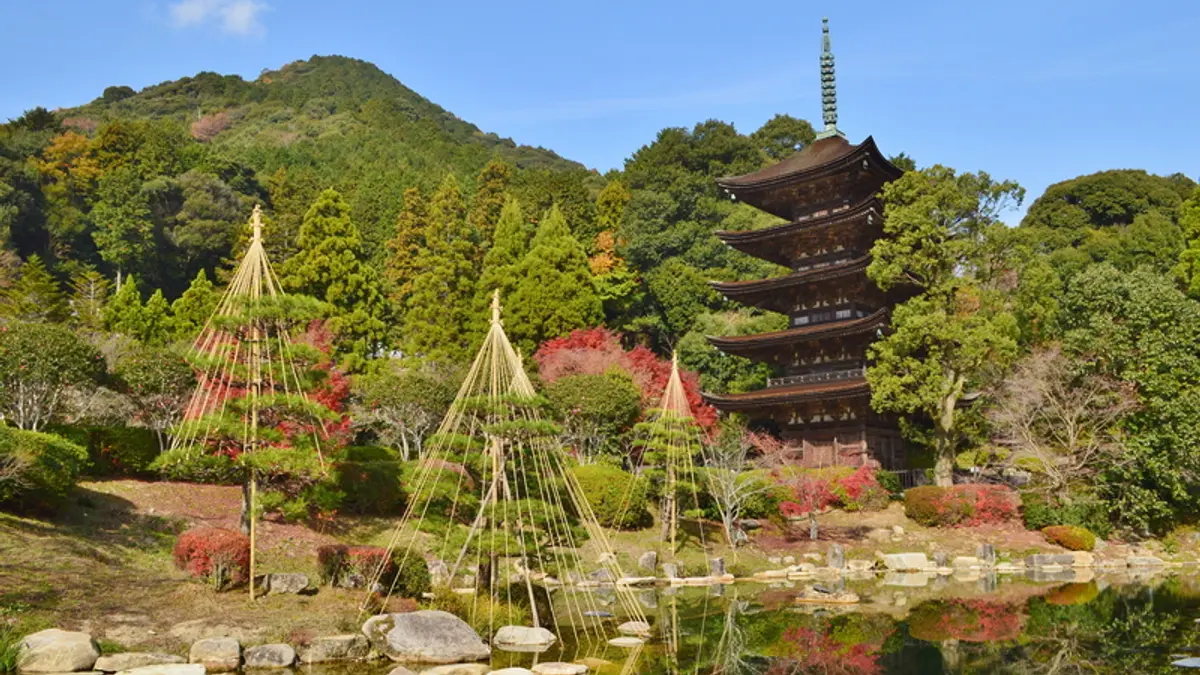
Explore a city where a medieval pagoda, peaceful gardens and traditional lacquerware reveal the cultural ambitions of western Japan’s Ouchi rulers.
Discovering the Kyoto of the West
Yamaguchi City, in western Honshu, rewards travelers who enjoy temples, gardens and local crafts. The five-story pagoda at Rurikoji is its best-known landmark, while a riverside walk and a stay in nearby Yuda Onsen bring a gentler rhythm to a day of sightseeing.
The city is often called Nishi no Kyo, the “Kyoto of the West.” Its connection with the former capital comes from the Ouchi family, powerful medieval rulers who made Yamaguchi a center of government and culture.
Historic places are spread among modern streets rather than gathered in one continuous old town. Exploring them reveals how Kyoto’s influence met the overseas connections and local traditions of western Japan.
The Ouchi and Their Cultural Capital
Around 1360, Ouchi Hiroyo moved his residence to Yamaguchi. He and his successors developed the town while maintaining close connections with Kyoto’s political, religious and cultural circles.
For roughly two centuries, the Ouchi supported temples, welcomed cultural figures and participated in trade with China and the Korean peninsula. Their patronage helped create the distinctive heritage known as Ouchi culture.
The painter-monk Sesshu and the poet Sogi were among the cultural figures associated with this world. Their presence helps explain why Yamaguchi’s relationship with Kyoto was more than a matter of appearance.
The family’s power declined after a rebellion by the senior retainer Sue Harukata in 1551 forced Ouchi Yoshitaka to take his own life. Ouchi rule ended in 1557, when Mori forces defeated his successor, Yoshinaga. The temples, gardens and crafts associated with the family remain central to the city’s identity.
Rurikoji’s Five-Story Pagoda
Set among trees in Kozan Park, Rurikoji’s National Treasure pagoda is a natural starting point for a visit.
The building dates to around 1442 and is associated with Ouchi Moriharu’s commemoration of his elder brother Yoshihiro. Its gently curving roofs and balanced wooden structure make it one of the most memorable sights in the city.
The pagoda was built in the grounds of an earlier temple. Rurikoji moved onto the site in the early Edo period, giving the older building the name by which it is known today.
Walk around the public viewing areas to appreciate how the roofs and surrounding trees change with your viewpoint. The recent roof conservation project was completed in December 2025, restoring the pagoda’s cypress-bark roofing.
The Ouchi Residence Site and Ryufukuji
The former Ouchi residence site introduces the people who governed medieval Yamaguchi. Ryufukuji now occupies part of the grounds where the rulers lived and conducted political and cultural life.
The residence buildings have disappeared, but excavations uncovered garden remains. Restored garden areas help visitors picture the carefully arranged surroundings in which the Ouchi received guests.
Combine the site with a walk through the Otono neighborhood. Temple approaches, local shops and the nearby Yamaguchi Furusato Heritage Center make this a good area to explore at an unhurried pace.
Sesshu’s Garden at Joeiji
Joeiji, northeast of the central historic district, offers a quieter encounter with Ouchi culture.
Its garden is traditionally attributed to Sesshu, the Buddhist monk celebrated for his ink paintings. Local tradition holds that Ouchi Masahiro commissioned him to create it in the later fifteenth century.
The pond, upright stones and wooded slopes form a landscape that invites careful looking. Sit for a while and notice how the rocks and trees give depth to the view. The garden is nationally designated as a Historic Site and Place of Scenic Beauty.
Joeiji is a separate stop from the pagoda and residence site. Include travel time in your plans, especially if you also want to try a craft activity or spend the evening in Yuda Onsen.
Walking Beside the Ichinosaka River
The Ichinosaka River brings the city’s Kyoto connection into its landscape. Local accounts describe how the river was likened to Kyoto’s Kamo River when Yamaguchi developed under the Ouchi.
Today, the riverside provides a pleasant walk between cultural stops. Cherry blossoms brighten the banks in spring, while early summer is associated with fireflies. Their appearance depends on the season and natural conditions.
Leave time for a cafe or a local sweet along the way. The river, nearby streets and surrounding hills help bring the city’s separate landmarks together into a more complete picture of Yamaguchi.
Ouchi Lacquerware and Yamaguchi Uiro
Ouchi lacquerware carries the city’s craft heritage into everyday life. Its deep red lacquer, decorative patterns and gold details appear on trays, bowls, chopsticks and ornamental objects.
The Yamaguchi Furusato Heritage Center introduces local crafts and offers a lacquerware chopstick-making experience. This activity requires booking by phone or fax by the previous day and is generally available on weekdays, excluding the Bon and New Year holidays. Confirm your date and language support before arranging your visit.
For a food stop, try Yamaguchi uiro, a steamed sweet known for its soft texture and use of bracken starch. Recipes can also contain wheat flour and sweet bean paste, so check ingredients if you have dietary requirements.
A cup of tea and a piece of uiro make a welcome pause between temples and gardens. Together with the craft shops, they show how local traditions remain part of the city’s daily life.
Staying in Yuda Onsen
Yuda Onsen adds a hot spring stay to a cultural visit. The hot spring district is a separate part of Yamaguchi City, so allow time to travel between your accommodation and the main Ouchi sites.
Yudaonsen Station is on the JR Yamaguchi Line, with direct local trains from Shin-Yamaguchi Station. From the main sightseeing areas, use the JR Yamaguchi Line or local buses where convenient; the best connection depends on the location of your sights and accommodation. Check the walk from the station and whether your hotel offers a shuttle.
The town’s familiar white fox belongs to a local legend about the discovery of the springs. The story remains part of Yuda’s identity and gives the district a character of its own.
An overnight stay leaves room for sightseeing during the day and bathing in the evening. Confirm bath access, day-use arrangements and house rules with your chosen accommodation or facility.
Find accommodation in Yuda Onsen
Search Yuda Onsen hotels on Klook. Compare locations, availability, prices and cancellation conditions before booking.
Planning Your Visit
Allow a full day for the pagoda, residence site, river and selected cultural stops. Staying overnight gives you more time for Joeiji, a reserved craft experience and the hot springs.
You might begin with the pagoda, continue to the residence site and Otono neighborhood, then pause for lunch and a riverside walk. Give Joeiji its own block of time rather than squeezing it between closely timed appointments.
Spring brings riverside blossoms, and autumn adds color around temples and gardens. Summer can be hot and humid; winter brings shorter days and a quieter atmosphere. Choose a manageable number of stops and leave room for local transport connections.
The Character of Yamaguchi
Yamaguchi’s appeal lies in the connections between its historic places. The pagoda recalls the Ouchi’s patronage, the gardens reveal their cultural interests, and lacquerware connects that heritage with craftspeople working today.
A visit combines these discoveries with ordinary streets, small shops and a hot spring evening. This is a city where the influence of Kyoto becomes part of a distinctive regional story.
For the wider background to the series, see Longing for Kyoto — Japan’s “Little Kyoto” Towns and the Pull of the Old Capital.
Getting to Yamaguchi — Transport Information
Shin-Yamaguchi is the Shinkansen gateway. Yamaguchi Station and Yudaonsen Station are on the conventional JR Yamaguchi Line; they are different stations from Shin-Yamaguchi. Use the Shin-Yamaguchi to Yamaguchi Route for the local rail leg and onward planning. For city sightseeing, use Yamaguchi Station; for a stay in the hot spring district, use Yudaonsen Station.
| From | Method | Transfers | Notes |
|---|---|---|---|
| Shin-Yamaguchi | JR Yamaguchi Line local train to Yamaguchi | 0 on a direct service | See the linked local Route; allow onward walking or local transport to the sights. |
| Shin-Yamaguchi | JR Yamaguchi Line local train to Yudaonsen Station | 0 on a direct service | Convenient for an overnight stay in Yuda Onsen. Check walking distance or shuttle availability from the station to your accommodation. |
| Hiroshima | Sanyo Shinkansen to Shin-Yamaguchi, then JR Yamaguchi Line to Yamaguchi | 1 on the stated itinerary | See the Hiroshima to Shin-Yamaguchi Route. Choose a train that calls at Shin-Yamaguchi. The booking below covers only Hiroshima → Shin-Yamaguchi; the local rail leg is separate. Book / Buy TicketThird-party booking prices may include service fees. |
| Hakata | Sanyo Shinkansen to Shin-Yamaguchi, then JR Yamaguchi Line to Yamaguchi | 1 on the stated itinerary | Choose a train that calls at Shin-Yamaguchi and check the local connection. The booking below covers only Hakata → Shin-Yamaguchi; the local rail leg is separate. Book / Buy TicketThird-party booking prices may include service fees. |
Check current timetables, fares and service notices before traveling. The table describes specific travel patterns, rather than every possible departure. The booking links open Klook, a third-party seller; select your travel date and confirm both stations, the train and ticket conditions before paying.
Official Transport Information: JR West ticket and timetable search, JR West service status, Shin-Yamaguchi station information, and local tourism transport guidance.