Exploring the Seto Inland Sea: Awaji Island, Naoshima and the Shimanami Kaido
September 24, 2026
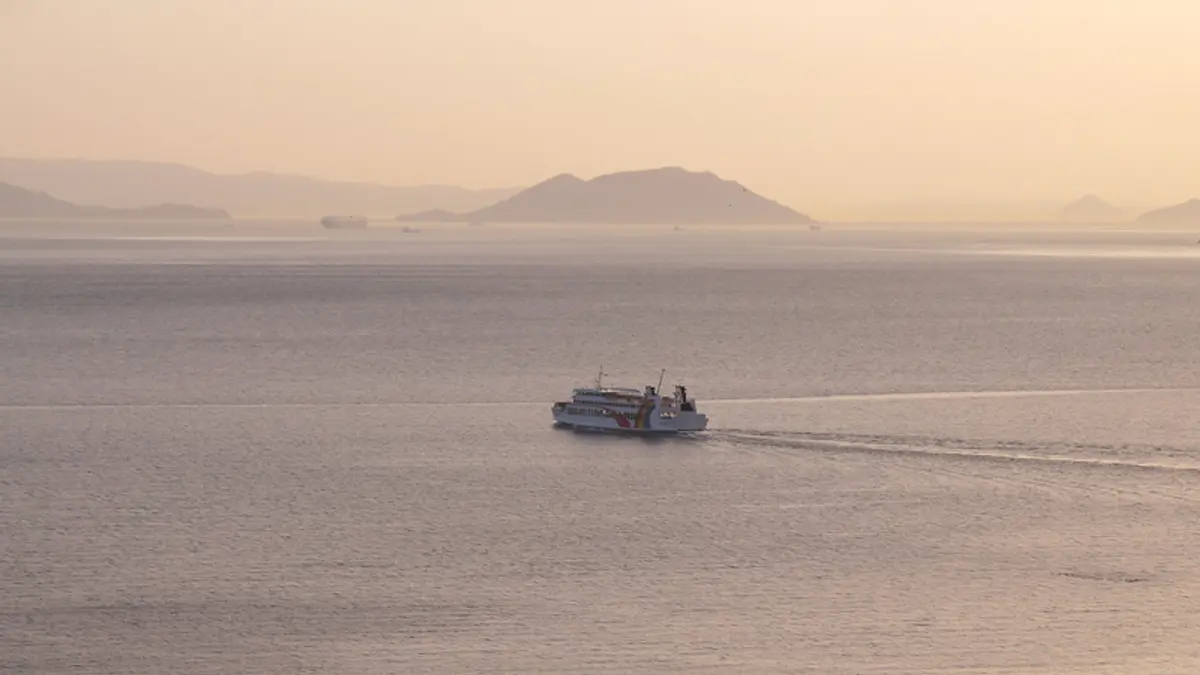
The Seto Inland Sea is not simply the water beside the Sanyo route. It is a travel region in its own right, where islands, ferries, bridges and port cities link Honshu and Shikoku in several different ways.
That changes how a trip should be planned. Once you turn away from the main Sanyo rail corridor, ports and bus terminals become just as important as stations, and the journey across the sea may become part of the experience rather than a transfer to get through quickly.
The useful question is therefore not only where to cross, but whether you want to visit an island for a day, stay on it overnight, or continue onward into Shikoku.
Akashi and Awaji Island: day trip, island stay, or route to Shikoku
From Kobe, Awaji Island can be approached by highway bus, while boats from Akashi provide another way to reach the northern part of the island. Public transport on Awaji is based mainly on buses and boats rather than railways. (awajishima-kanko.jp)
For a short trip, northern Awaji can be visited without trying to cross the whole island. Official tourism information presents public-transport day trips beginning from Sannomiya or Kosoku-Maiko and returning via the Akashi–Iwaya boat connection. (awajishima-kanko.jp)
If the island itself is a major part of the trip, staying overnight becomes more useful. Sumoto has highway-bus connections from Kobe, local buses to other parts of the island, accommodation and the Sumoto hot-spring area. It is a practical place to slow down instead of trying to fit northern, central and southern Awaji into one day. (awaji-kotsu.co.jp)
Farther south, Fukura is useful for the Naruto Strait and whirlpool cruises. Local buses connect Fukura with Sumoto and other parts of Awaji. Travelers continuing toward Naruto and Tokushima should check which stop in southern Awaji their intercity service uses rather than assuming the same bus continues directly from Fukura. Because service patterns can change, check the current connection before planning a through journey. (awaji-kotsu.co.jp)
This means Awaji can work not only as an excursion from Kansai, but also as an overnight island stay or part of a longer journey toward Shikoku.
Naruto and Tokushima: where the trip becomes a Shikoku journey
After the Naruto Strait, the travel pattern changes again.
Naruto itself can justify time for the strait, whirlpools and nearby attractions. Travelers who want to continue farther into Shikoku can move on to Tokushima, which works more naturally as a city base for the next stage of the trip. Local buses connect the Naruto sightseeing area with Naruto Station and onward connections. (tokubus.co.jp)
Naruto can be the main destination when the sea crossing is the focus; Tokushima becomes more useful when the journey is continuing across Shikoku.
Okayama and Takamatsu: the simplest central crossing
The most straightforward rail crossing of the Inland Sea is between Okayama and Takamatsu. The rapid Marine Liner connects the two cities in an average of about 55 minutes and crosses the Seto-Ohashi bridge system. (jr-shikoku.co.jp)
This makes the route easy to understand: stay in Okayama while exploring the Honshu side, cross the sea by train, then use Takamatsu as a new base on the Shikoku side.
For itinerary planning, the important change is from an Okayama-based journey to a Takamatsu-based one.
Takamatsu, Kotohira and the islands: choose what kind of stay you want
Takamatsu works especially well for travelers who want both a city stay and access to the Inland Sea. Ferries connect the city with Naoshima, Shodoshima and several smaller islands, allowing you to keep the same hotel while making individual island trips. (my-kagawa.jp)
Takamatsu is not only useful for the sea. If you stay several nights, Kotohira and Kotohiragu Shrine provide a contrasting inland day trip within Kagawa. It works best as an inland excursion from a Takamatsu stay. Kagawa's official itinerary also combines Takamatsu, Naoshima and Kotohira within the same multi-day trip. (my-kagawa.jp)
The choice is therefore flexible: stay in Takamatsu and make day trips, or move the overnight stay onto an island when the island itself becomes the main reason for traveling.
Uno and Naoshima: a day on the island, or a night among the art
On the Honshu side, Uno Port is one of the main ways to reach Naoshima. Ferries and passenger boats connect Uno with Miyanoura Port in about 15–20 minutes, and Naoshima is also connected with Takamatsu. (naoshima.net)
That makes Naoshima easy to add from either side of the Inland Sea. A full day is enough for many visitors, but the island’s official tourism association recommends staying overnight if you want enough time for its art facilities and outdoor works without rushing. (naoshima.net)
For a day trip, plan the outward and return boats first. If Naoshima is one of the main purposes of the journey, staying on the island removes that pressure.
Shodoshima: large enough to deserve its own time
Shodoshima is a different kind of island. It is the second-largest island in the Seto Inland Sea and has multiple ports, towns, mountain scenery and attractions spread across a much larger area than Naoshima. (my-kagawa.jp)
Ferries from Takamatsu serve several ports, including Tonosho, Ikeda and Sakate. That means the arrival port matters when planning the day, because different parts of the island are not interchangeable. (pref.kagawa.lg.jp)
A focused day trip is possible, but if Shodoshima itself is a main destination, staying overnight makes much more sense. The island is better treated as a small travel region than as a single attraction.
Onomichi and Imabari: when the crossing itself becomes the trip
The Shimanami Kaido connects Onomichi and Imabari through six islands. Its recommended cycling route is about 70 kilometers, but the value of the route is not simply reaching the other end. (shimanami-cycle.or.jp)
The islands, bridges and coastal scenery make the journey itself the attraction. Official cycling guidance recommends allowing at least a couple of days if you want to enjoy the sights rather than concentrate only on completing the distance. (shimanami-cycle.or.jp)
For travelers staying on Honshu, Onomichi is a natural place to spend the night before beginning the route. On the Shikoku side, Imabari works equally well as the place to finish, rest, and decide whether to continue toward Matsuyama or elsewhere in Shikoku.
Travelers who want more time on Ikuchijima, Omishima or another island can also divide the crossing with an overnight stay in the middle. Setoda on Ikuchijima, for example, can be reached by boat from Onomichi and works well for a shorter island stay. (shimanami-cycle.or.jp)
Hiroshima and Matsuyama: continue west by sea
Farther west, Hiroshima and Matsuyama are connected directly by ship. High-speed passenger services and ferries run from Hiroshima Port, with calls at Kure, to Matsuyama Tourist Port. (matsuyama-sightseeing.com)
For someone already staying in Hiroshima, this creates a simple alternative to returning east to Okayama before entering Shikoku. If Kure is already part of the trip, you can board there instead.
On arrival, Matsuyama Tourist Port is only the beginning of the city stay; buses connect the port with central Matsuyama. The overnight base is therefore usually the city rather than the port area. (matsuyama-sightseeing.com)
Building the trip
A short Seto Inland Sea trip usually works best when you choose one main pattern.
From Kansai, Awaji can be a day trip, an island stay, or the route toward Naruto and Tokushima. From Okayama, you can cross directly to Takamatsu or turn toward Uno and Naoshima. From Takamatsu, individual islands can be added without changing hotels, while Shodoshima may deserve its own stay. From Onomichi, the Shimanami route makes island travel the main experience. From Hiroshima, the journey can continue directly across the sea to Matsuyama.
The important decision is not simply how to get from Honshu to Shikoku.
It is where you want crossing the Inland Sea to become part of the trip.
Where to stay
Planning to stay overnight? Find accommodation in:
ImabariOmishimaShodoshimaOnomichiOkayamaTokushimaMatsuyamaSumotoIkuchijimaTakamatsu
Related Routes
- Akashi Port → Iwaya Port
- Hiroshima Port → Matsuyama Tourist Port
- Imabari → Matsuyama
- Kobe-sannomiya → Akashi Port
- Kobe-sannomiya → Sumoto Bus Center
- Kure Port → Matsuyama Tourist Port
- Matsuyama Tourist Port → Matsuyama
- Naruto → Naruto Park
- Naruto → Tokushima
- Okayama → Takamatsu
- Okayama → Uno Port
- Onomichi Port → Setoda Port
- Sumoto Bus Center → Fukura
- Sumoto Bus Center → Naruto
- Sumoto Bus Center → Tokushima
- Takamatsu East Port → Sakate Port
- Takamatsu Port → Ikeda Port
- Takamatsu Port → Miyanoura Port
- Takamatsu Port → Tonosho Port
- Takamatsu → Kotohira
- Uno Port → Miyanoura Port