Hida Takayama — Merchant Streets and the Craft of a Mountain Town
October 19, 2026
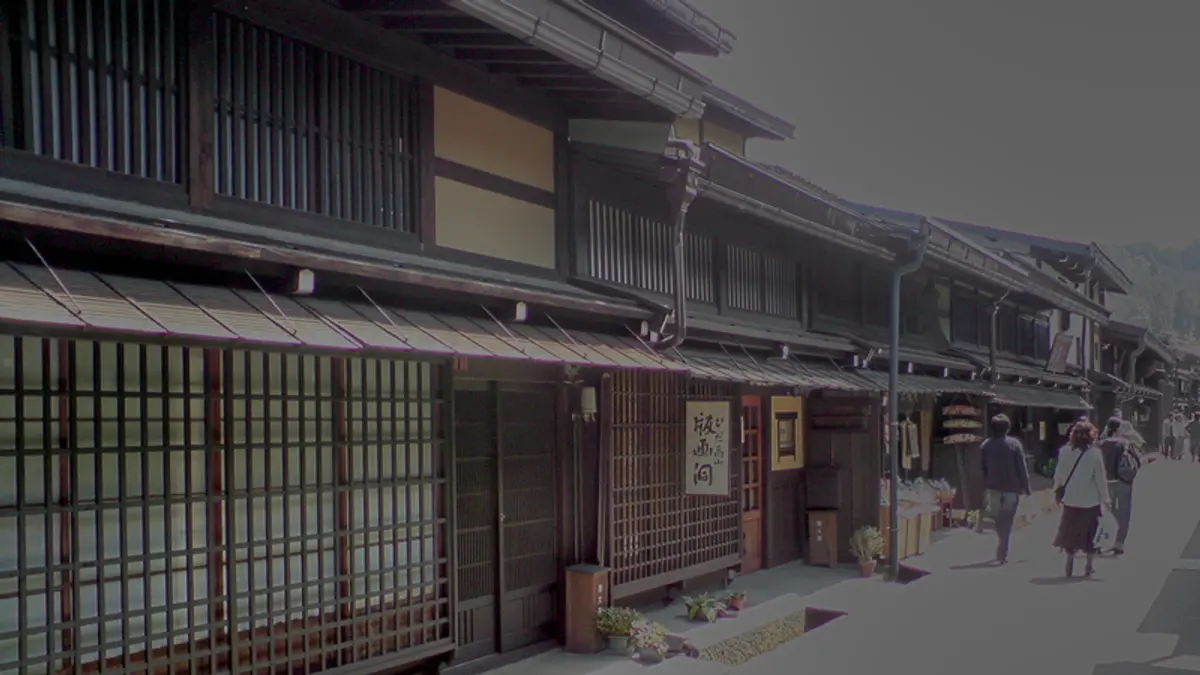
Discover a historic town in northern Gifu where wooden merchant houses, festival floats and traditional crafts bring the culture of the Hida mountains into view.
A Historic Town in the Hida Mountains
Takayama, in the Hida region of northern Gifu Prefecture, is an inviting destination for travelers interested in traditional streets, local food and craftsmanship. Wooden latticework, narrow water channels and sake breweries give its old town a distinctive atmosphere.
Often called a Little Kyoto, Takayama developed as a castle town and later prospered as a center of government and commerce. Merchants and craftspeople helped shape the streets and traditions visitors enjoy today.
The name Hida Takayama identifies this destination within the wider Hida region. This Guide focuses on central Takayama and the nearby Hida Folk Village, leaving time to explore both at a comfortable pace.
From Castle Town to Shogunal Territory
Kanamori Nagachika gained control of Hida in 1585. Under the Kanamori family, Takayama developed into a castle town with districts for warriors, temples, merchants and craftspeople.
In 1692, the Kanamori were transferred to another domain, and Hida came under the direct rule of the Tokugawa shogunate, Japan’s military government. Officials of the shogunate administered the region from Takayama.
Commerce continued to grow after the ruling family left. Wealthy merchants supported local culture, while the skills of Hida’s craftspeople became visible in houses, religious buildings and festival floats.
These different influences explain why a visit to Takayama can move naturally from a merchant street to a government office and then to a hillside temple district.
Why Is Takayama Called a Little Kyoto?
Takayama’s traditional townscape and temple district make its Little Kyoto nickname easy to understand.
The city’s account of Higashiyama connects the eastern temple district with Nagachika’s admiration for Kyoto’s eastern hills. Walking among the temples offers a quieter way to appreciate that relationship.
The town also developed around its own mountain setting and commercial life. Its historic streets include buildings from different periods, reflecting generations of rebuilding and care. Kyoto provides a useful introduction to Takayama, while Hida’s regional history gives the town its particular character.
Sanmachi — Exploring the Merchant Streets
Sanmachi is a natural place to begin. Traditional wooden townhouses line the streets, with latticed fronts and water channels running beside them. Shops, breweries and restaurants keep the neighborhood lively.
Look above the shop displays to notice the roofs, timberwork and proportions of the buildings. Balls made from cedar leaves hang outside sake breweries, providing a recognizable sign of one of the town’s traditional industries.
An early walk offers a quieter view of the streets; returning during business hours gives you time to browse shops, try local food or visit a brewery. Some buildings remain private spaces, so enter only where visitors are welcome and ask before photographing interiors.
Takayama Jinya — Inside a Government Office
Takayama Jinya introduces the officials who governed Hida under the Tokugawa shogunate.
The complex includes offices, residential rooms and a rice storehouse. Walking through these spaces helps explain how government worked and how differences in rank shaped the arrangement of rooms and entrances.
The buildings reflect several periods of construction and alteration. The front gate, for example, was rebuilt in 1832. The storehouse gives a sense of the rice taxation that supported the administration.
Allow time to look at the details of the rooms and timberwork. The Jinya adds a different perspective to the merchant streets, bringing the region’s political history into the visit.
Higashiyama and the Former Castle Hill
East of the commercial center, Higashiyama offers temples, wooded slopes and a slower pace. A walk here reveals how religious places and the surrounding hills formed part of the castle town.
Nearby Shiroyama Park occupies the former castle hill. The castle buildings no longer stand, but the remains and wooded paths help visitors understand the setting above the town.
A Higashiyama walking route linking the temple district and Shiroyama Park runs for approximately 3.5 kilometers. Choose a shorter temple walk if you also plan to visit the Jinya and museums. Hillside paths include slopes, steps and uneven ground, so allow for the weather and your preferred walking pace. Temple grounds remain active religious places; use designated visitor areas.
Craftsmanship in Wood and Lacquer
Hida has a long reputation for skilled woodworking. In Takayama, that heritage can be appreciated in buildings as well as in objects made for daily use.
Hida Shunkei lacquerware is known for a transparent finish that allows the wood grain to show through. Looking closely at a tray or box reveals how the natural material becomes part of its decoration.
Another local craft is ichii ittobori, carving in Japanese yew wood. Shops and craft displays offer opportunities to compare the carved surfaces with the smooth finish of lacquerware. Modern furniture adds another expression of the region’s continuing skill with wood.
Festival Floats and Community Traditions
The Takayama Festival brings together two shrine festivals. The spring Sanno Festival, associated with Hie Shrine, takes place on April 14–15. The autumn Hachiman Festival, associated with Sakurayama Hachimangu, takes place on October 9–10.
Their decorated yatai, or festival floats, combine woodworking, carving and ornamental arts. The neighborhood communities that maintain them keep these skills and customs part of town life.
Festival visits require advance planning for accommodation and transport. Outdoor processions depend on the weather, so confirm the program for your travel year. Outside festival dates, float exhibitions provide another way to appreciate this craft heritage.
Morning Markets and Hida Food
The Miyagawa riverside market and the market in front of the Jinya make a morning walk especially rewarding. Seasonal produce and small purchases offer a different experience from the main shopping streets.
Stalls vary by season and vendor, so leave time to browse without relying on one particular seller being there.
Hida beef is a familiar local specialty, but other dishes also deserve attention. Hoba miso is miso with ingredients such as vegetables or meat, heated on a magnolia leaf over a small stove and often enjoyed with rice. Takayama ramen and pickled vegetables provide other introductions to the region’s food.
Recipes and stocks vary between restaurants. Ask about ingredients if you have allergies or follow a particular diet.
Hida Folk Village — Life Beyond the Town
Hida Folk Village is an open-air museum outside the central walking area. Traditional houses relocated from the Hida region introduce rural life, household tools and ways of working in the mountains.
The museum offers a useful contrast to the merchant streets: the houses show how people lived across a wider region. It is a separate destination from Shirakawa-go, so make sure your travel plans identify the place you intend to visit.
Allow a separate block of time for the journey and museum. Local buses provide an option from the station area; check the timetable, including the return service.
Seasons and Length of Stay
One full day allows a first look at Sanmachi, the Jinya and selected nearby sights. An overnight stay adds a morning market visit; two nights give more time for Higashiyama, crafts and the Folk Village.
For a balanced first day, combine the old town and Jinya with lunch and a craft stop. Use another morning for a market, then choose the temple walk or Folk Village according to your interests.
Spring and autumn bring seasonal color, with festival dates especially busy. Summer offers long days but can be hot. Winter brings cold weather and possible snow or ice on paths. Excursions into the surrounding mountains need additional travel time and their own seasonal planning.
A Mountain Town with Its Own Cultural Weight
Takayama’s merchant streets, government buildings and festivals show how cultural influences met the resources and skills of Hida.
Notice the grain of a lacquered object, the arrangement of rooms in the Jinya and the activity behind a traditional shopfront. These details make a stay in Takayama rewarding beyond its best-known views.
For the wider background to the series, see Longing for Kyoto — Japan’s “Little Kyoto” Towns and the Pull of the Old Capital.
Getting to Takayama — Transport Information
Takayama is on the conventional JR Takayama Main Line, not a Shinkansen line. Nagoya is a practical rail gateway from the Tokaido corridor; Toyama provides an approach from the north. Direct Hida services must be selected from the timetable rather than assumed for every departure.
If approaching via Nagoya from Tokyo, use the existing Tokyo to Nagoya Route, then continue on the Nagoya to Takayama Route. Allow time to change between Shinkansen and conventional platforms at Nagoya.
| From | Method | Transfers | Notes |
|---|---|---|---|
| Nagoya | Limited Express Hida to Takayama | 0 on a direct service | See the linked Nagoya to Takayama Route for journey details. Reserve ahead for busy periods and confirm the destination. This booking covers Nagoya → Takayama only. Book / Buy TicketThird-party booking prices may include service fees. |
| Toyama | Limited Express Hida to Takayama | 0 on a direct service | Direct departures are limited; check the exact train. This booking covers Toyama → Takayama on the Hida, not a bus or an Alpine Route ticket. Book / Buy TicketThird-party booking prices may include service fees. |
Check current timetables, fares and disruption notices. The booking links open Klook, a third-party seller; select your travel date and confirm both stations, the train and ticket conditions before paying. The old town is walkable from Takayama Station; the Folk Village and mountain destinations involve additional travel.
Official Transport Information: JR Central travel information, JR Central service status, JR West Hida train information, JR West ticket and timetable search, and Nohi Bus.
Where to stay
Planning to stay overnight? Find accommodation in:
For a central-town visit, check the property's map and access from Takayama Station. Accommodation in the wider city can be well outside the old town; confirm your dates, room availability and location before booking.