Where to Go in Northern Hyogo, Tottori, and Shimane
September 23, 2026
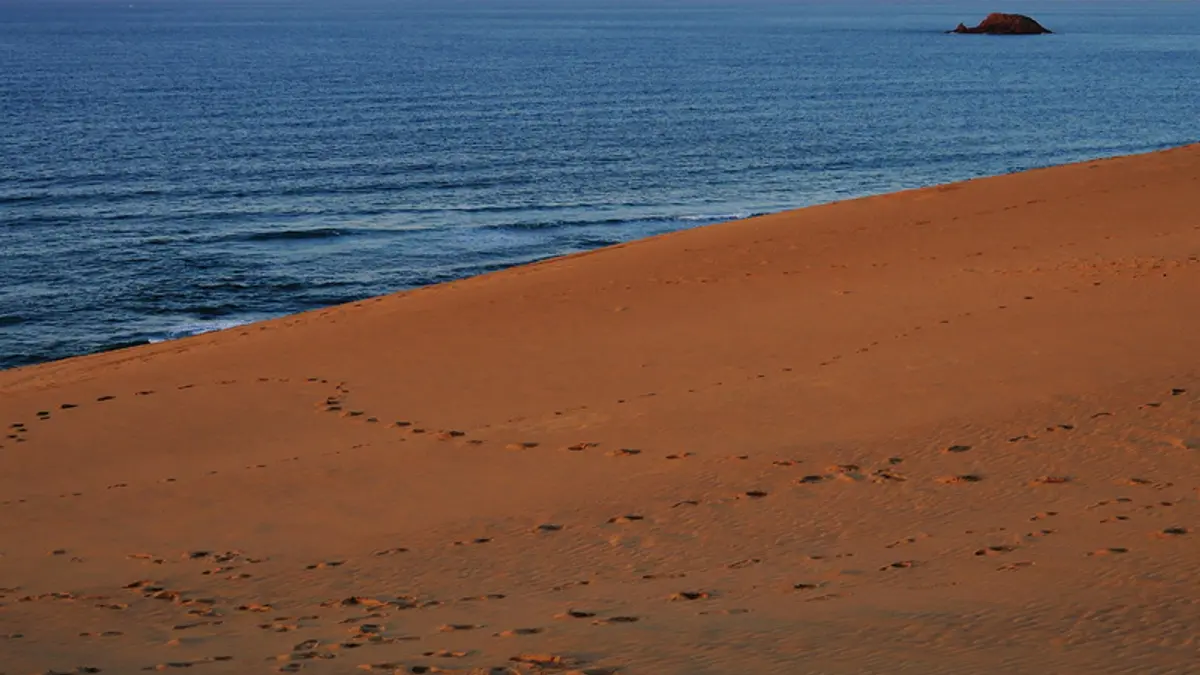
Stretching west along the Sea of Japan, northern Hyogo, Tottori, and Shimane offer a side of Japan that feels very different from the busy urban corridor between Tokyo, Kyoto, Osaka, and Fukuoka.
This is not one destination but a long region with several distinct travel areas. Hot spring towns, sand dunes, mountains, castle towns, ancient shrines, Japanese gardens, former mining settlements, and remote islands are spread across the San'in region.
Distances can also be deceptive. Places that look relatively close on a map may require trains, local buses, ferries, and additional connections. Trying to see everything in one trip can therefore mean spending more time moving than sightseeing.
Rather than treating San'in as a checklist, choose the part of the region that best matches what you want to experience.
Kinosaki Onsen and Northern Hyogo: Hot Springs and Historic Towns
For travelers approaching from Kyoto or Osaka, northern Hyogo provides a natural transition from Kansai into the San'in region.
Kinosaki Onsen is the area's best-known destination. Rather than being built around one large hot spring resort, Kinosaki is a compact town where traditional inns, public bathhouses, canals, and streets form part of the experience. It works particularly well for travelers who want to slow down for a night rather than simply stop for sightseeing.
The surrounding Tajima area offers several contrasting destinations.
Izushi is a former castle town with traditional streets and is particularly associated with Izushi soba. It makes a good addition for travelers who enjoy smaller historic towns rather than major temples and monuments.
Farther inland, Takeda Castle Ruins occupy a mountaintop above the surrounding valleys. They are famous for the seasonal "castle in the sky" appearance created when the ruins rise above a sea of clouds, although this depends on weather and time of year. Even without the clouds, the mountain setting makes Takeda quite different from castles in Japan's larger cities.
Choose northern Hyogo if you want hot springs, traditional towns, and mountain scenery while gradually moving away from the major cities of Kansai.
Tottori: Much More Than the Sand Dunes
Tottori is often associated almost entirely with the Tottori Sand Dunes, but the prefecture changes considerably from east to west.
The dunes are still the obvious starting point. Facing the Sea of Japan, they create a landscape unlike almost anywhere else on a typical first trip to Japan. Their proximity to Tottori city also makes them easier to include than their remote-looking landscape might suggest.
Central Tottori offers a quieter alternative. Kurayoshi preserves historic streets and old merchant buildings, while nearby Misasa Onsen provides a traditional hot spring stay. This area suits travelers who prefer smaller towns and a slower itinerary.
Western Tottori changes character again around Mount Daisen. Its highest peak, Kengamine, reaches 1,729 meters, making Daisen the highest mountain in the Chugoku region. The commonly climbed Misen Peak is 1,709 meters high. The mountain offers forests, hiking, seasonal scenery, and views toward the Sea of Japan.
Near the western edge of the prefecture, Sakaiminato provides something completely different. Manga artist Shigeru Mizuki grew up here, and Mizuki Shigeru Road extends from Sakaiminato Station through the town, filled with bronze statues and other references to the yokai characters associated with his work.
Choose Tottori if landscapes are a major part of your trip, especially if you want to combine the Sea of Japan with mountains, small towns, or a distinctly different side of Japanese popular culture.
Matsue and Yasugi: Castle Towns, Gardens, and Art
Around Lake Nakaumi and Lake Shinji, the journey shifts from the landscapes of Tottori toward the historic and cultural centers of eastern Shimane.
Matsue is one of Japan's notable surviving castle towns. Matsue Castle forms the historic center, but the appeal of the city extends beyond the castle itself. Former samurai districts, canals, museums, and the shores of Lake Shinji make Matsue a place that rewards walking and staying rather than simply visiting one landmark.
Nearby Yasugi is best known to travelers as the gateway to the Adachi Museum of Art. The museum combines a major collection of modern Japanese painting with carefully maintained Japanese gardens, making it a strong choice for travelers whose interests lean toward art and garden design rather than castles or shrines.
Between Matsue and Izumo, Tamatsukuri Onsen provides another option for an overnight stay. Its history extends back at least to the eighth century, and traditional inns along the Tamayu River make it easy to combine a hot spring stay with sightseeing in eastern Shimane.
Choose this part of Shimane if you are interested in castles, Japanese gardens, art, and traditional urban landscapes.
Izumo: Ancient Shrines and the World of Japanese Mythology
West of Matsue lies Izumo, one of the most distinctive cultural destinations in the region.
The main reason to come is Izumo Taisha, one of Japan's most important Shinto shrines. For travelers interested in Japanese mythology and the country's early religious traditions, Izumo offers a different perspective from the temple districts of Kyoto or Nara.
The wider region is closely connected with myths recorded in some of Japan's oldest texts, and this cultural background is part of what makes a visit here meaningful. Izumo is therefore best approached not simply as another famous shrine but as a destination where mythology, religion, and regional identity remain closely connected.
Matsue and Izumo also work naturally as a pair. Travelers with limited time can build a trip around these two areas rather than continuing across the whole of Shimane.
Choose Izumo if Shinto shrines, mythology, and ancient Japanese culture are among the main reasons you are traveling in Japan.
Oki Islands: Give the Islands Their Own Time
Beyond the Shimane Peninsula lie the Oki Islands, a group of islands in the Sea of Japan.
Oki has four main inhabited islands. Dogo is the largest, while the three inhabited islands of Dozen are Nishinoshima, Nakanoshima, and Chiburijima.
Like Sado Island off Niigata, Oki should not be treated simply as an attraction just offshore from the mainland. Reaching the islands is only the first part of the journey.
Dramatic coastlines, cliffs, grasslands, distinctive geological formations, small communities, shrines, and traditions shaped by centuries of island life give Oki a character very different from mainland Shimane.
The islands are also part of the Oki Islands UNESCO Global Geopark, reflecting a landscape shaped by volcanic activity, erosion, and long geological change.
Travel requires planning. Ferries and fast ferries connect the mainland with the islands, while moving between islands and exploring them adds another layer to the journey. Weather and seasonal transport schedules can also matter.
The important point is to allow enough time. Oki works best when the islands themselves are the journey, not when they are squeezed into a mainland itinerary as a quick side trip.
Choose Oki when you have enough time to make a remote-island journey part of your experience of San'in.
Iwami Ginzan: World Heritage Beyond the Main Cities
Continuing west brings you into a quieter and more rural part of Shimane.
Iwami Ginzan is a former silver-mining area and a UNESCO World Heritage Site. Its significance extends beyond the mine shafts themselves: the heritage area also preserves settlements, historic routes, and a landscape shaped by centuries of mining activity.
The historic town of Omori is an important part of the experience. Traditional buildings line the former mining settlement, while walking routes continue toward the mining areas. Ryugenji Mabu, one of the mine shafts open to visitors, can be reached from the Omori area.
This is quite different from visiting a castle or museum beside a major railway station. From JR Oda-shi Station, reaching the Omori area requires a local bus, and exploring the area itself takes additional time on foot.
That slower pace is part of the attraction.
Choose Iwami Ginzan if you are interested in industrial history, preserved settlements, rural landscapes, and World Heritage sites, and are prepared to devote a substantial part of a day to one area.
How to Choose
You do not need to visit every destination in this guide.
Choose Kinosaki Onsen and northern Hyogo for hot springs, traditional towns, and an easy transition from Kansai into San'in.
Choose Tottori for sand dunes, mountains, coastal landscapes, and smaller towns.
Choose Matsue and Yasugi for castles, Japanese gardens, and art.
Choose Izumo for Shinto, mythology, and ancient Japanese culture.
Choose the Oki Islands when you want a remote-island journey and have enough time to make the islands a destination in their own right.
Choose Iwami Ginzan for World Heritage history, preserved settlements, and a slower rural journey.
For many travelers, choosing one or two of these areas will produce a better trip than trying to cross the entire region.
Getting There and Around
There is no single best gateway to San'in.
From Kyoto and Osaka, northern Hyogo and eastern Tottori are natural entry points. Rail services connect Kansai with Kinosaki Onsen and continue toward the eastern side of the San'in region.
For western Tottori and eastern Shimane, Okayama provides another important gateway. The Limited Express Yakumo runs from Okayama through Yonago and Matsue to Izumoshi, making it particularly useful for travelers heading directly toward Matsue or Izumo.
Once in San'in, the JR San'in Main Line forms much of the east-west railway backbone, but many attractions are not directly beside it. Local trains, buses, private railways, ferries, and walking connections become increasingly important when visiting hot spring towns, mountain areas, shrines, remote islands, and Iwami Ginzan.
This is why San'in is better understood as several connected travel areas rather than one route that must be completed from end to end.
Decide first what you want to experience. Then choose the gateway and section of San'in that fits that journey.
Where to stay
Planning to stay overnight? Find accommodation in:
Related Routes
- Haneda Airport → Izumo Airport
- Haneda Airport → Tottori Airport
- Haneda Airport → Yonago Airport
- Izumo Airport → Izumo
- Izumo → Izumo Taisha
- Izumo → Oda-shi
- Kinosaki Onsen → Izushi
- Kinosaki Onsen → Takeda
- Kinosaki Onsen → Tottori
- Kurayoshi → Misasa Onsen
- Kurayoshi → Yonago
- Kyoto → Kinosaki Onsen
- Matsue → Izumo
- Matsue → Shichirui Port
- Matsue → Tamatsukuri-Onsen
- Matsue → Yasugi
- Oda-shi → Iwami Ginzan
- Okayama → Yonago
- Shichirui Port → Saigo Port
- Takeda → Takeda Castle Ruins
- Tottori Airport → Tottori
- Tottori → Kurayoshi
- Tottori → Tottori Sand Dunes
- Yasugi → Adachi Museum of Art
- Yonago Airport → Yonago
- Yonago → Daisenji
- Yonago → Matsue
- Yonago → Sakaiminato