Why Are So Many of Japan’s Racehorses Born in Hokkaido?
September 16, 2026
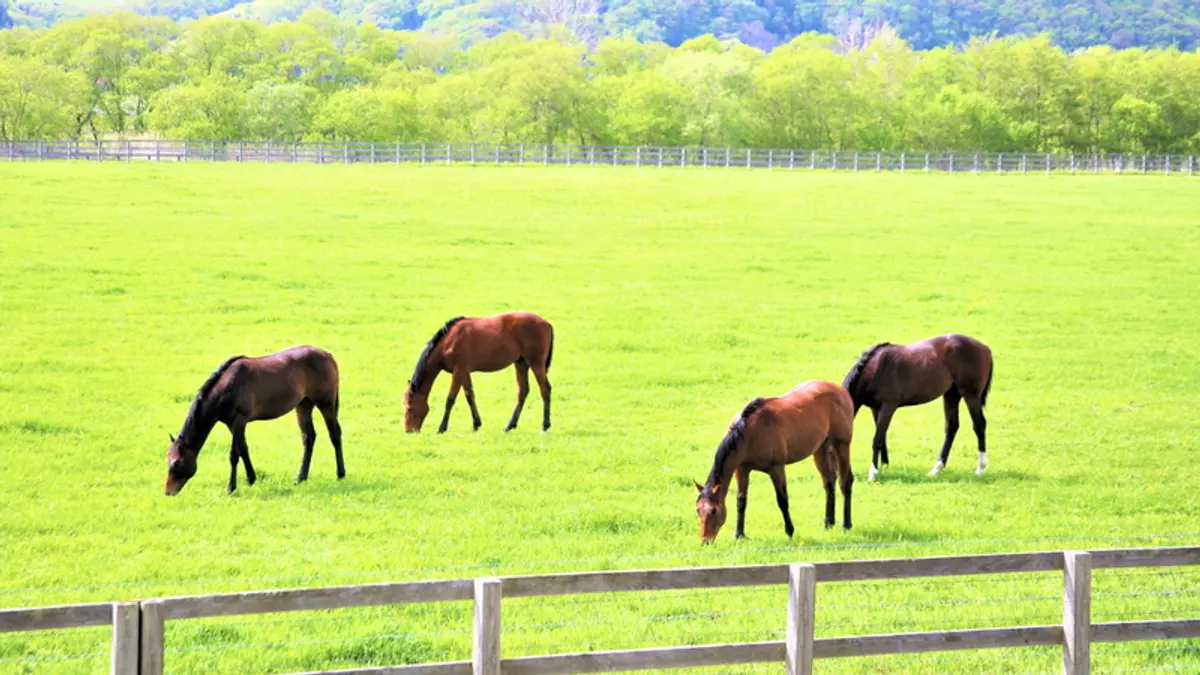
Drive through the Hidaka region of southern Hokkaido and the landscape begins to change.
Beyond the towns and coastal roads, long fences divide broad green fields. Horses graze in the distance, sometimes with the Hidaka Mountains rising behind them. Signs bearing the names of horse farms appear along otherwise quiet country roads.
To a traveler unfamiliar with Japanese horse racing, it may simply look like another beautiful rural corner of Hokkaido.
But these fields are part of Japan’s most important racehorse-breeding region.
Hidaka accounts for around 80 percent of Japan’s light-horse production, including the Thoroughbreds that will eventually appear at racecourses across the country.
Understanding why changes the way you see this landscape.
Japan’s Horse Country
Hidaka is not a single town.
The region stretches along the Pacific coast of southern Hokkaido and includes communities such as Hidaka, Biratori, Niikappu, Shinhidaka and Urakawa.
Horse breeding is woven into much of this countryside.
Around 80 percent of Japan’s light horses are produced in the Hidaka region.
That extraordinary concentration explains why travelers encounter paddocks, breeding farms, training facilities and horse-related businesses again and again while moving through the region.
The horses are not simply part of the scenery.
The horse-breeding industry helped create the scenery itself.
How Hidaka Became Horse Country
The relationship between Hidaka and horses goes back much further than modern Japanese horse racing.
Horse breeding developed in the region during the Meiji era, initially with military horses among its important purposes.
The modern light-horse industry came later.
Production expanded significantly from around the mid-1960s. During the 1970s, changes in Japanese agricultural policy, including reductions in rice production, encouraged some farms to shift from rice cultivation toward horse breeding.
Then came Japan’s racing boom.
By the late 1980s, when horses such as Oguri Cap had become national celebrities, Hidaka was producing more than 10,000 horses a year and had around 1,800 horse-raising farms.
Those numbers later declined as Japan’s economy and racing industry changed.
What remained, however, was something much harder to create: generations of experience, specialized farms, veterinarians, training facilities, horse markets and an entire community built around raising racehorses.
Today, Hidaka remains Japan’s largest horse-producing region.
From a Hokkaido Field to the Racecourse
A racehorse’s story begins far from the grandstands.
Foals are generally born in spring and spend their earliest months with their mothers. As they grow, they pass through different stages of raising and training before eventually entering professional training and beginning their racing careers.
In Hidaka, this process is supported by an entire regional network.
There are breeding farms, facilities for young horses, training farms, veterinary services and horse sales. Organizations such as the Hidaka Horse Breeders’ Association support the horse-breeding industry across the region.
This explains something that is easy to miss when simply driving through the countryside.
The individual farms may look separate.
Together, they form a highly specialized racehorse-producing region.
Hokkaido and the Rise of Japanese Thoroughbreds
Japanese horse racing has changed dramatically over the past few decades.
Japanese-trained horses now regularly compete at the highest international level.
Equinox, for example, finished 2023 as the world’s highest-rated racehorse in the Longines World’s Best Racehorse Rankings after victories including the Dubai Sheema Classic and the Japan Cup.
Deep Impact became one of Japan’s most influential racehorses and stallions, with his bloodline later reaching some of Europe’s most famous races.
There is an important geographical distinction, however.
Neither Deep Impact nor Equinox was born in Hidaka. Both were bred at Northern Farm in Abira, another major horse-breeding area of Hokkaido.
That distinction actually helps reveal the bigger picture.
Hidaka is the enormous production heartland, accounting for around four-fifths of Japan’s light-horse production, while other parts of Hokkaido are also home to internationally successful breeding operations.
Together, these areas have made Hokkaido synonymous with the origins of the Japanese Thoroughbred.
Visiting Horse Farms: Respect the Rules
Seeing horses from a road does not mean that a farm is open to visitors.
Racehorse farms are working farms, not ordinary tourist attractions. Some welcome visitors under specific conditions, while others do not accept visitors at all.
Never enter a horse farm without permission. Before visiting any farm, check whether visits are currently permitted and follow the latest official rules.
Visit only farms that are currently open to visitors, and follow the designated times, locations and instructions. Follow each farm’s rules regarding photography, touching horses and feeding them.
Biosecurity rules are especially important.
These rules are not simply a matter of etiquette. They help protect the health of valuable horses and prevent infectious diseases from being carried between farms.
Farm visits are possible because of the cooperation and goodwill of the people who work there. Respecting their rules helps ensure that visitors can continue to experience Hidaka’s horse culture in the future.
Before planning a farm visit, check the latest information and visiting rules from the Racehorse Hometown Information Center.
The Landscape Looks Different Once You Know
You can travel through Hidaka without knowing any of this.
You can see green fields, horses behind fences and mountains in the distance and simply think:
This is beautiful Hokkaido countryside.
There is nothing wrong with that.
But once you know that roughly four out of every five light horses born in Japan come from this region, the same view begins to tell a different story.
Those green fields and carefully maintained paddocks are not simply part of a pastoral Hokkaido landscape.
They exist because horses are born and raised here.
Those fences surround working farms.
And somewhere among the thousands of young horses growing up across Hidaka each year may be one that will eventually run before tens of thousands of spectators — perhaps even at a racecourse far beyond Japan.
That is what makes Hidaka unusual.
The story is not hidden in a museum.
It is spread across the landscape.